Video Production Services in Shenzhen 07/10 · ONCE Guide to Video Production Services in Shenzhen
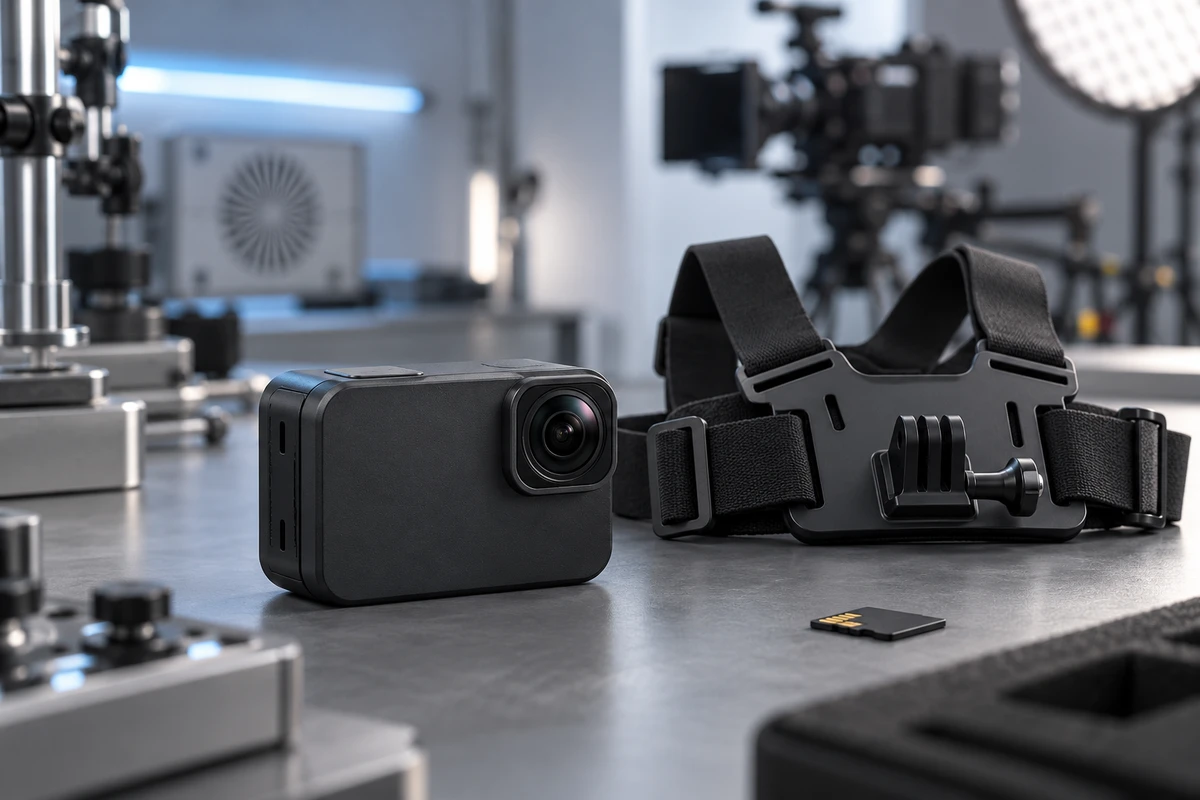
Consider a wearable camera prototype that needs a product video in Shenzhen. The formal shot list includes chest mounting, button or voice activation, phone preview, and a final check that recorded footage can be transferred and played back. The industrial design sample is ready, and the engineers are nearby, but the firmware, app, and mounting accessories are still changing.
The purchasing question is not whether a crew can “shoot something” in half a day. It is whether a separate half-day prototype test can remove enough uncertainty to protect the formal shoot.
The short answer: book the test when a few high-risk actions can determine whether the production is viable, and when the product team can explain, reset, or repair the prototype during the session. You are buying a go, conditional go, or no-go decision—not a cheaper version of the final film. If the script, sample, or safety conditions are not ready, a half-day session will not make the product production-ready.
Buy a decision, not a quantity of test footage
The cost of a formal shoot begins before the camera rolls. Once the studio, talent, department heads, equipment, and post-production calendar are committed, a prototype that cannot connect, reset, or produce a usable file can stall several cost centers at once.
A useful test should answer three questions:
- Can the critical product action be completed continuously under the planned conditions?
- Can the production team show the action and its visible result clearly?
- If it fails, is the dependency in the sample, software, accessory, location, or shot design?
“A folder of test clips” is therefore a weak deliverable. A more useful package is a risk-shot matrix, pass/conditional/fail status for every critical action, failure notes, a sample-version record, and a recommendation to proceed, revise, or reschedule.
When a separate half-day test is worth buying
Test when a small number of actions can block the whole shoot
The highest-risk shot is rarely the beauty close-up. It is usually an action chain: mount the camera, trigger recording, show an observable device response, confirm the recording state, then transfer and play back the file. If any step depends on unsettled firmware, the app, an account, phone OS, wireless connectivity, storage, or a mounting accessory, discovering that dependency on the formal shoot day is expensive.
An independent test is even more useful when the formal production needs actors, moving cameras, or a location that is difficult to reset. The test can use a producer or product owner as a stand-in and a lightweight camera package. It does not need to consume the complete production crew.
Fold it into normal prep when the same conditions are already proven
If the shoot uses a production unit and the product team can provide continuous evidence from the same model, software version, phone platform, and mounting method, a basic power-on and visual inspection may fit into standard pre-production. Do not buy a separate session simply to make the workflow look more complete.
The phrase “same conditions” matters. A different model, old firmware, another phone OS, or a highlight reel made from successful fragments does not prove that this project’s action chain is repeatable.
Do not test yet when the minimum inputs are missing
If the script has not decided what it needs to prove, the prototype raises an unresolved safety concern, the app or account is unavailable, the mount has not arrived, or no engineer can explain whether a failure is recoverable, a test is likely to produce only a record of non-readiness. Complete product diagnosis or wait for the next build before booking the session. A test fee is not insurance against missing product preparation.
Test one end-to-end path instead of a compressed shot list
A common mistake is to squeeze the entire formal shot list into half a day. Time disappears into lens changes, accessory swaps, and repeated explanations, yet no single path is fully validated.
For a wearable camera, narrow the session to one end-to-end route:
| Test point | What must be visible | Likely dependencies | What to record |
|---|---|---|---|
| Wear or mount | Stable position, clear field of view, natural movement | Clip or magnetic mount, wardrobe, device weight | Mounting method, angle, slipping or release |
| Start recording | Trigger and device response are observable | Firmware, button logic, voice conditions, indicator | Trigger method, delay, failed attempts |
| Connect or preview | Connection can be repeated and preview matches the script | App build, phone OS, Wi-Fi, Bluetooth, permissions | Phone, OS, app, account, permissions |
| Read back the file | File can be found, transferred, played, and checked | Storage, codec, cable, card reader, export path | Filename, format, transfer route, errors |
Current official documentation for the DJI Osmo Action 5 Pro treats activation, wireless connection, the app, storage, stabilization, and file transfer as separate topics. Insta360’s official GO 3S connection guide likewise separates Wi-Fi, Bluetooth, app permissions, and authorization on the device. These are finished-product examples, not requirements for every prototype. They illustrate why “it works” is not one abstract state: it is the outcome of a specific combination of versions and operating conditions.
The sample handoff must identify exactly what the crew received
Before the session, the product owner should provide a compact sample handoff card. It does not need to become an engineering report, but it must let the crew restore the same state:
- sample ID, hardware build, firmware version, and cosmetic limitations;
- app build, test account, phone model, and operating-system version;
- clips, magnetic mounts, cables, storage cards, readers, and spares;
- battery and charging state, plus known heat or protection conditions;
- which functions use engineering mode and which claims are approved for external use;
- who may restart, update, flash, open, or stop the prototype;
- how accounts, samples, and temporary files will be cleared and returned.
The practical Shenzhen advantage is not a promise that every issue will be solved in half a day. It is the possibility of putting the same physical prototype in front of the product engineer and production team with a short handoff loop. Shenzhen’s March 2025 action plan for AI terminals names smart wearables and imaging devices among its product directions and discusses pilot verification and evaluation platforms. That policy is useful local context, but its targets are not evidence that a particular product or project is ready.
Separate the three decision owners
The product owner confirms product facts
The product owner supplies the correct build, account, operating steps, and approved claims; explains whether an error is recoverable; and decides which states may be shown publicly. An engineering mode, temporary interface, or unverified behavior does not become an approved marketing claim just because a camera recorded it.
The production team confirms filmability
The production team converts the action into camera positions, lighting, wearing or mounting instructions, and a screen-capture or screen-replacement plan. It records each condition and result, then specifies the crew and equipment required for the formal day. ONCE’s guide to repeatable consumer-electronics actions explains how to turn a specification into a visible action chain. The paid half-day test has a narrower purpose: decide whether that chain is ready to shoot.
Pre-shoot testing is also normal camera-department practice. ScreenSkills describes first assistant camera responsibilities as including the setup, testing, and troubleshooting of camera equipment. A prototype test extends that preparation to the product being filmed; it does not certify the product.
The client approver makes the go, revision, or delay decision
One person present or reachable during the session needs authority to approve a scope decision. If a shot works only with engineering mode, temporary UI, or hidden intervention, the client must choose to revise the script, wait for a new build, or retain the shot with an explicit limitation. The production supplier should not approve product facts for the client or present the test as quality certification.
Replace “almost works” with pass, conditional, or fail
Each high-risk action needs a written success condition.
- Pass: Under the recorded sample and software conditions, the action is repeatable, the camera can show it clearly, and the output file can be checked without hidden intervention.
- Conditional: The action works only with a named phone, account, mount, location condition, or engineer present. Those dependencies must carry into the formal script and call sheet.
- Fail: The action is unstable, its result cannot be seen, or it requires unapproved post-production, engineering mode, or manual intervention to appear successful.
One successful attempt is not automatically a pass. The product and production leads should agree on a repeatable method. If the action itself cannot be repeated safely, use another form of evidence approved by the product owner instead of chasing a number of attempts.
ONCE’s sample and location readiness checklist helps collect the product build, app, accessory, and location inputs first. The paid test should begin after that basic readiness work, not use studio time to discover which sample arrived.
Treat test footage as internal by default
A half-day test often uses a small crew, temporary styling, a test account, and fast lighting. Even when one take looks polished, it should not automatically enter the final advertisement. Agree on possible reuse in the quote or test order, then verify:
- the approved sample, interface, and claim were used;
- frame rate, aspect ratio, color, sound, and composition meet the final delivery specification;
- talent, location, music, fonts, and third-party material have the required usage rights;
- temporary accounts, serial numbers, engineering messages, and unreleased information are cleared;
- the client accepts any visual difference between test and formal footage.
For content aimed at the United States, the brand should review claims for that market and date. The US Federal Trade Commission’s current advertising guidance for businesses says advertising must be truthful, non-deceptive, and supported by evidence where appropriate. A production test can document how a device behaved under recorded conditions; it does not replace product, legal, or technical claim review.
Put the next step after failure into the quote
Price the test as a defined pre-production stage or line item. State the session length, location, personnel, equipment, sample quantity, records delivered, and retest method. If the test fee may be credited toward formal production, define the conditions before the session rather than negotiating after it.
Separate failure causes as well:
- If the sample or software does not match the handoff card, the product team owns the repair and next-build date.
- If the location, equipment, or shot method does not match the agreed plan, the production team proposes an alternative configuration or retest.
- If the client adds actions, versions, or uses, treat them as a scope change.
- If the cause remains unclear, retain the raw record and decide whether to review remotely or reconvene.
A good test does not promise to solve every problem in half a day. It ensures that the next step is a decision rather than a guess.
Define completion before booking the formal shoot
The formal production can proceed when all of the following are true:
- one end-to-end action path has run on the same physical sample;
- the sample, firmware, app, phone, account, accessory, and storage states are traceable;
- every high-risk shot has a pass, conditional, or fail outcome;
- conditional dependencies have been added to the formal script, storyboard, or call sheet;
- written rules cover whether any test footage may enter final delivery;
- failed actions have an owner, next build, review method, and rescheduling trigger.
If the project needs a controllable indoor starting point, review the published scenes and white-cyclorama information for U-STUDIO Shenzhen. Availability, equipment, sound, network, power, set construction, and prototype-test conditions still need project-specific confirmation; a public page is not a location recce.
If you are preparing a wearable camera, audio device, or compact imaging product in Shenzhen, send ONCE the target market, channel, Shenzhen or factory location, formal shoot date, sample build, app and phone conditions, critical actions, and known failure notes. We can first determine which risks justify a half-day test, which inputs need to be fixed beforehand, and what studio, equipment, and production scope the formal shoot requires.
Source note: reviewed on October 8, 2026—the Shenzhen action plan for AI terminals, the current DJI Osmo Action 5 Pro manual, Insta360’s GO 3S connection and stabilization guidance, ScreenSkills camera-department testing responsibilities, and current FTC advertising guidance. Finished-product documentation is used only to show that dependencies vary by model and version; it is not evidence about the hypothetical prototype or an ONCE client project. This is a production-purchasing guide, not product certification, legal advice, or a performance guarantee.