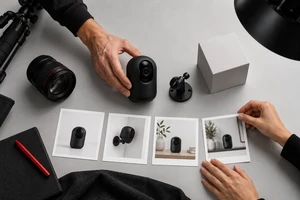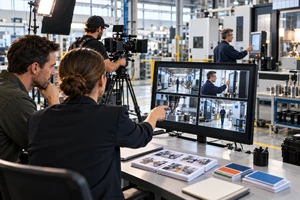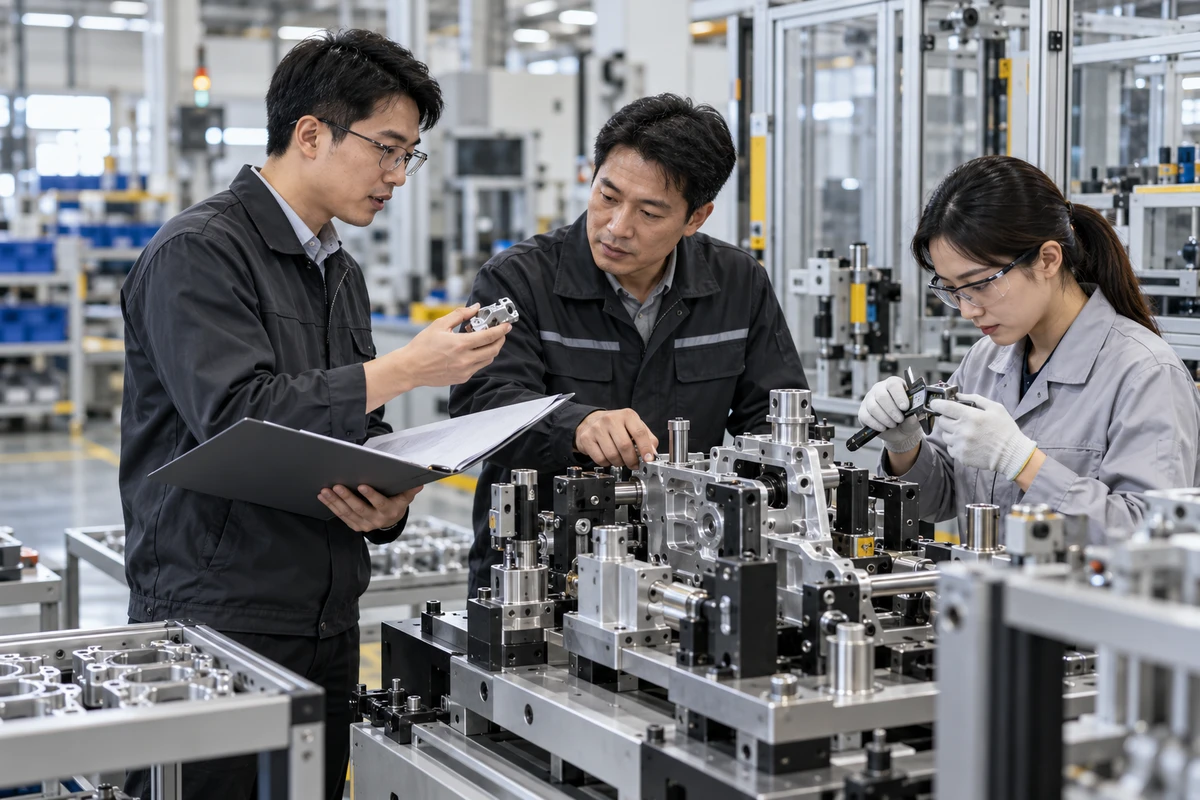
The easiest material to capture in a manufacturing corporate video is the facility: machines, operators, inspection stations, and finished goods. The harder story is how the company moves a change into a deliverable product.
Imagine a customer asking for a connector to be replaced with a material that can tolerate higher temperatures. Sales receives the request. Engineering assesses the impact. A prototype enters validation. Production updates its controlled work instructions. Quality approves the first article. Logistics then ships the correct batch. The R and D capability, production evidence, and delivery system a buyer wants to understand are all visible inside that path.
Our recommendation is specific: do not lead with claims such as “strong R and D,” “strict quality,” and “reliable delivery” over a montage of generic factory footage. Select one completed, approved engineering change that can be discussed without exposing a customer or a critical parameter. Use it as the narrative spine. The viewer does not need access to every confidential detail, but should be able to see how the issue entered the organization, who assessed it, where it was validated, how it was released, and how the correct batch reached delivery.
Choose a change that can be shown safely
The best change for the film is not necessarily the most important one. It should meet four tests: its cause and outcome are easy to explain; it crosses engineering, production, and quality; approved actions or records still exist to film; and the logic remains intact after customer names, part numbers, and exact thresholds are removed.
A demonstration story might follow a wear-prone component that was changed to a new material and then introduced into production. The film does not have to show the formula, supplier, or acceptance threshold. It does need to show how the previous issue was defined, which kind of validation reduced the risk, how the revised requirement entered production, how the first article was confirmed, and how later batches could be identified.
Open complaints, unreleased products, customer-specific processes, and changes that can only be explained by revealing sensitive drawings are poor candidates for a public film. They may be dramatic, but they will be cut apart during security review.
WIPO notes that reasonable measures for protecting trade secrets can include confidentiality agreements, document markings, access restrictions, monitoring, and employee awareness. For a production crew, that means confidentiality cannot be left to last-minute blurring. Before cameras roll, the company should decide who may enter each area, which screens can only be filmed as an action, which documents may only appear by their covers, and who controls the original footage. WIPO explains these measures in its trade secret FAQ.
Build a six-stage change trace before writing the voiceover
Instead of beginning with a polished script, place the selected change into six production cards. Each card should list the business question, approved visual, corresponding record type, responsible owner, prohibited detail, and condition that would make the material obsolete.
1. Input: where the change came from
The source might be a customer request, a regulatory change, a supply interruption, field feedback, or an internal improvement. The film does not need to expose an email thread. It can show a project owner confirming the issue in a controlled meeting, a sanitized workflow on a whiteboard, or an approved demonstration screen in the change system. The important point is that the change has a defined input and owner.
2. Assessment: how engineering turns the issue into a testable question
Avoid generic shots of engineers staring at monitors. Ask the engineering lead to explain what the change might affect, then place an approved action beside that statement: preparing comparison samples, setting up a fixture, reviewing a failure mode, or agreeing on a validation sequence. Exact values can remain confidential, but the test object, comparison logic, and type of acceptance condition should be clear.
3. Validation: where the result goes
A test instrument lighting up is not evidence by itself. Show the action and the destination of the result: sample identification, operator confirmation, record generation, isolation of a failure, and independent review. If real data cannot be shown, use clearly approved demonstration data or shallow focus. Do not fabricate a perfect dashboard and let the viewer assume it represents actual performance.
4. Transition: how the new requirement reaches production
Engineering completion does not mean manufacturing has changed. Capture the controlled update of a work instruction, tooling or material transition, operator briefing, segregation of old material, and the first article moving from the line to confirmation. This is the point where an R and D claim becomes production evidence.
5. Release: how quality decides the batch may move
The public overview of ISO 9001:2026 describes planned and controlled operations, performance monitoring, and improvement as parts of a quality management system. A video cannot use that fact to prove certification or conformity. It can honestly show selected control points: where sampling occurs, where a result is recorded, where nonconforming material goes, and who holds release authority.
6. Delivery: how the batch maps back to the promise
Do not let a truck leaving the gate stand in for a delivery system. Return the story to the batch. A sanitized packaging label can retain a legible structure. Warehouse staff can confirm the version. Shipping documentation can be visibly connected to the approved batch. The project owner can explain where the customer receives status updates. The story then moves from “we produced something” to “we delivered the intended revision.”
NIST’s September 2026 manufacturing traceability meta-framework describes structured, verifiable product history and the principle of selective disclosure, which allows necessary traceability data to be shared while proprietary information is protected. That is also a useful filmmaking rule: show continuity without exposing every underlying value. See NIST IR 8536.
Let interviews explain decisions and visuals prove actions
Each speaker should describe a decision they actually own. Sales explains how the requirement entered. Engineering explains the impact assessment. Production explains the transition conditions. Quality explains release responsibility. Logistics explains the batch handoff. A senior executive should not be asked to narrate every department’s process, and voiceover should not substitute for visible support.
Set a “nearby evidence” requirement for every interview conclusion. When a speaker mentions validation, show samples, test action, and record destination around that statement. When first-article approval is discussed, show the material transition, identification, and confirmation. When delivery reliability is discussed, show the schedule point, batch check, and handoff, not only an aerial warehouse shot.
This differs from ONCE’s article on factory video for remote supplier screening. Supplier screening asks whether a factory deserves a closer look. The engineering change trace asks what the organization does when requirements move.
Public, private, and controlled versions need different timelines
The closer the engineering change is to an actual transaction, the more the deliverables should be separated.
- The public version preserves roles, approved actions, and process order. It omits customer names, part numbers, thresholds, suppliers, interface details, and information that could reveal capacity.
- The private sales version may include approved sample comparisons, additional quality points, and more explanation from project owners. Its audience, use case, and validity period should be documented.
- The controlled review version may show more specific records, batches, or tests only when agreements and permissions allow it. Access, download, and forwarding rules should be explicit. It still does not replace an audit, contract specification, certification document, or original quality record.
Footage should inherit the same controls. Camera reports can record the area, shot number, sensitive element, and permitted use level. The edit project can preserve masking, replacement, and approval status. Captions, screen replacements, and voiceover should share a version number.
If AIGC is used to extend a factory exterior, invent machine motion, or alter an instrument result, the image may look more complete while weakening the evidence chain. Generative tools are safer for atmosphere that carries no factual burden, with disclosure handled according to the target market and platform.
Approve the chain, not just the shot list
During internal review, pause on any conclusion and ask three questions: Which visible action supports this statement? Which type of record supports the action? Who confirms that record, and when does it become obsolete? If the third answer returns to a slogan, the film is still presenting an image rather than a credible operating path.
A practical delivery package can include the main film, the six-stage change trace, a shot and permission register, separate public and private versions, a clean master without subtitles, interview transcripts, and handling notes for sensitive footage. When the same material is adapted for a website, trade show, or LinkedIn, current platform specifications should be checked again before release.
This structure is not right for every project. An anniversary, founder story, ceremonial opening, or film with one emotional viewing context may benefit from a continuous brand narrative. The change trace is most valuable for R and D-led manufacturers in long-cycle sales where buyers regularly ask about engineering response, quality control, and coordinated delivery.
The key judgment is simple: credibility and confidentiality are not opposites. Choose one engineering change that is safe to discuss, then connect actions, records, and owners all the way to delivery. Explore ONCE VISUAL’s industrial production approach or send one proposed change, available factory areas, and target audience through our corporate and industrial video solutions to schedule a factory video assessment.