A commercial can look like stop motion, miniature photography, or an intricate practical effect—and the first comment is still: “Was this made with AI?”
That question does not automatically mean the creative failed. It describes a new viewing condition. Generative tools have lowered the cost of producing polished images, but they have also raised the cost of verifying what is real: the product, the materials, the performance, and the judgment behind the final frame.
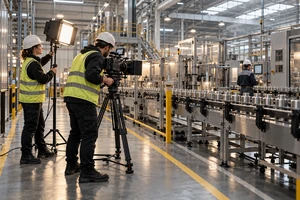
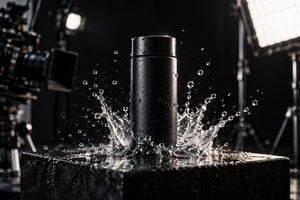
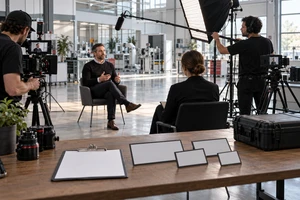
For the right project, behind-the-scenes footage is no longer a souvenir. It is a second layer of the campaign—one that explains how the image was made and helps a brand show which parts of the product and production can be trusted.
Apple released a second story about how the first one was made
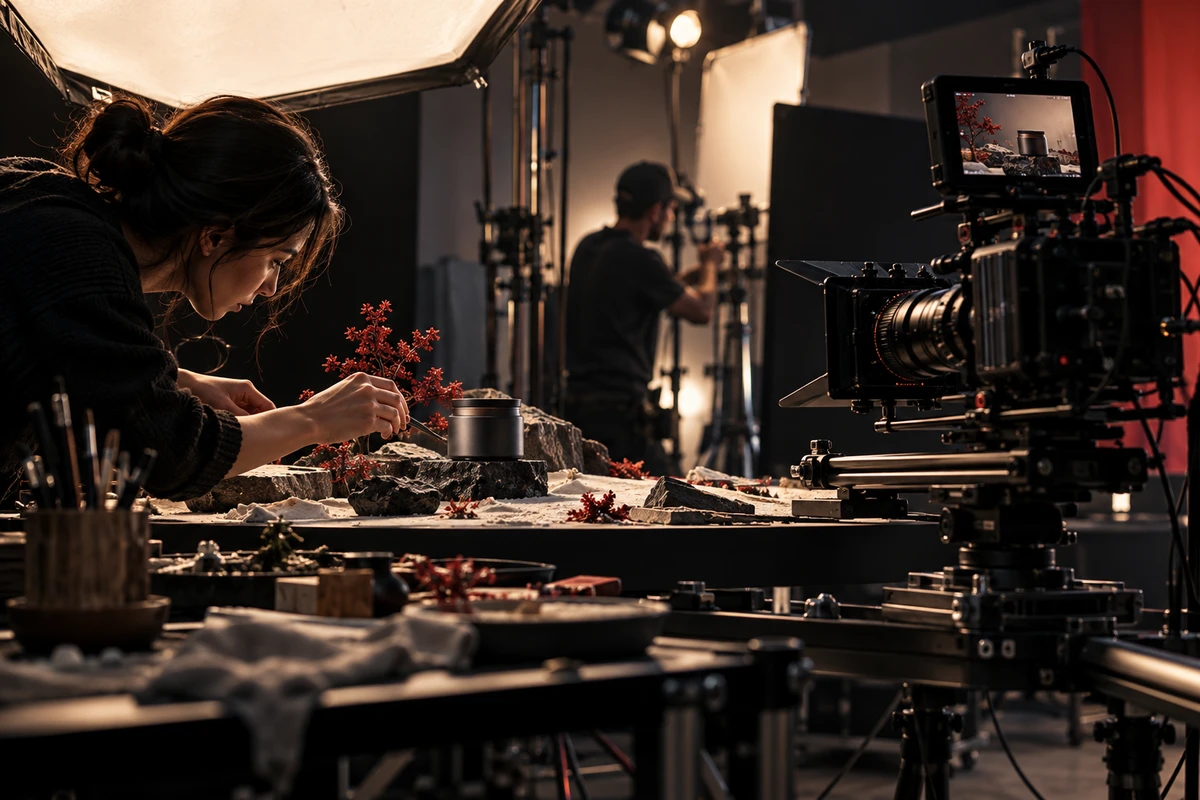
In late September 2026, Apple published a making-of film for its Apple Games campaign. The footage shows artists sculpting and painting physical props and sets, moving characters frame by frame, and combining the practical work with CGI. Creative Bloq’s report argued that, in an AI-saturated visual culture, the making-of can become nearly as important as the finished ad.
This case proves one limited but useful fact: Apple chose to turn its production method into public campaign content. It does not prove that every audience prefers handmade work, or that BTS automatically increases conversion.
It does expose a procurement problem. In the past, production complexity could remain hidden behind a seamless final cut. Today, if viewers cannot tell how an image was made, the value of the craft may be hidden too.
On October 1, 2026, Vogue described a related movement as “effort signaling”: brands make time, skill, and visible labor part of the value proposition. The report also documented a sharper problem. Even traditionally produced work can be suspected of being AI-generated when it looks unusually glossy or surreal, pushing brands to explain the method and release process footage afterward.
The opportunity is not to become anti-AI. It is to make the relationship between claim, method, and final image easier to understand.
Generation is cheaper; verification is more expensive
The IAB/Sonata Insights study published in January 2026 surveyed 505 US Gen Z and Millennial consumers who engaged with ads and 104 US advertising executives. Eighty-two percent of executives believed those consumers felt positive about AI-generated advertising; only 45% of consumers reported that they did. This is not a global consumer verdict, but it is a clear warning against treating internal enthusiasm as audience acceptance.
A smaller Adobe study conducted in 2024, including 147 consumers in the UK and US, found that 70% would think twice about continuing to purchase from a brand if AI-created images inaccurately represented a product or service. The material risk is not simply that AI was used. It is that the image makes a product promise the real product cannot keep.
Research on disclosure is also mixed. The IAB study suggests that, for many younger consumers, knowing AI was used is neutral or positive for purchase likelihood. A 2026 Journal of Business Research paper, drawing on eight studies across online, lab, and field settings, found that salient AI disclosure can reduce engagement in some contexts by making the communication seem lower-effort and the product lower-quality.
The practical conclusion is not “always label” or “never label.” A generic badge cannot answer the questions that matter:
- Which product facts came from a real sample or location?
- Which elements were created with CGI, generative tools, or compositing?
- Why was that method chosen, and did it alter information a buyer might rely on?
If a campaign includes generated content, disclosure roles should be defined before production. ONCE’s earlier guide, Should an AI Video Ad Be Labeled?, provides a separate framework for that decision.
The ONCE Proof-of-Making Capture Plan
Most BTS libraries do not fail because they contain too little footage. They fail because they contain endless shots of people looking busy, with no sequence that supports a brand claim.
Before the shoot, add one page to the production brief: a Proof-of-Making Capture Plan. It has five parts.
1. The claim worth proving
Write one sentence describing what the audience should be able to believe. For example:
- the material, scale, and finish come from a real product sample;
- a mechanism or movement works under real conditions;
- packaging, craft, or assembly is performed by people;
- a complex move comes from a physical rig, robot arm, or live performance;
- AI extends a background or creates variants without changing decision-critical product facts.
Without a claim, a making-of film easily becomes a camera-equipment showcase.
2. The shots that make the claim visible
Each claim needs a small proof sequence: a wide view of the set, hands or tools at work, the product and monitor in the same frame, the before-and-after state of a key action, and a match between process and final result.
Casual phone footage often misses the decisive seconds. Complex products, miniature builds, motion-control work, or performance-heavy scenes justify assigning a BTS operator who can move without entering the hero camera’s line or slowing the main unit.
3. What must stay private
Behind the scenes does not mean everything is public. Unreleased samples, client names, screens, script revisions, talent privacy, licensed music, third-party marks, and safety information need a capture-and-release rule before call time.
These limits affect framing, camera position, and the cost of cleanup. They should not be discovered after the edit is complete.
4. The hybrid-production explanation
For live-action, CGI, and AI hybrids, keep a simple visual-construction note: what was photographed, what was added digitally, which product details could not change, and who approved the final version.
This is not a technical essay. It prevents the team from answering future questions with memory and guesswork.
5. Versions people can actually use
Do not make a three-minute documentary the only deliverable. A practical package can include:
- 6–12 second process hooks for short-form openings;
- a 15–30 second proof-of-making cut for the second wave of a launch;
- horizontal and vertical stills and short clips;
- process-to-result pairs for the website, sales decks, retail meetings, and PR;
- an asset list with date, project, usage rights, and approval status.
When is BTS worth the additional budget?
Not every ecommerce video needs a polished making-of. Before asking for a price, assess three multipliers.
Value multiplier: Does the brand promise depend on real materials, engineering, craft, professional expertise, or production difficulty? The more it does, the more useful the process can be.
Skepticism multiplier: Could the final image be mistaken for AI, CGI, or an exaggerated demonstration? Is the product in a category—such as beauty, wellness, durability, safety, or premium goods—where visual claims require special care?
Reuse multiplier: Can the process assets support launch, ecommerce, a brand site, trade shows, retailer meetings, recruitment, distributor training, or sales enablement? More legitimate uses make the incremental spend easier to amortize.
Then calculate the real incremental cost:
extra capture time + BTS crew or device + version editing + rights cleanup + asset organization
The main economic advantage comes from shared production conditions: the location, lighting, product, and hero crew are already present. But if BTS requires extensive re-enactment, extra sets, or delays the main unit, it is no longer a low-cost add-on.
A minimum plan can be disciplined: capture five proof sequences, deliver one 20-second cut, and create a small stills set. High-craft, high-consideration, or higher-risk campaigns can justify a dedicated operator, interviews, and a fuller making-of story.
Do not turn authenticity into another performance
The value of BTS is not making the set look even more polished than the ad. If every frame shows cheering, handshakes, and a director staring at a monitor, the audience is still watching promotion.
Useful production content shows decisions: why a light moved, why the product had to be reset, why an action could not be hidden in post, which elements used digital tools, and which details had to return to the real sample.
AI does not make live action automatically superior, and handmade craft is not a luxury every brand should buy. It changes one important condition: finished images are becoming easier to imitate, while accountable judgment and a verifiable process remain scarce.
For the next product film or brand campaign, consider adding a Proof-of-Making Capture Plan beside the hero film, cutdowns, and aspect-ratio list. ONCE can help determine which moments are worth documenting, how to capture them without disrupting the main unit, and which versions can become useful brand assets rather than forgotten production files.