The moment a one-day product shoot usually loses control is not the set change itself. It is the moment after the change, when the crew realizes that the previous state can no longer be rebuilt.
The seal has been removed from the package. Liquid has been poured. Fingerprints have appeared on a mirror-finish sample. The talent has moved from clean, dry hair to a wet look. The afternoon window light has passed the planned angle. Every shot is still on the call sheet, but the conditions behind those shots are no longer the same. Returning to an earlier setup now means replacing a sample, rebuilding hair and makeup, relighting the set, or redressing the props.
Once a brand has decided to combine product photography, video, talent scenes, and landscape and portrait deliverables in one shoot day, the first task is not filling an hourly schedule. It is marking the irreversible state lines: what can be reset, what can only be approximated, and what must move in one direction.
Do not label every changeover as the same block of time
Two changes may both appear as “reset” on a call sheet while carrying very different risks.
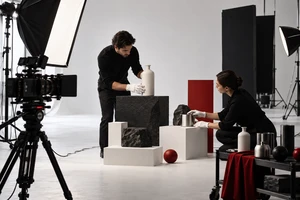
Repeatable states have clear marks and reference images. A pedestal returns to taped floor marks, a key light returns to a recorded height and angle, and props return to positions shown in an overhead photo. The reset still takes time, but the team has enough information to rebuild it with reasonable consistency.
Partly repeatable states can be restored in broad terms while small details continue to drift. A rolled sleeve, the wrist that carries a watch, a hair parting, the liquid level in a glass, screen brightness, or the distance between a reflector and a product all belong here. These shots are best completed within one styling or lighting block, not revisited throughout the day.
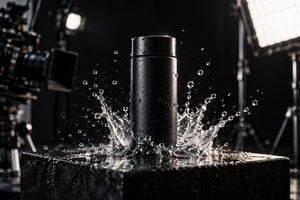
Irreversible states should be drawn as one-way transitions. Opening a sealed package, cutting food, pouring liquid, removing protective film, spraying a product, creating wear, moving from clean hair to a wet or effects look, or relying on a narrow natural-light window should never be hidden behind an ordinary shot number.
The test is straightforward: if returning to the previous state requires a fresh sample, a complete styling reset, a new lighting build, or another time window, it is not a normal changeover. It is a boundary in the production plan.
Give every setup a state card and a named reset owner
A useful state card does not need to be complicated. It needs to let another crew member rebuild the setup without relying on memory.
| Field | What the crew must be able to answer |
|---|---|
| Sample state | Is this the hero or backup unit? Can it be opened, wetted, powered, heated, or repeatedly operated? |
| Talent state | Which wardrobe and hair and makeup look applies? Where are accessories placed? Where does the action start and end? |
| Set and props | What are the exact positions of the pedestal, chair, glass, cables, and background modules? |
| Lighting state | What are the key direction, modifier, color temperature, defining reflection, and shadow to preserve? |
| Camera and format | What are the camera height, focal length, landscape frame, portrait frame, and still-photo requirement? |
| Reset record | Who takes the reference image, who approves the reset, and which action closes the path back? |
Reference images should be named by setup and state, not left in a phone album sorted only by time. Tethered capture can also help the team compare images. Capture One's current help page, Adding adjustments to captured images (updated March 16, 2025), explains that Next Capture Adjustments can apply settings from the last image or a selected primary image to later captures. That can keep monitoring consistent within one lighting state, but it also makes one operational point clear: when the light or sample state changes, the reference and adjustment source must change with it.
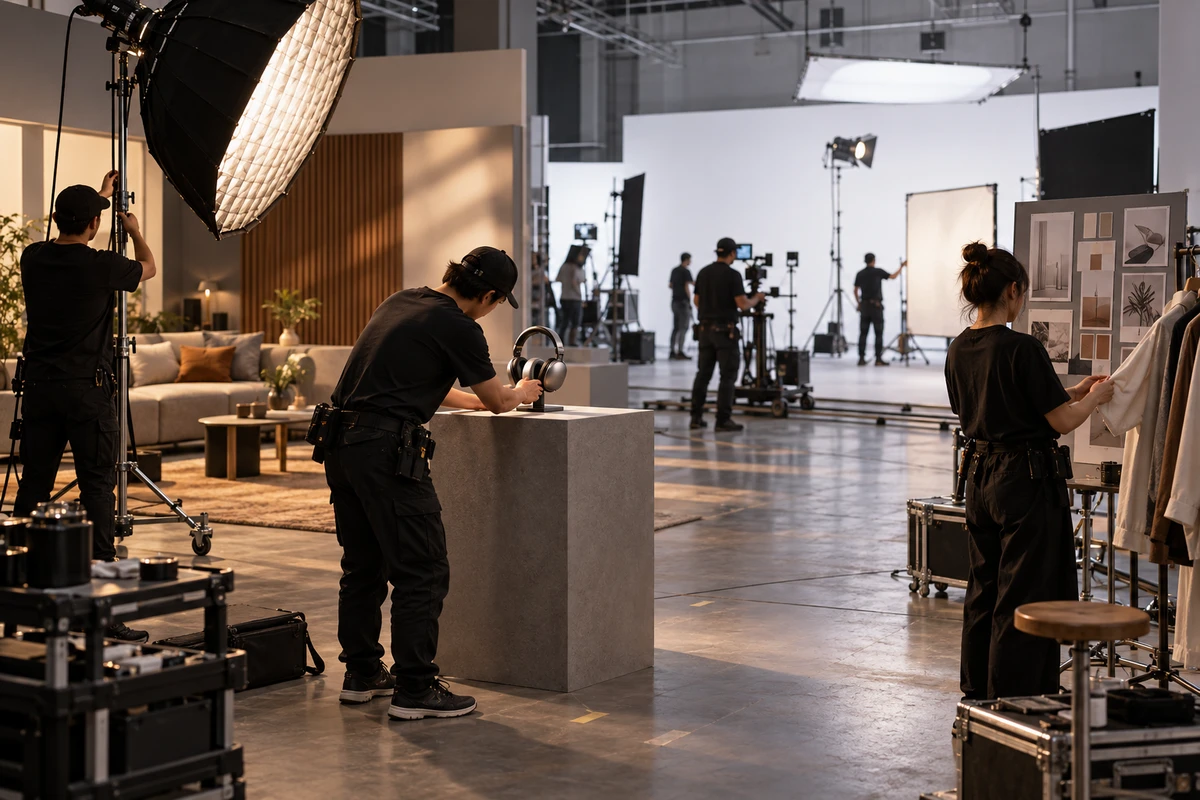
The card turns “reset” from a shared assumption into an assigned responsibility. Camera and lighting record the frame and light; art records prop positions; styling records the talent baseline; the product owner approves the sample's next state; and production protects the irreversible transitions. If the schedule changes, the team can immediately see which blocks may move and which may not.
Finish the clean state before crossing a one-way line
A reliable order is rarely “all video first” or “all stills first.” It follows the reversibility of the physical state.
1. Establish the pristine baseline while it still exists
When the product first comes out of its case, capture packaging, labels, ports, material details, standard angles, and any surface that must be free of fingerprints. Reflective, transparent, and pale products should also have an approved lighting and angle reference. Before the hero unit is operated, wetted, or disassembled, confirm that the backup is genuinely interchangeable rather than merely the same model.
2. Group shared lighting tasks without sacrificing the sample
Shots with the same key direction, surface, and related materials can run together to avoid rebuilding the entire lighting plan. But if an action will change the surface or internal state of the product, complete the required landscape, portrait, and still versions under that light before crossing the line.
ONCE's earlier article on planning one-day photo and video changeovers addresses whether the day is feasible in the first place. Once production is underway, the concern shifts: shared lighting must not hide the fact that the product can no longer return to its clean state.
3. Schedule talent by look and action chain, not by file name
Within one wardrobe and styling state, let the talent complete the full product action: pick up, operate, react, and put down. Then capture the medium view, hand detail, and still frame. Sleeve height, accessory position, holding hand, and action endpoint all belong on the state card. A director can move a close-up earlier without losing the physical reference for the surrounding shots.
4. Capture the hero action in three forms before leaving
Do not leave the most important product action as one landscape master. While the set, sample, and talent are all correct, confirm three separate needs:
- Does the landscape frame retain the person, product, and required negative space?
- Has the portrait frame been recomposed around the subject relationship rather than cropped from the center later?
- Does the still image need a separate frame before, during, or after the action?
These outputs may share one action, but they do not always share one camera position. ONCE's guide to modular product sets and portrait framing provides a useful extension on movable set elements and format-specific camera positions. Only after the three-format check and playback should the sample, styling, or set move to its next state.
Allow schedule changes only inside the same state zone
Shoot days change. Talent runs late, a prop has not arrived, a client approval pauses, or a lighting test takes longer than expected. A resilient call sheet does not prevent change; it defines the safe area in which change can happen.
Divide the day into state zones with entry and exit conditions:
- Zone A: intact samples, no talent, standard product assets;
- Zone B: resettable samples, one talent look, lifestyle actions;
- Zone C: opened packaging or operated products, functional demonstrations;
- Zone D: liquid, stains, wet styling, or another irreversible effect.
Shots can move within a zone. Crossing into the next zone requires production, the product owner, and the relevant department to agree. If the next block is not approved, use the time to complete safe shots in the current zone instead of opening, restyling, or creating an effect too early. The schedule remains flexible without letting one quick decision turn the remaining shots into a reshoot.
When a single day is the wrong constraint
A state card cannot make every condition reversible. Add backup samples, split the shoot, or reduce the day's scope when:
- there is only one hero sample and the plan includes opening, liquid, wear, or disassembly;
- several hair and makeup looks cannot be restored quickly but shots must match;
- different products require completely different precision reflections or lighting effects;
- a critical setup depends on a short natural-light window, weather, or a location move;
- landscape, portrait, and still executions require substantially different actions;
- the brand requires remote approval shot by shot but has no response window or authorized on-set decision maker.
The purpose of a one-day multi-scene shoot is not to prove how fast a crew can work. It is to secure complete assets while the physical states remain controlled. Without backup samples, clear approvals, and reset owners, adding another scene simply moves the risk into post-production.
Approve five answers before approving the call sheet
The final plan should answer five questions: Which sample may be consumed? Which talent look cannot be reversed? Which lighting block has a fixed time window? Which hero actions require landscape, portrait, and still coverage before leaving the set? Who has authority to approve the move across the next state line?
If those answers are still open, do not keep compressing the hourly schedule. Bring the product list, sample count, talent looks, required formats, and target date to U-STUDIO Shenzhen for a studio visit or availability check. ONCE can map the irreversible states, reset ownership, and three-format hero actions before confirming the realistic scope of the day.