When an overseas buyer first evaluates a Chinese factory remotely, the goal is rarely to be impressed by scale alone. The buyer is trying to answer more practical questions in limited time: Does this company actually make this type of product? Is the process stable? Who owns the critical quality checks? If something goes wrong, can the team detect, record and resolve it?
That changes the job of factory video production. Aerial views, fast-moving machinery, executive handshakes and ambitious brand language can establish presence, but they do not give a buyer enough information for supplier screening. A useful factory video should be organized as a clear, traceable evidence path that remains careful about customer confidentiality and proprietary information.
A corporate film says who you are. A screening video shows how you deliver.
These two purposes can coexist, but they require a different order of information. A corporate film may begin with vision, scale and history. A supplier-screening video should begin with a specific product or order moving through the facility. Where do materials enter? Which stages materially affect the result? Where are inspections performed? How are nonconforming items separated? How is finished product packed and released?
The more clearly this path is shown, the easier it becomes for a buyer to ask useful follow-up questions. ISO's published quality management principles include the process approach and evidence-based decision making. That does not mean a video can prove compliance with a standard. It does suggest a sound production principle: credibility comes from observable processes and specific control points, not adjectives.
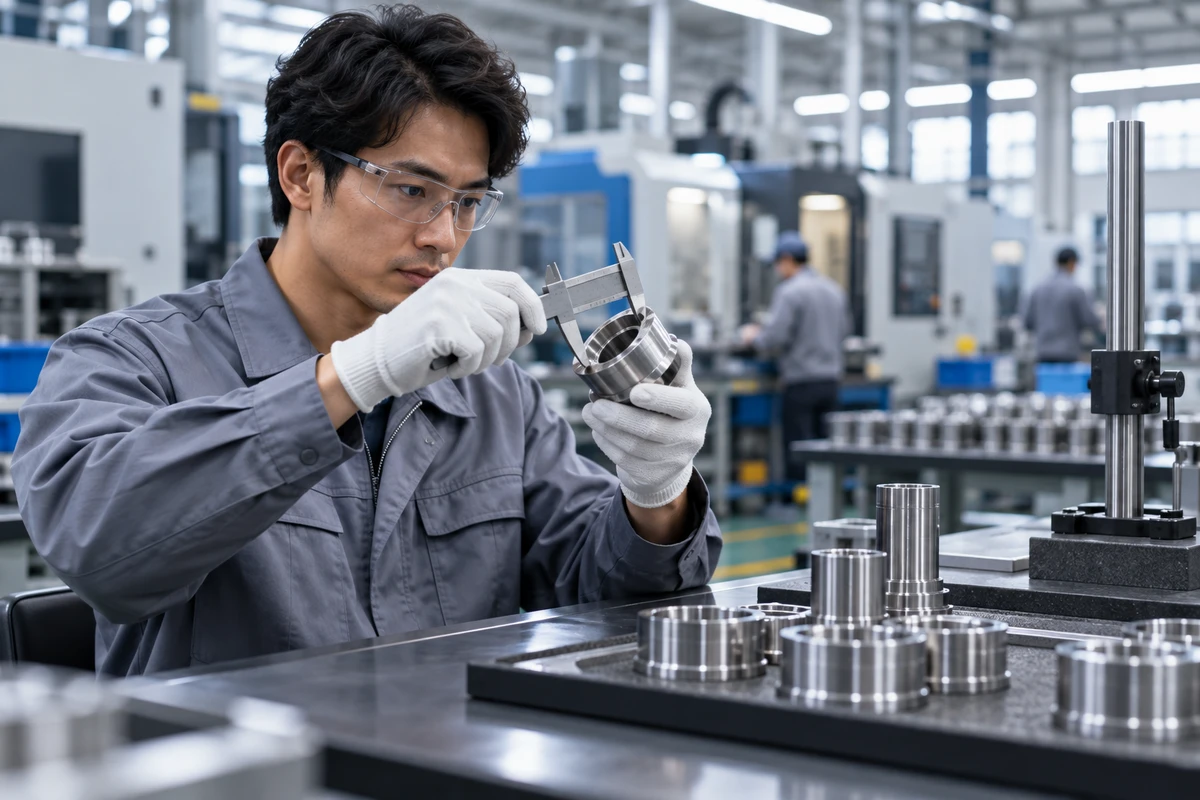
For example, “strict quality control” should not be represented only by an employee standing beside a measurement machine. A more informative sequence shows how a sample is identified, how a measurement is taken, where the result goes, what happens to a failed item and who is responsible for release. The factory must approve what may be shown, but avoiding every concrete detail leaves the audience with little more than an environmental tour.
Four kinds of evidence a buyer can actually read on screen
1. Continuity of identity. The entrance, production area, product or work in progress, packaging and dispatch should form a believable relationship. Do not mix unidentified stock footage into a real facility. Do not edit different places or dates into one apparently continuous process without making that distinction clear.
2. Process visibility. A video does not need to introduce every machine. It should select the steps that materially shape the outcome. For an injection-molded component, those may include tooling, molding, trimming and dimensional inspection. For an electronic product, they may include assembly, functional testing, burn-in and packing. The sequence has to follow the product; one generic factory template cannot fit every manufacturer.
3. Control points. Before filming, ask the quality team to identify three to five stages that matter most to delivery, then determine which can be shown. The camera should provide scale, a readable action and a visible destination for the result. A blinking machine that hides both the test object and outcome may look technical, but it adds little purchasing information.
4. Organizational response. Buyers are evaluating people as well as equipment. A short contribution from an engineering, quality or project lead is often more useful than a lineup repeating a corporate slogan. Ask that person to explain one responsibility, one handoff and one route for escalating a problem.
Build a no-film list before the shot list
A factory is not a neutral studio location. Sales, operations, quality, information security and management should agree in advance on which areas, documents and people cannot be recorded. Common risks include customer names, order labels, supplier information, drawings, machine interfaces, access-control details, unreleased products, employee badges and identifiable personal information.
A workable location plan separates the facility into three groups:
- Approved to film: cleared public areas, general processes, demonstration samples and materials without customer identifiers.
- Conditional filming: areas that require a replacement sample, covered label, disabled screen, restricted angle or shallow depth of field.
- Do not film: customer confidential information, sensitive drawings, core formulas, security details or personal data without authorization.
This list should enter the production documents during recce and scheduling, not when the camera is already in position. Repeated interruptions on set cost time and often break the logic of the final process sequence.
Video supports due diligence. It does not replace it.
Even a carefully produced factory film is selected and edited. It can help buyers understand a process, shorten an introductory call and make physical actions easier to grasp. It cannot replace corporate records, certificates, sample testing, audit reports, contractual specifications, traceability data or an on-site visit when one is required.
The OECD Due Diligence Guidance for Responsible Business Conduct describes due diligence as an ongoing process of identifying, assessing, addressing and communicating impacts. The U.S. International Trade Administration also advises companies to conduct continuing checks when evaluating business partners. In that context, a factory video is not a substitute for due diligence; it is a tool that helps the next stage reach the important questions faster.
A useful ending therefore tells buyers what supporting materials are available, what requires a nondisclosure agreement and which claims still need documentary or physical verification. It should never imply that watching the video is enough to make a sourcing decision.
Version control matters for the same reason. A public website edit should be conservative. A privately shared sales version may include more process detail after approval. A project-specific controlled version may require named recipients, an expiry date and restrictions on forwarding. The closer the content moves toward a transaction, the less permission management can depend on a verbal reminder.
Put four departments on the same evidence list
“Make it feel international” is not an actionable brief. A stronger brief asks four roles to answer specific questions:
- Sales: What do prospects question most often in the first conversation?
- Operations or production: How does one product move through the factory, and which stages are most often misunderstood?
- Quality: Which control points may be filmed, and which results must be established by documents rather than pictures?
- Management or information security: Which areas, identifiers, data and people must remain private?
Convert the answers into a working table of question, supporting evidence, proposed shot, permission status and follow-up material. Then build the route, interviews and filming schedule. This does not turn a commercial film into an audit recording. It focuses the creative work: which images should carry emotion, which actions must be clearly readable and which information belongs in the sales package instead.
If the material will later be adapted for LinkedIn, trade shows, the website or sales email, shorter edits can be created from the same approved footage. Those public edits should not be presented as complete due-diligence material. Masters, captions, licenses and usage instructions also need a defined delivery package; see our corporate video final-delivery checklist for a practical framework.
Credibility comes from restraint
A credible factory video does not try to prove everything. It selects a small number of capabilities the camera can honestly support, keeps the process understandable, identifies accountable people and makes clear which conclusions still require documents, samples or an audit.
If you are preparing a factory or corporate video for overseas buyers, begin with the product flow, key quality controls and the no-film list before discussing aerial shots or executive interviews. Explore ONCE commercial video production solutions and share your facility, product and target-market requirements with the team to build an evidence-led filming plan that can be approved, produced and delivered responsibly.