The immediate response is not to reshoot every product film. It is to change what the next shoot leaves behind. A video can create interest, but a conversational layer invites the viewer to ask about compatibility, materials, setup, delivery and support. The brand then needs more than persuasive footage; it needs current product data and evidence that can support a reliable answer.
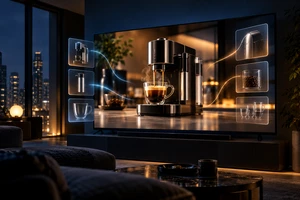
On September 24, 2026, Google introduced Business Agent for YouTube Ads in its Demand Gen update. Google says viewers can use conversational AI alongside video ads with product feeds and ask about products or brands without leaving the viewing context. The announcement points advertisers to a sign-up rather than describing universal availability. Separately, Google Merchant Center documentation says Business Agent analyses Merchant Center information and additional business data, including the merchant’s website. Customisation currently requires an eligible US-based ecommerce store, a verified Merchant Center account, at least 50 approved free listings and a claimed brand profile.
Those are confirmed platform facts, not proof that every video ad is becoming conversational. ONCE’s inference is narrower: if this interface expands, the useful unit of production will be a video plus an answer-ready evidence pack. Brands can test that operating model now without betting their entire content plan on one product announcement.
The answer gap usually sits inside the conditions
Most product scripts are good at compressing a promise: lighter, faster, easier to install, better for travel. They often omit the conditions that make the promise true. A demo may show a device connecting to a phone without naming supported operating-system versions. A water-resistance scene may look convincing while leaving the model, depth and exposure time undocumented.
Once the viewer can ask a follow-up question, those omissions become operational. The agent may find an answer in the product feed or website, encounter conflicting information, or find no defensible source at all. The production question therefore changes from “Does the film look credible?” to “Can the brand identify the SKU, source, test condition, owner and review date behind this claim?”
The ONCE three-layer answer pack
1. The fact layer
Capture fields that can be checked directly: model, dimensions, materials, colours, compatibility, box contents, installation requirements, warranty and regional differences. Use the same vocabulary across Merchant Center, the product page and customer support. A pre-production field review often reveals contradictions before they become customer-facing answers.
2. The proof layer
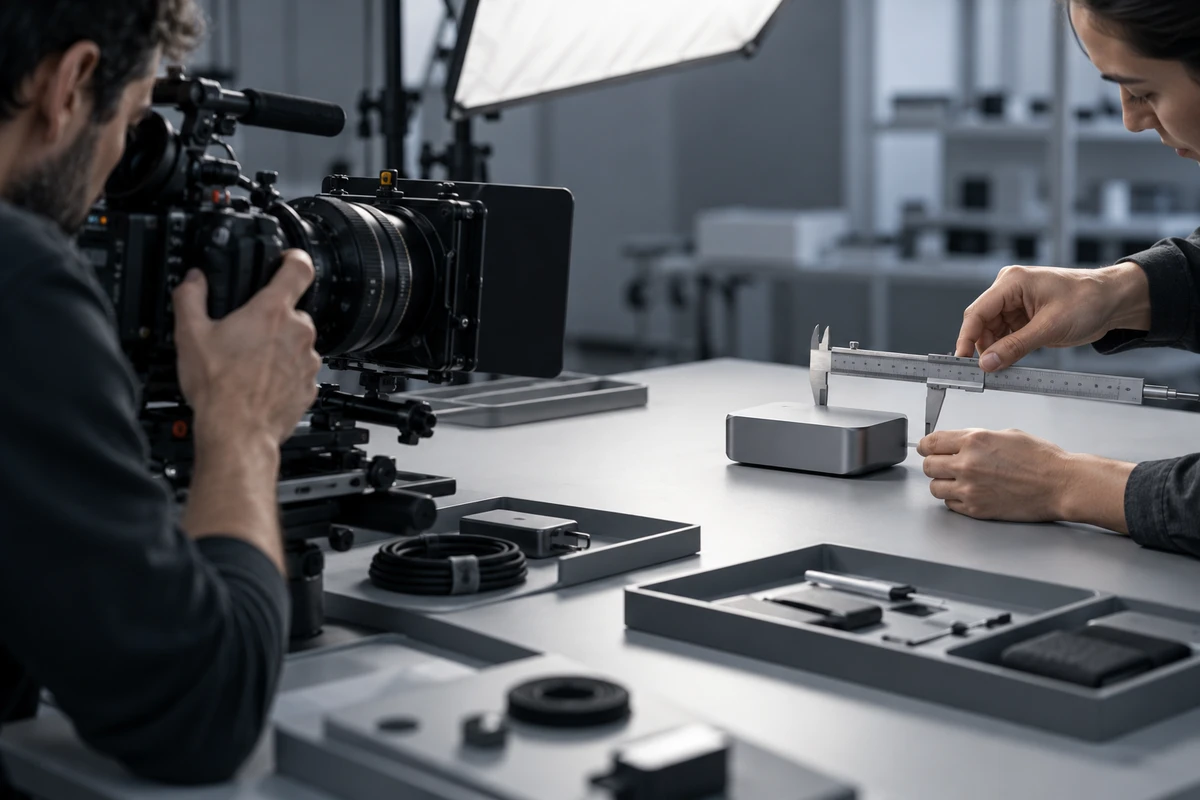
Connect every important claim to a primary asset: an uninterrupted demonstration, documented test conditions, a close-up, a manual reference or a specification approved by the product owner. Deliver searchable source footage and test notes, not only the finished edit. A charging-speed claim, for example, should retain the device model, starting charge, adapter rating, environment and full timing record behind the montage.
3. The exception layer
Record the cases that should not receive a simple yes: region-specific versions, accessories sold separately, operating-system limits, laboratory conditions and post-purchase issues that require a human handoff. Exceptions do not weaken the advertisement. They keep a broad creative claim from escaping the product conditions that make it accurate.
The minimum viable pack can be a shared table rather than a complex knowledge base. Give each question an approved answer, source, applicable SKU, supporting footage, exceptions, owner and review date. That is already more durable than information scattered across scripts, chats and call notes.
Run a 12-question stress test before launch
Instead of first asking whether AI can sound like the brand, ask whether the brand can supply reliable answers. Choose one priority SKU and have product, marketing, support and production simulate twelve questions—three in each group:
- Fit: Will it work with this device, space, size or operating environment?
- Use: What is needed for first setup, how long does it take and what happens if it fails?
- Performance: Under what conditions does the key result hold, and how does it differ from the previous model?
- After purchase: What is in the box, what are the warranty and return conditions, and where does an exception go?
Score each answer green when the field and primary evidence agree, amber when a person knows the answer but the feed, page or footage is outdated, and red when the answer depends on a guess or teams disagree. Not every red item needs new footage. The resolution may be to update data, narrow the claim or define a support handoff.
Rewrite the production brief around four deliverables
- Hero and cut-down films that create the buying reason and align with the promoted SKU.
- Searchable evidence footage labelled by function, condition and model, including clean versions without baked-in text.
- An answer map connecting common questions to specifications, visual proof and exceptions.
- A change register showing which answers expire when inventory, software, region or policy changes.
The commercial model should also move beyond a single finished-film fee. Separate creative and hero production, evidence capture, structured packaging and ongoing maintenance. There is no honest universal benchmark: regulated claims, test equipment, SKU count and update frequency vary widely. The useful comparison is how much verifiable, reusable material each supplier leaves behind for the same budget.
Teams already building high-volume creative can use ONCE’s creative-pool acceptance model to separate output volume from testable variables. Business Agent adds another question: does each selling-point variable have a product fact and an answer source behind it?
Who should prepare now—and who can wait
Start now if the product is high-consideration, difficult to install, compatibility-sensitive or surrounded by repeated pre-sale questions. Consumer electronics, connected home equipment, professional tools and configurable accessories are good candidates because one precise answer may remove more friction than another generic cut-down.
For a low-risk, low-price, single-spec impulse product, the full system may be excessive. Keep a minimal fact sheet and the five most common questions. Do not build a large knowledge operation for complexity that does not exist. Participation in the Google test should depend on US eligibility, feed completeness, website quality and question density—not the presence of “AI” in the announcement.
Control the first experiment with one SKU
Select one valuable SKU with frequent questions and reasonably clean source information. Run the 12-question test, capture one round of missing evidence, reconcile the product page and feed, then consider the platform sign-up or an ad experiment. Even if YouTube changes the interface, the structured facts, traceable footage and aligned internal language remain useful across sales, support and other commerce channels.
For production partners, this creates a credible service extension. The job is not to promise what an agent will say. It is to connect product truth, visual proof and distribution inputs so the brand is easier to answer correctly.
Sources
- Google, Turn discovery into action with September’s Demand Gen Drop, September 24, 2026.
- Google Merchant Center Help, Get started with Business Agent, accessed October 21, 2026.