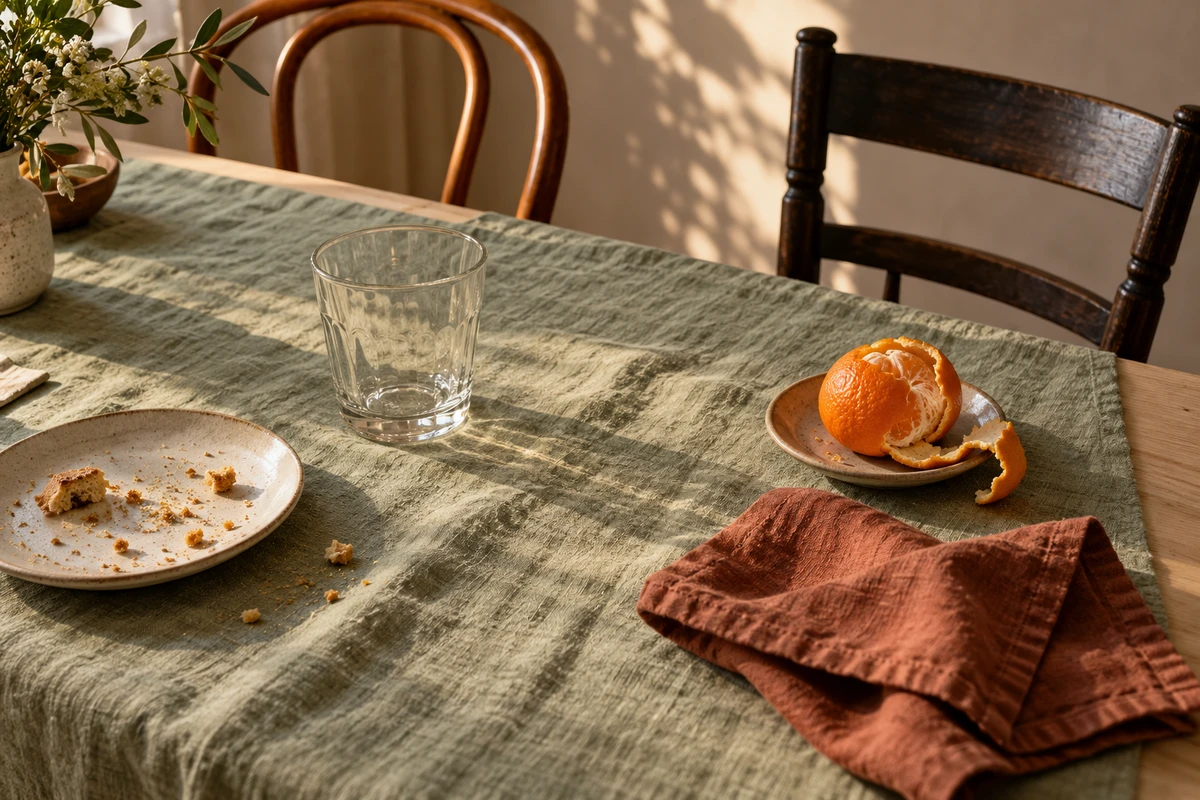
A table has been cleared. Then time begins to move backward: glasses return, breadcrumbs reappear, and the empty chairs have people in them again. Reverse storytelling in advertising can make this sequence beautiful. It can also give it quite different meanings. Are we celebrating the restoration of order, or inviting viewers to notice the gathering that has just ended?
Much depends on where the reversal stops. Rewind all the way to an empty surface, and the film may gradually erase every trace of use. Stop at someone passing bread, and those traces acquire a source. Viewers might remember a table becoming clean again. They might remember the evening that a tablecloth helped make room for.
A story can run backward while people move normally
Two approaches are useful to distinguish. Reversing footage plays a recorded action backward: a glass returns from the table to a hand. Reverse chronology changes the order of scenes: the departure comes before the meal, which comes before the preparations. People within each scene can still speak and move normally. The approaches can work together, but they do different jobs.
Adobe's Speed/Duration documentation, updated January 7, 2026, includes the Reverse speed option for playing a clip backward. That controls playback direction. The script and edit still have to establish why we are going back and what we learn by doing so.
If the main question is where an object came from, scenes in reverse order may be sufficient. If the idea asks us to witness an impossible restoration, a reversed action may be more useful. Reversing the entire film is one option. Backward walking, mouth movements, and the motion of clothes become part of the performance; they cannot simply be assumed to add charm.
Nor does the production have to begin with a finished sequence and a single command. Framestore's Guinness project archive lists noitulovE as a 2005 work. Its account describes live-action elements including a bar, performers against green screen, and Icelandic scenery, alongside stock footage, CG creatures, plants, rocks, and digital stills. This article uses the production team's written account, without claiming a shot-by-shot viewing or adopting figures for campaign performance or production cost.
The practical implication is specific: a sense of changing time can be built from different materials. For a new reverse-time film, consider separately which actions benefit from genuinely reversed footage and which passages call for new filming or compositing. One treatment need not do every job.
Go back to a moment worth keeping
Consider an original, fictional tablecloth commercial. This is neither an ONCE client project nor a demonstration of product performance. It opens on a cleared table with the cloth still in place. A brief reversal of the clearing action returns used dishes and breadcrumbs. The edit then enters an earlier scene of the meal, with people moving normally, and we discover how those traces were made.
The tablecloth acquires a different role. At first it looks like a neatly arranged display item. Later we see it sharing space with people: someone draws a plate closer; someone moves a chair to make room. The film concerns where life happens. Its reversal cannot also serve as proof of automatic cleaning, stain resistance, or durability. Any actual material or functional claims still need accurate product information.
Continuing backward to the moment before the cloth was laid might make the chronology more complete without making the story richer. For this idea, the moment worth reaching could be the host making space for a late friend. We discover someone absent from the opening image, and the gesture that welcomes them.
That suggests deciding where the reversal ends before designing its technique. What should viewers understand by the final scene? How an object was used? Whose choice produced the result? If the only answer is that the footage can play backward, a longer rewind will not necessarily create a story.
Sound can stay in the present
This concept does not require every sound to run backward. Let the quiet room establish itself at the start. Use designed sound as the dishes return, then allow a complete invitation to be heard when the film enters the meal with normal movement. The relationship between sound and time is a creative choice. Every reversed action need not announce itself with an unusual effect.
Another possibility is a friend's present-day recollection guiding us into the earlier images. The film should make clear that this is a later account. A newly recorded voice should not be presented as original sound from the dinner. Without real participants and authorized material, use an explicitly fictional performance rather than inventing a testimonial.
Leave an ending for time moving forward
After the reversal, the film can move forward again. In the fictional dinner scene, the host draws an extra chair to the table and the late friend sits down. We have recovered a gathering that appeared to be over; now we let it continue. The cloth remains in use instead of returning to a permanently untouched display.
This is not a template for every brand. A film may be about withdrawal, regret, or the impossibility of starting again. Ending at an unchanged beginning can have force. What matters is the final action's relationship to the journey back: does it complete a new choice, or merely provide a convenient product frame?
Changing sequence can also change how responsibility is understood. If a person's decision caused an event in the actual story, viewers should still have an opportunity to understand that decision. Do not leave only a miraculous result. When actual product use is involved, distinguish narrative fantasy from functional explanation. A brief account of the treatment can suffice, but viewers should not have to guess which product claims are real.
Find the instant when understanding changes
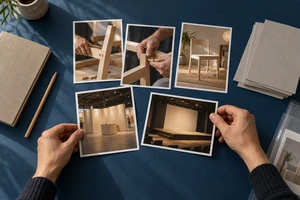
Before production, arrange a few storyboard frames or rough shots in both chronological and reverse order. Ask whether a later scene changes the meaning of an earlier one. In the tablecloth idea, if the meal leaves viewers remembering only glasses flying backward, reconsider the human action and how long we stay with it before adding more reversed objects.
A short test can also help choose the method. Is the reversed action readable? Is the transition to normal movement jarring? Does the cloth retain a coherent state of use across shots? These are proposed creative comparisons, not a claim that filming, consumer research, or performance testing has taken place.
If you are developing a reverse-time commercial, bring the product and the moment you most want to revisit to ONCE's brand and commercial production solutions. What should people value differently once they have returned to the beginning?
Sources checked October 19, 2026. The Framestore archive does not display an article publication date; this article uses its section on the 2005 production. Adobe's documentation update is dated above. The tablecloth scenario and original AI concept cover are fictional illustrations.