A multi-director brand film series need not standardize every shot, grade and piece of music. Its more valuable common ground may be the promise behind each encounter: what the films care about, why the brand belongs there, and what a different author can still contribute.
If every expressive decision is already fixed, a new director may become another executor. If only the product and opening ident are shared, several good films do not automatically form a series. Development needs to find something worth asking different filmmakers to interpret.
Eight filmmakers can share a recognizable premise
MoMA’s historical The Hire event record, dated June 8, 2003, describes eight filmmakers directing shorts featuring BMW cars and Clive Owen, who consistently plays the driver. Multiple authors and a common character premise can coexist. The record does not provide a development formula for every brand.
BMW PressClub’s July 7, 2025 anniversary retrospective, The Hire: BMW’s Revolutionary Brand Campaign, dates the online launch of Ambush to April 26, 2001 and identifies work by directors including John Frankenheimer, Ang Lee and Wong Kar-Wai. Only public text was read for this article. The films were not individually viewed; no shot-by-shot style analysis or independent evidence of advertising or sales effects is claimed.
For a brand team today, the useful question is not how to assemble an equivalent list of famous names. It is what should remain recognizable when the author changes. A person, a recurring task, a place or a repeatedly explored relationship might provide that starting point. The choice depends on what the brand genuinely wants to keep discussing.
A common premise need not impose a continuous plot. A recurring character can take on independent tasks; different people can address the same question. Numbering films as episodes should follow a reason for making them together, not substitute for one.
Give authors a question they can make decisions about
Show a better life or make the brand younger communicates an ambition, but leaves nearly any pleasant image eligible. That makes it difficult to explain why one proposal belongs and another does not.
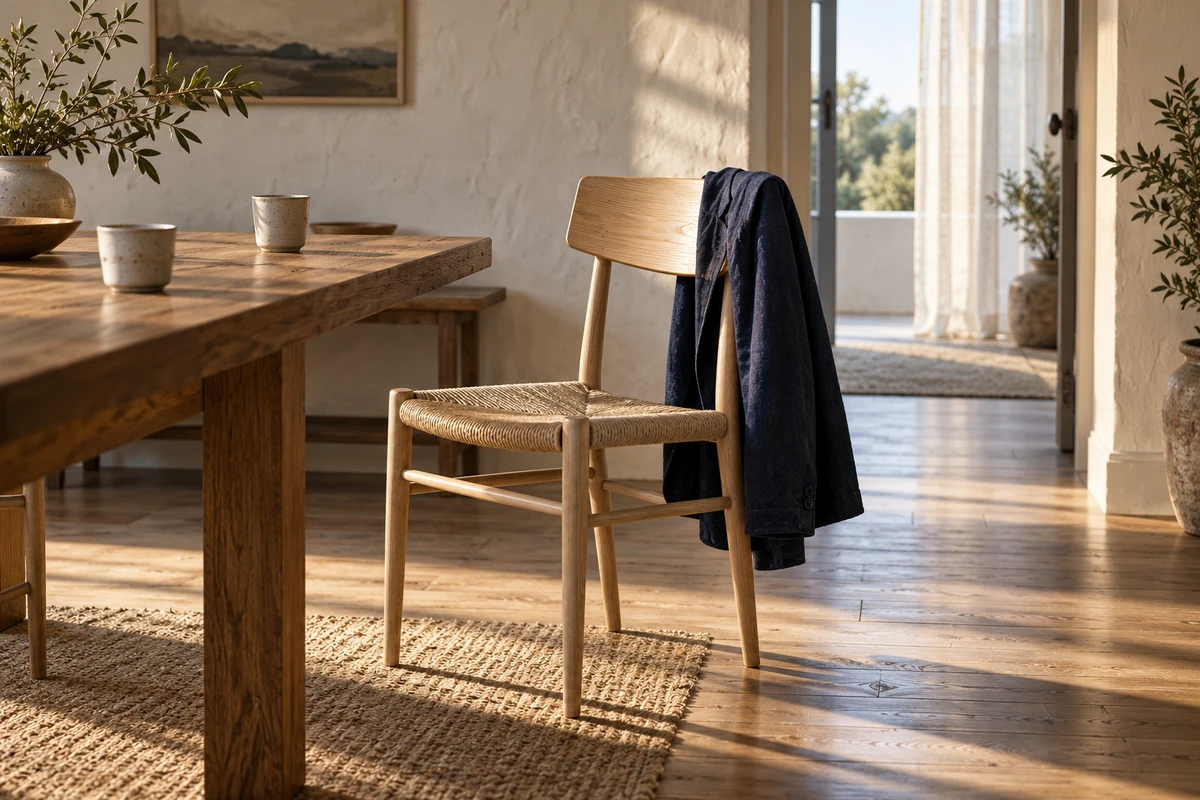
Consider an original, entirely fictional home-brand proposal: the same chair enters different passages of life, with each director asking how people make room for themselves or someone else. This is not an ONCE client project or an executed series. Actual construction and use would need confirmation in a real production; the story cannot invent product capabilities.
One author might develop a dinner comedy. A host keeps rearranging seats for a friend who has not arrived, gradually leaving themselves in the least convenient position. Another might choose quiet solitude: someone finally clears accumulated belongings from a chair, sits down and allows themselves time without being hurried.
The difference is not merely pacing or color temperature. The first asks how to accommodate yourself while caring for others. The second asks whether you deserve a place too. Both can answer the same commission because making room becomes an action and the chair participates, rather than appearing only in a closing product shot.
Neither answer must be more uplifting or more sophisticated. A useful shared question provides something substantial against which to discuss proposals. It does not write the same conclusion for every filmmaker.
Freedom should change something meaningful
If a second director can replace the cast, setting and soundtrack but must reproduce the first film’s turn and shot order, multiple authorship may amount to different packaging.
Open choices can include viewpoint, an interpretation of a relationship, narrative genre and the ending’s aftertaste. The chair might hold an expectation or mark the point where someone stops working. Camera proximity and room for sound can develop with each expression instead of being fully prescribed before proposals exist.
That does not remove the brand’s editorial judgment. A beautiful tour of a room without any human relationship to making room may no longer answer this commission. Perhaps it proposes a better direction. State that change openly rather than asking for departure while pretending the question has never changed.
Product facts should remain consistent. A film cannot invent dimensions, load capacity or an operating method for a dramatic action and then call the change authorial expression. Viewers should have a chance to distinguish real use from deliberate fantasy. Creative freedom is not a source for functional claims.
Different generated styles are not necessarily different viewpoints
If AI concept images are used, the two narratives can be explored through different visual directions. Recasting one scene as film-like, animated or futuristic does not automatically produce another author’s answer. When the character makes the same choice and encounters the same turn, the variation may remain mostly on the surface.
Compare what the proposals say before how they picture it. Concept images can support discussion without establishing that performance, sample handling or a complete film will work. No claim about a model’s consistency or production readiness is made here.
An editor need not turn every director into the same person
Someone needs to consider both the individual film and the collection. That editorial role should explain whether each piece is worth watching independently, what understanding it adds, and whether two proposals are answering the same thing twice.
In the fictional chair series, two stories might both begin with someone busy accommodating others. If both simply end with learning to keep a seat for themselves, the collection may receive near-identical answers. Discussing an unanswered part during development is more useful than relying on editing after production to manufacture a distinction.
This should not reward whichever proposal most resembles the first film. The first establishes one workable expression, not necessarily a storyboard template for every successor. Equally, different authors are not a reason to dismiss unclear character purposes or an indistinct product role as matters of style.
Developing a series includes choosing what not to make next
Multiple directors need not mean many simultaneous productions. Comparing two written proposals can help assess whether the shared question is specific enough and still open to different answers. This is a suggested method, not a test performed for this article. If both proposals can only become the same story, the question may be too narrow. If comparison is impossible, it may remain too vague.
A brand may need several independent films with different purposes rather than a series. An explanation, documentary portrait and event record can each be valuable without being forced into one creative rule simply to complete a programming grid.
What deserves long-term attention is a question that can still yield new understanding, not just a finished opening ident. Different directors matter when viewers return to an answer that belongs here and that they have not encountered before.
For a brand film series, bring a question worth pursuing, confirmed product facts and two unfinished story directions to a discussion with ONCE about series development and brand films. Explore whether the shared commission supports different answers before deciding how to produce the collection.
Sources consulted October 19, 2026. This original development analysis uses historical public text. No films in the cited series were viewed, no multi-director development exercise was conducted and no audience test was performed. The chair proposals and original AI cover are independent fictional concepts. The Chinese version identifies overseas sources by organization, title and date without claiming verified access from mainland China.