Before asking a creator to rebuild a successful room-styling post as a product advertisement, an overseas marketing team should ask what the original is missing. If the setting, product and explanation already fit the campaign, distribution may be the next job. If the item has changed at the factory, a polished existing post may be the wrong starting point.
Pinterest's content-promotion test makes that distinction commercially important. It creates a reason to assess existing creator work before commissioning more—not a reason to treat every attractive Pin as an editable asset belonging to the brand.
The test has a relationship requirement
Checked on October 19, 2026, Pinterest Help's Creator Commerce Hub describes a test for eligible brands. Promotion is limited to brands with an existing creator relationship, such as an affiliate or creator program the creator has joined. Creators receive an email when a brand promotes a Pin; opting out does not affect campaigns already running. The page provides no publication date.
Those details do not establish access for your account, a universal creator fee, or permission to download and remake the work. Nor should a team infer a per-Pin approval workflow that the page does not document. Net Influencer's October 9 report, Pinterest Lets Brands Promote Creator Content From Existing Partners, also stresses the existing relationship. Broader headlines are not a procurement specification.
Use ONCE's keep-the-post decision
This is a proposed commissioning method, not a Pinterest feature or a completed ONCE experiment. After confirming eligibility and the relevant partnership arrangements, view the whole post and list the changes the campaign actually needs.
| What the campaign needs | Appropriate next assignment | Do not silently include |
|---|---|---|
| The same product and context, with the existing story intact | Coordinate promotion and review of the original, once conditions are confirmed | Source files, recutting or use on another platform |
| A different product, language, claim or narrative context | Commission a defined new version and confirm the material it may use | Changes assumed to be covered by the existing relationship |
| Unclear eligibility, product match or partnership conditions | Resolve those questions before promotion or copying | A new shoot used as a substitute for resolving the relationship |
Keeping the post is a creative decision as well as a production decision. A creator's demonstration may work because the viewer understands the room, the person's intention and the sequence of choices. Removing that context to isolate a product close-up can change the message. Organic engagement is not evidence that the resulting ad will produce incremental sales.
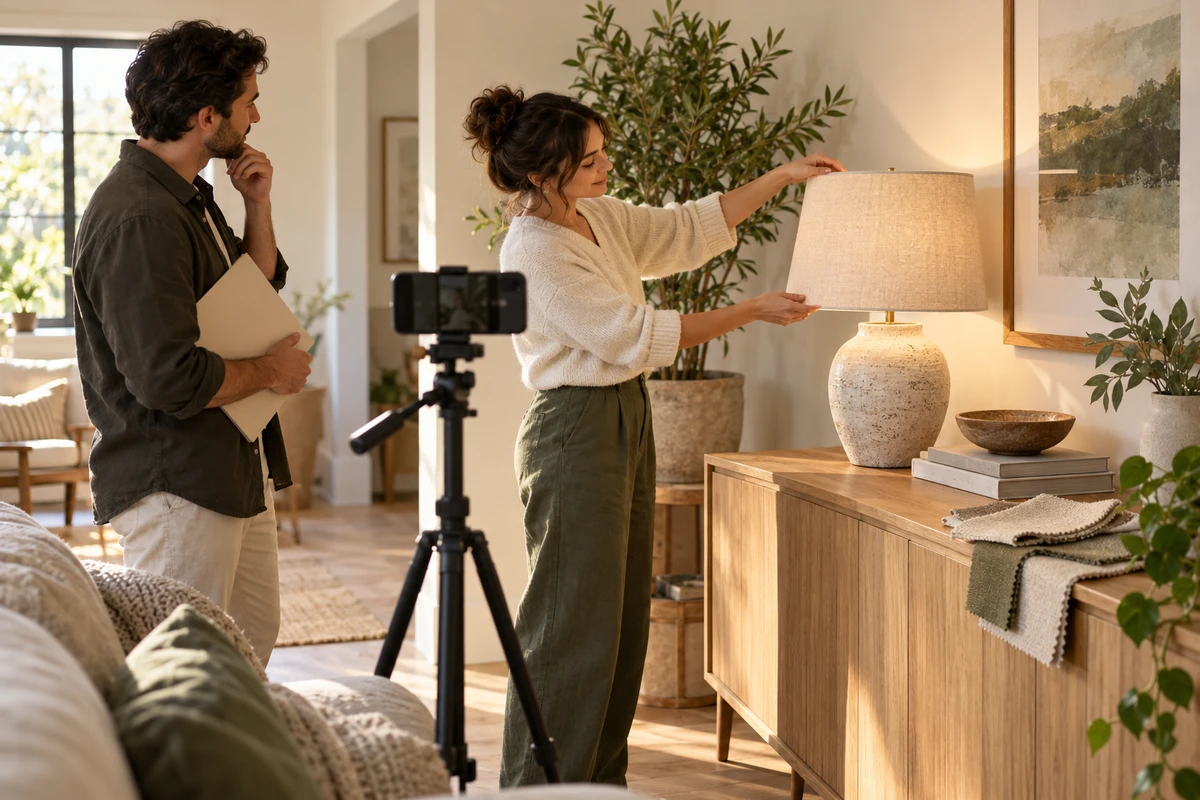
Consider a fictional homeware company sourcing from China. A creator has filmed a lamp beside a reading chair. The brand now ships a revised dimmer mechanism. The original room idea may remain useful, but the old control sequence cannot be made current simply by inserting one new close-up. The team needs to decide whether the creator should produce a new version or whether a separate current-model demonstration is the better assignment. The supplier should confirm the actual model; the market team should decide what viewers need to understand.
Commission the missing answer, not a vague improvement
An actionable brief might retain the original as room inspiration and commission a separate dimming demonstration. That is clearer than asking an editor to “make the creator content more commercial.” It also avoids forcing a lifestyle story to carry every product instruction.
Define who verifies the item, who performs any additional filming, what files are required, which changes are agreed, where and for how long the resulting work will be used, and who approves the final expression. These are commissioning questions, not legal conclusions about any particular agreement.
Music needs its own check. Pinterest Business Help's Pin types ineligible for ads, checked October 19, 2026 with no displayed publication date, says brands need permission to promote Pins containing music. A track being present in an organic post is not enough to conclude that the proposed promotion is cleared. Ask before proceeding; do not assume that downloading the post and replacing its soundtrack is available or agreed.
Compare quotes with coordination, additional production, agreed usage charges, media and ongoing maintenance stated separately. An existing post is not automatically the cheaper option once real work is counted. Equally, an entirely new set is not automatically necessary just because the media team needs an ad. This article supplies no benchmark fees or promised savings.
A future opt-out is not a current campaign stop
Pinterest's documented distinction between opting out and campaigns already running matters at handover. Before launch, identify the person responsible for the live media activity. Keep a record of the Pin, the actual campaign, agreed period, review point and contact route.
If a creator raises an objection, a model changes or the partnership ends, someone must receive that information and check what is currently running. Agree who requests action, who can act within the account's actual permissions and who confirms the result. Do not request a creator's password or assume the brand can remove the organic post.
A settings screenshot is not proof that an existing campaign stopped. Conversely, ending paid promotion does not establish that the creator's original post disappeared. This is a proposed responsibility arrangement, not an invented walkthrough of an advertiser interface the test has not documented publicly.
For ONCE, the possible long-term role is to help teams select suitable existing work, identify genuinely missing production and keep product changes connected to campaign maintenance. That may support an ongoing service, but coordination and review consume resources too; no margin improvement or client result is claimed here. Start with one candidate post and one precise question: can its full expression stay intact for this campaign? The answer determines whether to buy distribution support, commission new work or resolve missing information first.
The cover is an AI-generated fictional home-production scene, not a Pinterest, ONCE or client project.