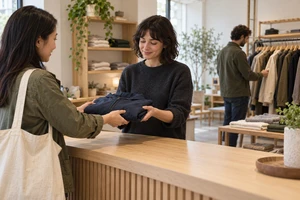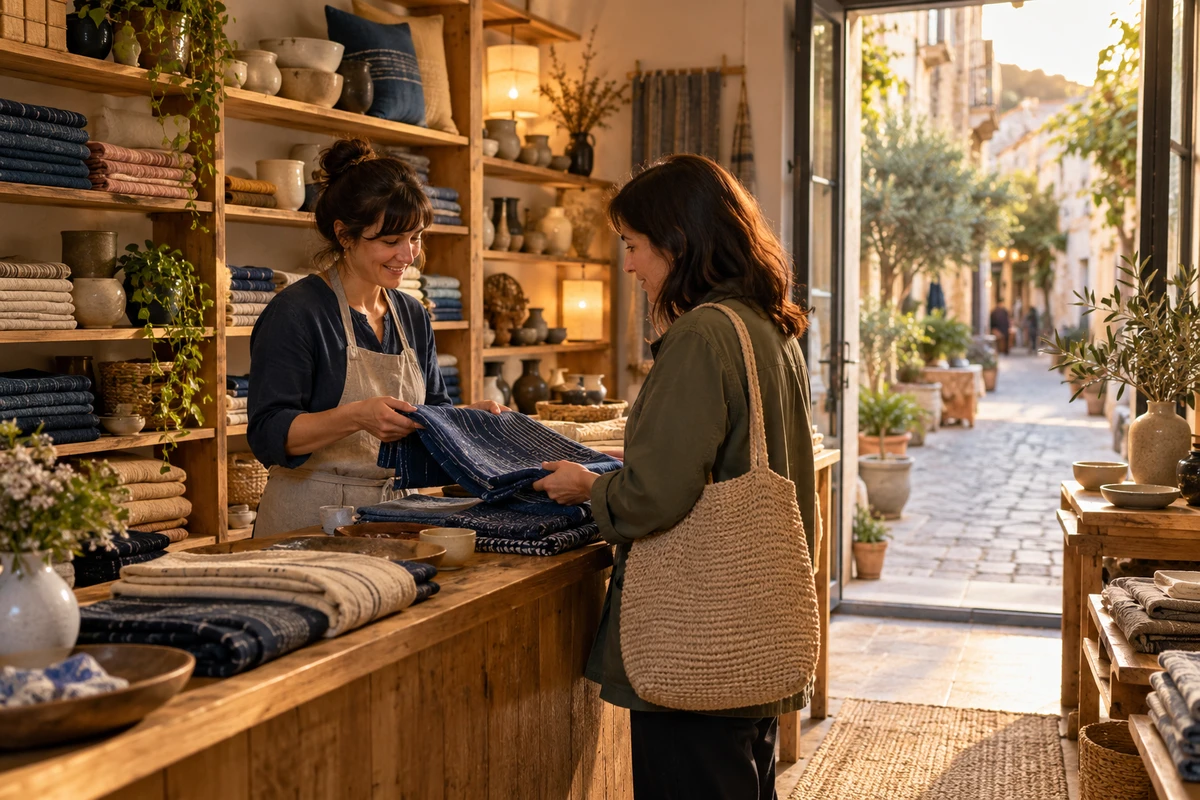
Imagine a brand ad filmed in neighborhood shops: someone opens a door, wraps a purchase, and smiles as a customer leaves. It feels warm, but afterward we remember only the character of the street, not which shops appeared or where to find them. That can be a valid piece of neighborhood storytelling. If the project was meant to support specific businesses, however, the work is not yet done.
Putting a shop in a large brand’s imagery is different from giving that shop a communication opportunity of its own. A partnership ad deserves another question: beyond making the lead brand seem approachable, what does it leave for the people taking part?
Cadbury gave support a specific destination
Ogilvy’s Not Just a Cadbury Ad project account, consulted October 19, 2026, describes advertising shared by Cadbury Celebrations and local businesses. The nearby businesses featured varied with the viewer’s location. Shops were not simply a festive backdrop; they became businesses a viewer could discover.
WPP’s case account dated 2022 places the original project in 2020 and describes a 2021 extension: Shah Rukh Khan appeared in versions naming local businesses, generated using machine learning, while a website let shop owners create their own ads. This is a participant’s account of a historical project, not a statement that its tools remain available. We do not use its viewing or sales figures here.
Those written accounts suggest a creative interpretation: the partnership changed whom the advertising pointed toward, rather than merely announcing concern for small businesses. A shared brand campaign did not have to feature the same anonymous collection of appealing shopkeepers everywhere. What a viewer saw could connect with a specific business nearby.
That goes further than placing the same “support local” line on every version. It asks the lead brand to give away some attention: to make another name recognizable and let the audience take another business away from the ad. This is not simply a decision to show a smaller logo. It is a choice about how the brand expresses its position.
A name can move a shop beyond scenery
Anonymous shops can easily become an aesthetic. Wooden doors, old counters, and busy hands provide texture without necessarily showing the proprietor’s work. If a partnership extracts only those attractive details, the shop may remain a set in the lead brand’s story.
Treating the business as a subject starts with specifics: what it does, why customers come, and how the owner wants to introduce it. A name opens the door; it is not the entire introduction. A fleeting name that leaves us unsure whether the business is a tailor, repair shop, or household store offers limited communication value.
The film does not need every proprietor delivering a standard testimonial at the entrance. Completing a repair, finding a familiar object for a regular customer, or explaining why something suits the person in front of them can supply a story. It should come from the actual business, rather than the same moving backstory invented for every shop.
Avoid assigning all the action to the brand and all the gratitude to the shopkeeper. That arrangement turns partnership into one-way praise. Proprietors can have judgment, choices, and a voice, including a view on what the activity does or does not offer them. Participating in how they are introduced is closer to co-creation than being handed a thank-you speech.
The partnerships need not look identical
One business may be best introduced through craft, another through selection, and another through its familiarity with regular customers. They can share an opening, a color approach, or a campaign invitation without performing identical actions.
Consistency can sit in what the lead brand contributes, with variation in how the businesses work. If every story must fit the same lines and duration, ask whether only template-friendly shops will qualify. This does not require including every business. It asks that selection remain consistent with a stated interest in diverse local enterprise.
Nearby should mean something to the viewer
The public Cadbury account connects local versions with viewing location. For other projects, “nearby” can likewise be considered a relationship with the audience, not just a city label. A shop being in the same large city does not make a visit realistic. Serving a street, a neighborhood, or a shared interest across cities are different propositions.
Not every film must send people to a store. It can introduce the proprietor, invite someone to view their work, or describe an activity that has actually been arranged. But an invitation to go and support a business needs a clear, currently applicable destination. A historical account should say when an activity has ended instead of continuing to sound like an open invitation.
These choices affect editing. A shop name that flashes past before a long lead-brand ending may not give the partner much opportunity to be recognized. A dense end card listing every business may not suit the intended viewing context either. Let the person, their work, and their name meet within the same passage, then make the next place to learn more understandable.
A name and destination still do not establish that a shop gained business. Seeing an ad, recognizing a retailer, finding out more, and purchasing are different outcomes. These are creative and communication proposals, not income guarantees. Publication by a large brand is not grounds for declaring the partnership successful on the shop’s behalf.
Some things should not vary with the template
Machine learning was part of the historical execution in 2021. For a brand working today, the more useful question is what should change between businesses, rather than treating the technology as the community relationship itself.
A shop name can be substituted; a business story cannot necessarily follow it. “Open for thirty years,” “knows every customer,” and “recovered because of this campaign” concern particular people and facts. Their usefulness as ad copy does not justify assigning them to the next shop. Even a name-only variant still needs imagery, services, products, and location that correspond to the business being introduced.
If synthetic voices or likenesses are involved, a new collaboration should first establish how participants agree to be represented, what statements may speak for them, and how the versions will be identified. A historical use of a technique does not establish access to equivalent assets or permission for a new project. We do not infer undisclosed details about Cadbury’s participants or provide a method for recreating a celebrity.
The lead brand need not disappear either. Viewers should be able to understand who enabled the introduction, why, and how the invitation relates to the brand’s wider expression. It can be an introducer, organizer, or fellow participant without becoming the rescuer in every shop’s story.
Return to the fictional street at the beginning. Anonymous moments can have value when the purpose is to evoke everyday life. If the intention is to share a communication opportunity with specific businesses, the question can change before filming: not what footage can be extracted here, but what this shop wants people to know and how it can be expressed together.
For a neighborhood or retailer partnership, bring the actual partners, the communication space the lead brand can offer, and one thing you want viewers to understand to a discussion of ONCE’s brand creative and production solutions. Let the people being filmed participate in what is said about them.
Source note: This analysis draws on the Ogilvy project account and WPP’s historical case account linked above, consulted October 19, 2026. No embedded film was viewed, no merchants were interviewed, and no effectiveness testing was conducted. The opening street scene and AI-generated cover are fictional illustrations, not Cadbury or ONCE client locations. The remaining proposals are original analysis.