Imagine a global hardware brand reviewing TikTok inspiration before commissioning its next shoot in China. An engagement curve peaks as a portable fan unfolds. The obvious request is another elaborate unfolding shot. But perhaps the preceding scene established the problem, or the offer arrived at the same moment. This is a hypothetical planning situation, not an ONCE campaign result.
A peak can locate a useful question without settling what caused the response. Before buying a recreation, ONCE recommends a Peak-Context Edit: state the possible relationship, compare a small change using approved material, and identify what—if anything—needs new filming.
Read the scale before reading the scene
TikTok’s “About Top Ads”, updated May 2025, describes a collection of high-performing creatives that advertisers have authorized for display. The official Top Ads one-pager, checked October 18, 2026 with no publication date shown, specifies performance thresholds and advertiser authorization. The collection is selected, not an unfiltered random sample of every ad.
That one-pager also explains the key-frame chart: the selected metric is indexed from 0 to 100 within the video, with 100 at its peak and 0 at its lowest point. A value of 100 is not a 100% click-through or conversion rate. Two ads reaching 100 do not, on that basis alone, have equal commercial performance.
The dashboard usage guide, also updated May 2025, calls the second-by-second chart relative performance. Keep its scale separate from sorting criteria and summary metrics elsewhere in the interface. Record the selected metric rather than labeling every peak a “conversion moment.”
This is an evergreen planning issue supported by current documentation, not a claim about a new product release. No competitor’s profit, ROAS or isolated shot contribution is estimated here.
Look on both sides of the peak
An action happening while a shot is onscreen does not, by itself, establish that the shot independently caused it. For a creative team, that is a reason to retain competing explanations.
The unfolding fan might make portability tangible. The earlier problem scene might have made that action meaningful. A simultaneous offer might matter. These are possible explanations, not findings from an analyzed campaign.
Review the complete unit of persuasion: where the promise starts, how the demonstration develops, and how the result and next step arrive. Do not apply an arbitrary fixed-length window to every ad. Note the voiceover, captions, product action and offer. The chart locates the moment; the surrounding sequence helps frame a useful production question.
The ONCE Peak-Context Edit
The proposed deliverable is a small edit comparison and a change note—not a catalogue of supposedly proven shots. Start with four records:
| Record | What belongs in it |
|---|---|
| Observation | Ad link/ID, viewing date, region and objective filters, selected metric and position; unknowns stay unknown |
| Explanation to challenge | For example: seeing the compact result first may make the later unfolding demonstration easier to understand |
| Smallest comparison | Result-first versus problem-first using the same approved material; hold other elements stable where feasible and document remaining differences |
| Permitted conclusion | A rough cut can reveal comprehension issues; an eligible live comparison addresses the selected advertising outcome |
Changing order can also change transitions, sound and neighboring shots. If so, define the variable as a narrative-order package. A later difference between versions would not prove the unfolding close-up was effective in isolation. The comparison must describe the work actually changed.
Before reshooting, ask intended viewers to explain what problem the product solves, what result they saw and what they would do next. This is a comprehension check, not a small preference poll dressed up as a conversion study. If the existing footage cannot communicate the result, commission the missing action or result coverage. Do not copy a competitor’s set, performer and camera treatment simply because a chart peaks there.
This method is ONCE’s proposed application to production planning, not a claim to have invented controlled experimentation or demonstrated a performance lift.
Separate the edit decision from the media finding
TikTok’s “About Split Testing”, updated January 2026, describes holding other variables constant and separating audiences between two ad groups. Its testing-variable guide, also updated January 2026, includes video creative and openings, and specifies one selected variable per test. Eligibility matters: its compatibility table lists TikTok Shop as incompatible. This particular tool is not a universal procedure for every TikTok activity.
The advertiser’s media or measurement owner should define the primary metric, comparison conditions and stopping rules. Production supplies the corresponding versions and change record. A viewing or click response should not quietly become a purchase claim.
If a suitable live comparison is unavailable, an edit can still help the team judge clarity. Keep the advertising effect unverified. If several elements change, interpret the version as that combination rather than awarding causal credit to its most memorable frame.
What to commission—and when to stop
When a research deck contains only an unlabeled graph, request the metric and context before filming. When the competitor’s product capability, offer or use case does not fit yours, resolve that mismatch first. When nobody can state whether the intended change concerns timing or the demonstration itself, commission a discussable edit rather than a finished recreation.
A useful brief specifies the observed reference, one explanation to investigate, the comparison versions, any genuinely missing shots and how later findings will be associated with the right version. Use owned or appropriately authorized material; the research assignment is not an instruction to insert a competitor’s footage into the finished ad.
For brands coordinating with a Chinese manufacturing and production network, this creates a more precise conversation than “make one like this.” Bring the product’s approved capabilities, available footage, market, channels and proposed question into ONCE’s production planning. Decide whether the next useful output is an edit, a focused shoot or further research.
Over time, the valuable record is the relationship between observation, explanation, actual change and outcome. ONCE sees that as a direction worth developing for ongoing content work—not an already proven performance model or margin improvement.
The unfolding shot may still deserve investment. A public peak alone has not made that decision. The first useful purchase may be the edit that lets the team see what it is actually trying to learn.
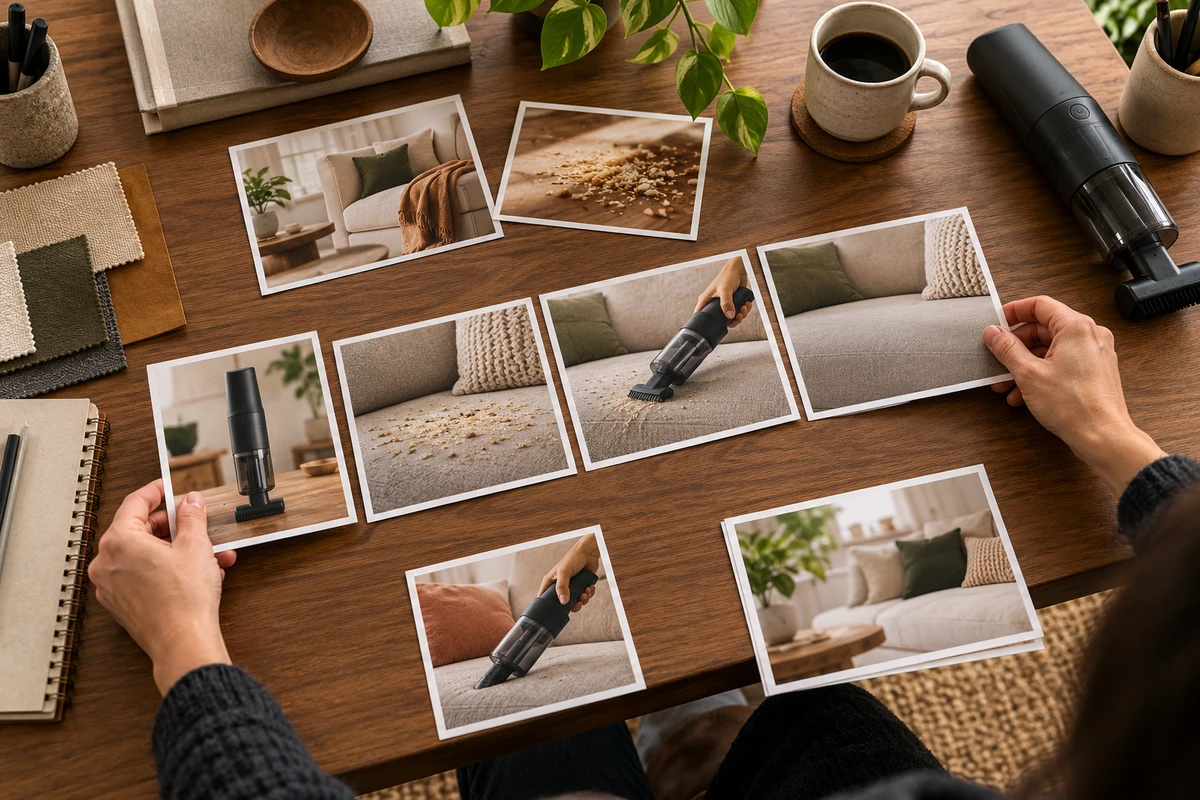
The cover is an AI-generated concept of creative editing, not a competitor ad, client project or live advertising dashboard. Facts checked October 18, 2026.