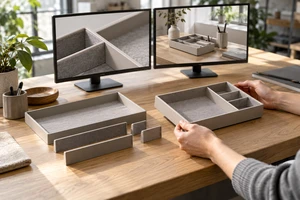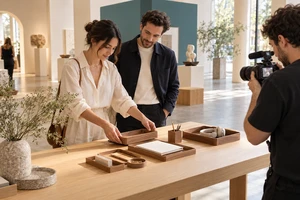
The finished film is ready. On the drive, there is still laughter beside the camera, a time-lapse of the set being built, and the director watching a monitor. Put those clips together and viewers can certainly see how busy the shoot was. But for someone outside the project, “everyone worked hard” may not be enough reason to keep watching.
A brand behind-the-scenes film can do something else: change how viewers understand one detail in the finished work. Why does a gesture pause for a beat? Why does that prop deserve the centre of the frame? Answering a question like this gives the BTS film a purpose of its own, beyond making use of leftover footage.
A creative explanation can be the main event
In its official team article, “Behind the scenes: how we bring our brand films to life,” published on May 28, 2026, MOO explains the premise of its 2026 brand film: businesses make print and merchandise to give away and build connections, but the story takes pride in those objects to the point of not wanting to part with them. Our source is that written account, not a shot-by-shot viewing of the complete commercial or BTS video.
What interests us is not a joke another brand could borrow. It is the explanation of how an ordinary business action becomes a character’s conflict. With that idea in mind, a handover can mean more than someone holding a prop: the question becomes whether they can bear to let go.
This is our editorial interpretation. A BTS story need not begin with setup, lighting and the first take in production order. It can begin with a creative choice that already works on screen. Production order answers “what did we do?” Viewing order needs to answer “why is this worth knowing?” Sometimes those sequences coincide, but they are not the same timeline.
Show a result, then open up its question
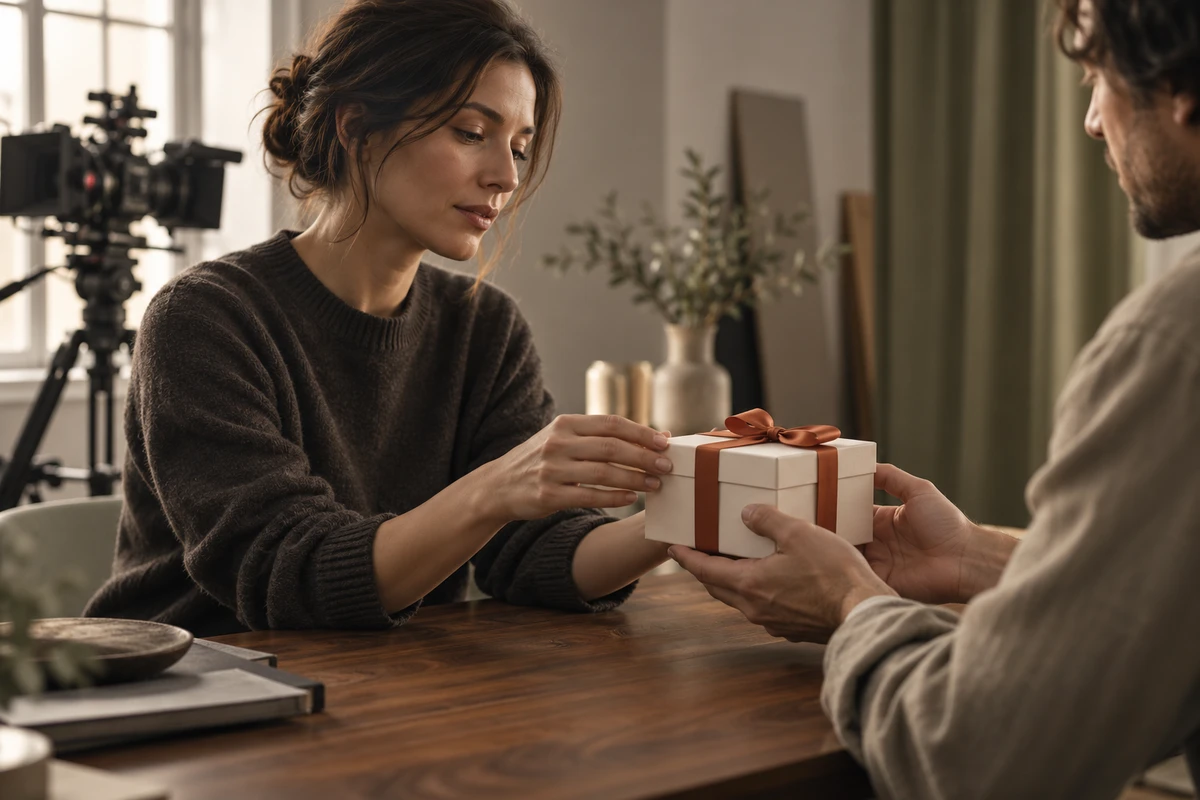
Imagine a fictional gift commercial in which someone hands a wrapped box to a friend. This is a creative illustration, not a MOO concept or an ONCE client project.
In one performance, the giver hands it over briskly and immediately withdraws their hand. In another, the friend already has the box, but the giver’s fingertips linger. The first can suggest an uncomplicated gift; the second creates room for “I love this enough to find it hard to give away.” Neither is automatically better. If the brand wants effortless generosity, hesitation might simply make the character seem possessive.
A BTS edit built around this difference could first show the finished moment, letting the viewer notice the pause. A creator could then explain the intention: not a refusal to give, but a gift that also tempts its giver. If genuine footage of different performances exists, show the comparison. Finally, return to the finished shot so the same gesture can be seen with a little more understanding.
The organising sequence is result, question, choice and return—not a tour of the entire editing timeline. Each element has a job. Finished footage establishes the question; comparison makes the difference visible; the creator’s explanation supplies the intention. A film does not need all three in equal measure, or even all three at all. A simple gesture may need one sentence. A complicated art-direction idea may need more context.
Compare meaning, not just effort
“We changed a lot of lights” and “we tried two versions” describe activity. To make a comparison useful to viewers, explain what the change lets the character, product or setting mean.
The same box gently pushed across a bright table and tightly held at a crowded party may suggest different things: something casually shared, or a personal object worth cherishing. The discussion is no longer only about attractive lighting. A BTS film need not dictate a single audience response, but a creator can explain the reading they were trying to encourage and why another choice was not used in this version.
If the available footage consists mainly of equipment close-ups, a straightforward set diary may be the better film. Celebrating work, recording a team and explaining an idea are all valid purposes. The problem is promising one kind of content with material suited to another.
Missing footage does not require an invented history
Important decisions often happen during a call, rehearsal or editing conversation, without a dedicated camera recording them. A later interview can still be valuable. A creator can explain why a pause survived the edit, alongside the actual finished shot. That is a retrospective explanation; it does not need to masquerade as a camera catching inspiration at the instant it arrived.
If two gestures need to be demonstrated again, label the material as a performance illustration or a post-shoot re-enactment. It can clarify a difference without proving those versions were originally filmed. Rejected concepts, arguments and numbers of failed attempts should not be invented to create drama. Otherwise, a film intended to build understanding introduces a new question about whether its account is true.
When only the final version survives, explain that choice and its rationale. A creative explanation does not require a complete failure-to-breakthrough plot. Helping someone understand a trade-off is closer to its purpose than manufacturing a production legend.
Decide what the BTS film should leave out
More explanation is not always more engaging. If the commercial depends on a surprising reveal, publishing its entire mechanism first changes the first-viewing experience. One option is to release the BTS later as an invitation to revisit the film. Another is to discuss art direction or performance without giving away the ending. This is a choice between preserving surprise and adding understanding, not a universal release-timing formula.
The intended audience also changes the length. A film for fellow makers can spend longer on detailed reasoning. Someone new to the brand needs to know what the original film is and what the product does in its story. An internal team keepsake can centre shared experience without being forced into an external brand explanation. Different purposes call for different films.
Back on that drive full of unused footage, the most useful starting point may not be the busiest shot. It may be a detail that makes the finished work easier to understand. Explain it clearly, and viewers have something new to notice when they return. This is a proposed creative method, not a promise of views or conversions.
If your brand has a finished film and behind-the-scenes material, start with one specific moment and discuss how its creative choice could become a standalone story with ONCE: explore video production solutions.
Source note: the MOO Team article cited above was consulted on October 17, 2026. Its accessibility from mainland China was not tested.