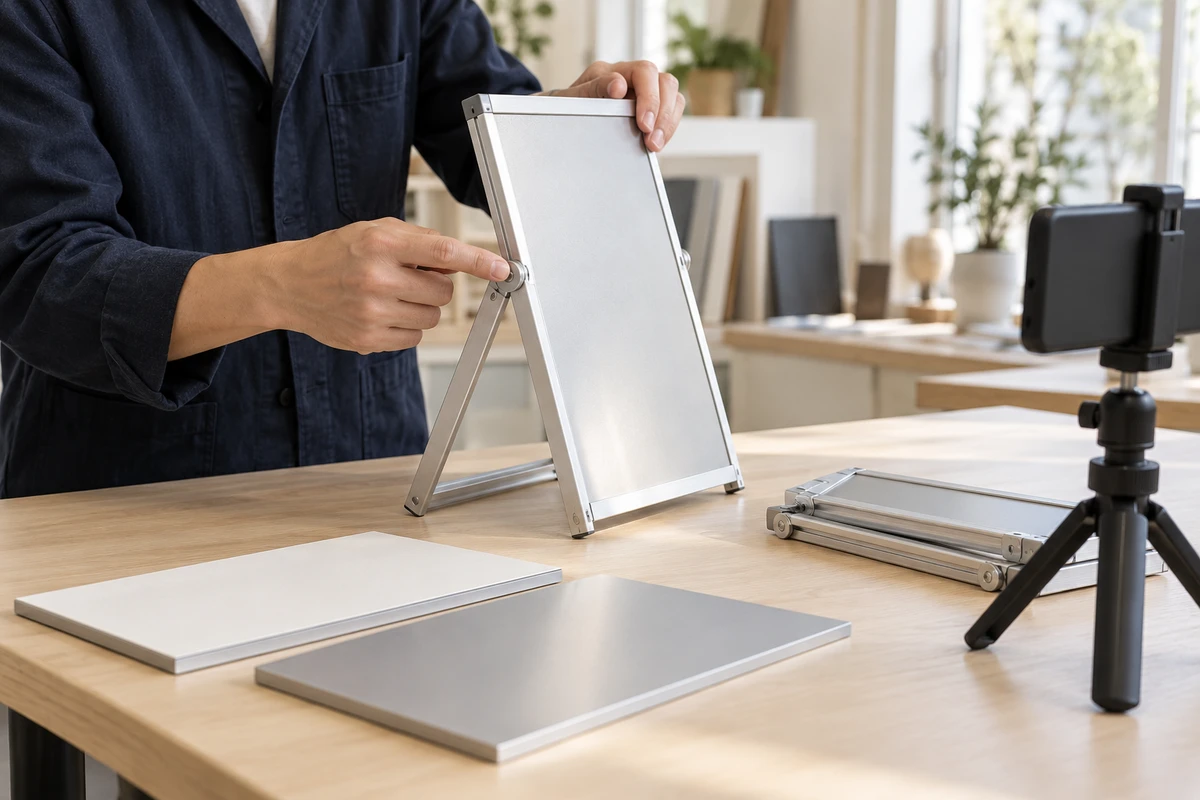
A supplier sends a video addressed to you by name. You asked whether a retail display folds for storage. The film explains the supplier’s history. The greeting is personalized; the answer is still missing.
For overseas brands working with Chinese manufacturers, this distinction matters when commissioning sales content. Reusing an approved demonstration can be useful. Generating a fresh greeting can make communication more convenient. Neither automatically establishes that a new packaging request, operating condition or delivery commitment has been checked.
The capability is real; the buying decision still needs definition
Vidyard introduced its Video Agent positioning in Meet Video Agent: Your full-funnel, AI-powered revenue assistant, dated July 16, 2025. Its current product page, checked October 15, 2026, describes CRM-triggered personalized video workflows and replacement fields such as a buyer’s name or company. These are the vendor’s descriptions, not ONCE test results or proof that a generated message understands a buyer’s needs.
VentaVid’s Video walkaround for car dealerships: a practical guide, updated October 1, 2026, distinguishes general inventory footage from a sales representative recording the particular car a customer asked about. It offers a useful workflow comparison. We do not adopt the article’s response-rate, sales or time-saving figures.
This is an evergreen commissioning question, not a new launch announcement: what should stay reusable, and what must change because this buyer asked something different?
ONCE’s remove-the-greeting review
Temporarily cover the buyer’s name, company and personalized salutation. Does the remaining video answer the actual question?
This is our proposed editorial check, not a validated scoring system. If the remaining content is a general introduction, it can still introduce, remind or invite. It should not be presented as a bespoke technical response.
Conversely, a reused clip can provide a relevant answer. Several buyers may ask how the same model folds under the same conditions. An approved demonstration need not be newly filmed for each of them. Personal relevance comes from matching the answer, not from ensuring every recipient receives a unique export.
Before selecting footage, keep a short question note: the buyer’s stated concern and conditions; the applicable clip and product configuration; the unresolved fact and its owner; and the next decision or information request. Retain only information needed and authorized for that conversation. Keep buyer identity out of reusable masters and confidential requirements out of public libraries.
A hypothetical display fixture illustrates the choice
Imagine a brand asking a Chinese supplier about a retail display. It wants to see the standard folding process and also asks for custom packaging. This is an invented example, with no assumed dimensions, load rating or delivery promise.
An existing, approved demonstration of the correct model may answer the folding question. Introduce it with a precise explanation of what it shows. The footage should preserve the starting state, key action and finished state, rather than borrowing a fast transition from a brand film that hides the mechanism.
The packaging request needs a different response. A standard product demonstration cannot establish that a custom packing solution has been developed. The supplier must identify what remains to be confirmed, request the relevant inputs and determine whether a drawing, sample or further demonstration is needed. A buyer’s name over an attractive unboxing sequence does not perform that work.
If the question is whether the display will fit a particular stockroom, product footage alone is insufficient. The relevant space information and an appropriately qualified assessment are still needed. The producer should not invent a fit guarantee. It should also ask whether a dimension drawing or concise written answer would serve the buyer better than another spoken video.
Commission answer segments that can stand alone
Start a production brief with recurring questions that the product owner can already answer accurately. Film each as a self-contained explanation: establish the object and configuration, demonstrate the relevant action, and preserve the conditions needed to interpret it.
Those segments can share framing, sound and visual treatment so they combine cleanly. But do not combine them merely because the software can. A single relevant demonstration with a clear introduction may be more useful than a longer automatically assembled presentation.
Approved greetings and closing invitations can be templated. A properly authorized AI likeness or voice may be part of the workflow, with synthetic participation made clear. Do not imply that an engineer has personally inspected a buyer’s requirement when no such inspection occurred.
Changes to price, delivery timing, certification, stock or customization need confirmation from the responsible owner. Generative fluency is not commercial approval. A customer-specific claim should be reviewed by someone who can answer for its accuracy.
Agree how clips will be reconsidered when the product or relevant conditions change. What is reusable is applicable knowledge, not an assumption that every underlying fact remains permanently current.
Buy coverage of questions, not just a volume of exports
When enquiries repeat stable questions, trial a small library of approved answers before commissioning individually shot messages at scale. When enquiries mostly introduce new configurations, test conditions or negotiation, reserve more effort for professional confirmation and necessary capture. Batch greetings may assist that work, but cannot substitute for it.
Separate question development, reusable demonstrations, template configuration and buyer-specific work triggered by new facts in the quotation. A proposal for a hundred videos should explain how many distinct questions they cover, which merely change names, and which require substantive review.
Evaluate a small pilot using actual preparation and approval time, mismatches or corrections, and whether buyers continue asking what the content was supposed to explain. Any comparison of replies or deal progression needs comparable enquiry types and sales stages. Small samples, different buyer groups or simultaneous offer changes prevent a confident attribution to video. A viewing event is not itself buying intent.
For a production company, reusable, authorized and de-identified question categories and filming methods could support a continuing service. Buyer-specific facts belong within their project permissions. Margin improvement remains something to establish with real demand and workload, not something to infer from software’s generation capacity.
Use ONCE’s production solutions to define a first set of questions and the footage needed to answer them. Then remove the greeting from the proposed message. If the buyer’s answer disappears with their name, the project still needs work.
Sources checked October 15, 2026. The original AI-generated cover is conceptual, not a real buyer exchange or a verified product demonstration.