A branded video series can ask the same question repeatedly. It cannot keep delivering the same content. What deserves to remain familiar is the kind of experience viewers can expect. What must change is why this episode is worth watching. Matching introductions, shot sizes and music can make an account look orderly without creating a format that sustains new ideas.
The problem is particularly concrete for product brands. New products do not arrive every week, and features are not unlimited. If each update depends on a new background, presenter or opening line, it becomes another wrapper around an old advertisement. An alternative is to find a question that the product can help answer—and that everyday situations keep giving new conditions.
A simple question can accommodate different inputs
Blendtec’s Will It Blend? offers a historical reference. In the brand’s January 4, 2013 Q&A with Tom Dickson - Part 2, the founder traces the series to 2006: a marketing director noticed how he tested blenders, and the team brought different objects into one video idea.
The useful lesson is its content organisation, not destructive demonstrations or a promise of low-cost virality. This article discusses the official written accounts, not a shot-by-shot viewing of the films. It does not adopt their figures for views, cost or marketing results.
The series name poses an immediately understandable question. The input changes; the question remains. The product is the means of answering, not a sponsor added at the end. From a planning perspective, that creates more room than “one feature per episode”: interest in this particular outcome gives the function a role in the action.
But many products are not suited to a “can it do this?” premise. A table, garment or everyday software tool might better address “how is it used in this situation?” or “what changes with this choice?” The stable element is a type of question, not necessarily a repeated slogan.
A new episode should change the situation
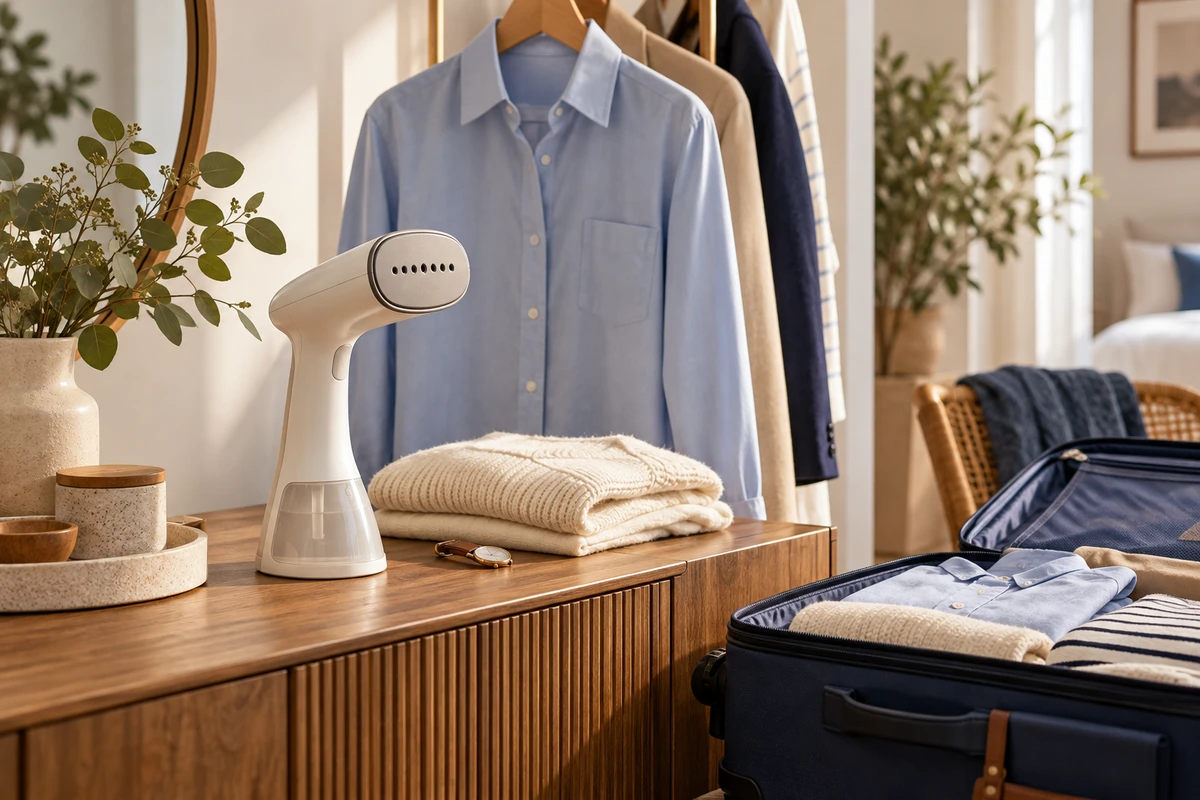
Consider a fictional garment-care brand with a series called “What can I wear out today?” This is not a real client project. Any actual product operation would need to follow its instructions and material suitability.
One episode concerns a shirt taken from a suitcase before a business meeting. Another concerns clothing brought out at a change of season: should it be tidied, cleaned or put away again? A third starts with a last-minute change of outfit. With limited time, the person must decide what to address—or whether to wear something else.
The point is not three different garments. It is three different decisions. The first concerns clothing after travel, the second its readiness to wear, and the third a trade-off under time pressure. If the product can help with only part of a situation, let it do that part. Every episode need not resolve itself with one button press.
By contrast, removing the same crease in the same way, replacing a shirt with a dress and making the finish brighter may add little understanding. A new prop does not necessarily create new content. The team should be able to explain what situation, difficulty or choice the next episode adds, beyond which new item appears.
This also changes the filming priorities. Preserve the initial condition, the person’s decision and the outcome—not only close-ups of operation. The suitcase and meeting preparation have narrative roles in the travel episode. How the person assesses a garment matters more in the seasonal episode. A familiar set can remain, but the shots should serve what actually happens this time.
The signature need not be fully designed on day one
Blendtec’s December 10, 2012 The Story Behind “Will It Blend?” recalls how a reminder from one shoot was reused and became a recurring element. This is the brand’s own production recollection, not evidence of a universal rule about audience memory.
The detail suggests that recognition need not come entirely from a predesigned identity package. A genuine action, a presenter’s relationship with an object or a naturally occurring phrase may become a useful habit. It should have a purpose within the content before it is repeated in the next episode.
The fictional garment-care series could retain a simple closing action: the person chooses what to wear and puts the other garment back. It resolves this episode while allowing the product not to be used every time. An exaggerated gesture unrelated to the scene would feel more like an advertising label pasted on afterwards.
More fixed elements are not necessarily better. Locking the presenter, location, question, music, catchphrase and camera path could leave only the captions free to change. Distinguish what helps people recognise the series from what happened to work in the first film. The latter need not become a permanent rule.
Leave room for outcomes other than escalation
A long-running series can create pressure: if the last episode was striking, must the next be more extreme? When escalation becomes the only source of ideas, the production is pushed towards bigger, faster or more dangerous actions.
This is not merely a hypothetical concern. The 2013 Blendtec interview also recounts injuries and frightening filming incidents. Its destructive demonstrations should not be treated as a repeatable home-use or production recipe. This article offers no imitation instructions. The transferable idea is the recurring question, not putting unsuitable objects through equipment.
For an ordinary product series, a more useful variation might be an incomplete resolution. The product addresses the main issue, but the person still chooses another garment. A material falls outside its approved use, so the story turns to another suitable approach. A function works, but the situation does not require it. Such outcomes must come from actual information and filming; inventing failures to appear authentic is no better than inventing successes.
Different outcomes do not automatically weaken the brand. They give the format more possibilities than permanent success and place the product within real use conditions. A brand unwilling to show any limits should choose a different kind of series rather than edit every demonstration into the same miracle.
Each episode must work before the series can continue
A recurring question reduces the need to explain the format from scratch. It should not require newcomers to catch up. The third garment-care episode must still establish the person’s decision, the product’s contribution and the final choice. A joke from an earlier instalment can be a bonus, not an entry requirement.
Likewise, horizontal, vertical and shorter edits of one film are distribution versions, not new events. They help an episode work in different placements without creating another answer. Counting uploads alone can confuse more versions with more creative territory.
Before committing to ongoing updates, write a few episode outlines that genuinely differ. The purpose is not to prescribe an episode quota, but to see what else the question can produce. If later ideas only replace colours, people and dates, reduce the frequency or reconsider the premise. A series may finish while its useful episodes remain available on the website or in sales conversations. Continuing indefinitely is not a reason to dilute it.
View counts are one observation, not the whole decision. Listen to how people retell an episode, whether they ask relevant product questions, whether they remember only an unrelated prop, and whether the team can keep obtaining genuine material. These are clues for editorial judgment, not proof of increased sales or stronger brand relationships.
A sustainable branded series creates an experience worth entering again: the question is familiar, but today’s answer is not. If you are developing one, bring ONCE the central question and several genuinely different episode outlines. Use the brand and social video solutions to discuss what deserves to stay fixed and what each episode must create anew.
Source note: consulted on October 15, 2026. The case draws on two historical Blendtec articles dated December 10, 2012 and January 4, 2013. Embedded films were not viewed and marketing results were not independently verified. The garment-care stories and cover are conceptual illustrations, not client cases.