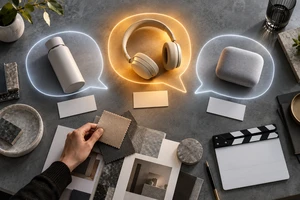
Consider a wholly hypothetical assignment. An open-ear headphone brand wants a Bilibili episode that answers a practical question: will music disturb the person at the next desk? The first treatment looks like a stretched commercial. A presenter reads specifications, the product rotates in beauty shots, and the film concludes that it “reduces sound leakage.” It could be cut into 30 seconds, but it does not yet earn a longer viewing time.
Length is not the missing ingredient. Process is. Useful Bilibili brand-content production gives viewers a line of reasoning they can follow: why the test was designed this way, why the first attempt failed, which conditions changed, what the second attempt revealed, and which conclusions still cannot be made.
Turn a product benefit into a question viewers can challenge
“Reduced sound leakage” is a product message, not yet an episode premise. A stronger question is: in an open-plan office, when the wearer chooses a comfortable listening level, what can a colleague at the next desk hear?
That rewrite changes the work in three ways:
- The audience understands the use case instead of receiving an isolated specification.
- The product no longer owns the answer in advance; it must enter an observable action.
- Comments can address volume, distance, ambient noise and fit rather than merely choosing whether to trust the claim.
Bilibili’s official marketing material has long framed creator content around interests, communities and the creator’s own language. That does not mean every brand film must imitate a creator. A more useful interpretation is that the episode needs a question the audience can actively understand. The brand owns approved product facts, the presenter clarifies the question, and the production team makes the conditions, changes and outcomes visible.
The failed first test creates the story turn
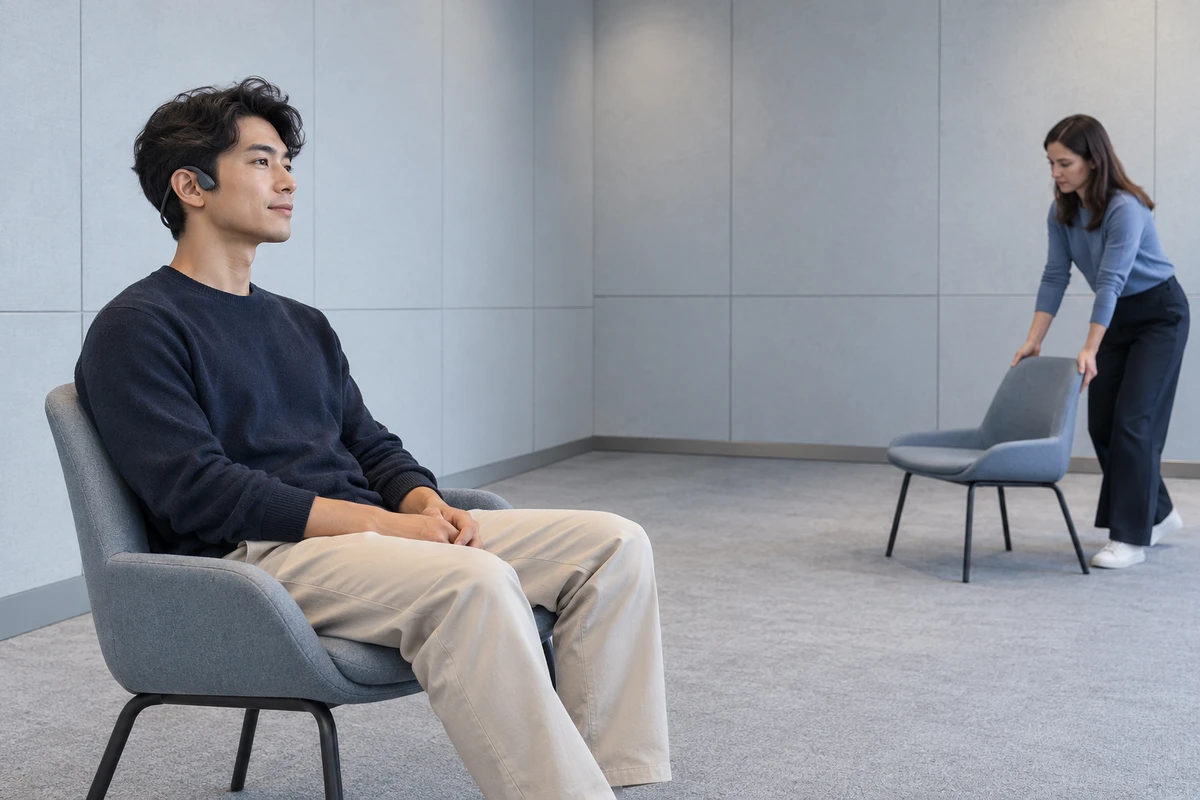
In the hypothetical first take, the presenter sets a phone to 60 per cent volume. A colleague sits one metre away and says they can barely hear anything. It looks successful, but the method is too loose to support a strong conclusion. The phone model, the player’s volume curve, the audio sample, room noise and wearing angle were not controlled. Even “one metre” was estimated rather than measured. At most, this is one scene-based experience; it is not a repeatable laboratory finding.
Delete the failure and the episode says only that the product is good. Keep it and explain why it failed, and the narrative begins. The team discovers that the question was too broad and the conditions too vague, so it narrows the claim.
The second take can become a demonstrative comparison: the same phone, the same licensed audio sample, the same player setting and the same wearer. The camera clearly shows positions at 50 centimetres and 100 centimetres, first in a quiet room and then with ordinary office ambience. The presenter reports what was heard under those conditions and states that this is not laboratory acoustic measurement.
That does not weaken the product. It gives the benefit a credible place in the story. Claims about sound-pressure level, frequency response or compliance with a technical standard still require suitable instruments, methods and reports. A branded episode cannot replace independent testing.
Six beats turn the test itself into a narrative
Do not decide that the video must be ten minutes. First make these six beats complete, then let the necessary duration emerge.
1. Where the question comes from
Open with the real task. Open-ear headphones can make conversation easier, but users may also worry about sound in shared spaces. Acknowledge the concern before introducing the product; there is no need to manufacture anxiety.
2. How the first attempt works
Show the phone, player setting, fit, distance between people and state of the room. Film the hand changing volume, the side view of the product and the colleague’s position—not just the presenter speaking.
3. Why the result is not yet a conclusion
Keep one specific methodological failure: distance was estimated, ambience changed, or the two playbacks were not matched. The failure must explain the reasoning. It should not be a staged accident or a deliberately damaged product.
4. Which variable changes
Change only a small number of conditions and show them on camera. If the team changes the phone, music, room and wearer at once, the second result will still be hard to interpret.
5. Where product information enters
Introduce structure, fit and approved functional information at the moment they explain an image. Do not read every selling point before the test begins, and do not turn a subjective listening impression into an unapproved technical claim.
6. What remains unresolved
The closing can acknowledge that ear shape, programme material and background noise may alter the experience. A follow-up episode should start from one specific unresolved question rather than a generic request for comments.
Community language is not a collection of memes
Brand teams sometimes remove every hesitation, retake and limitation because failure seems to reduce authority. The result is often an extended behind-the-scenes commercial: polished images, but no new reason to keep watching.
Community-native credibility comes from three forms of clarity. State the commercial relationship. Separate approved facts from the presenter’s observation. Do not let one demonstrative comparison stand in for a universal conclusion. Bilibili’s current Huahuo rules treat the title, cover, description and video as parts of the commercial submission, and flag issues including absolute language, patent or data claims, exaggeration and infringement. Its brand agreement also says the platform does not promise the final performance of commercial content. These are good reasons to define approved, qualified and prohibited statements in the brief before production, rather than removing risky words after the final edit. (Huahuo review rules; brand agreement)
Comments can identify the next useful question, but popularity cannot turn an opinion into a product fact. The content team should record what viewers are asking; product and legal owners then decide which questions can enter the next test.
A one-page episode card makes the method repeatable
Before filming, complete one card for each episode:
- Audience question: one concrete question tied to a use situation.
- Approved facts: the functions, structure and conditions the brand may state.
- First attempt: what the team expects to see and what would make the method insufficient.
- Failure worth keeping: a deviation that clarifies the reasoning rather than creates an incident.
- Reset variables: which of distance, device, media, environment and participant will be fixed or changed.
- Visible evidence: the actions, positions and changes viewers must see for themselves.
- Strength of conclusion: experience report, demonstrative comparison, or a technical claim requiring independent support.
- Next question: one worthwhile issue the episode cannot answer.
The card also exposes production dependencies: continuity across two lighting setups, product state that must remain consistent, ambience that needs separate recording, and lines that require brand, product and compliance approval on set. If the same production day also needs advertising cutdowns, beauty shots and channel episodes, ONCE’s short-form video production service explains how scripts, filming and platform versions can be planned together.
When an experiment-led episode is the wrong format
Not every product belongs in a test programme. The format is a poor fit when samples are unstable, conditions cannot be disclosed, conclusions affect health or safety, or the brand will accept only a predetermined answer. A product demonstration, an engineering interview or a visual explanation with explicit conditions may be more honest.
When a real audience question can be answered through a safe, repeatable action with visible limitations, however, experiment-led content can justify a longer viewing time. Its purpose is not to spend ten minutes proving that the product is perfect. It is to let the audience watch the brand make a judgment.
To plan a Bilibili product series, send the product, audience, account context, approved facts, sample status, target dates and budget range through the ONCE content-planning contact page. We can first decide whether the question calls for an experiment, a demonstration or a character-led story, then define the script, production and versions.