Advertising Aesthetics Research 05/10 | Time, Editing and Emotion
On the left, a person lowers an arm in a changing room. On the right, a footballer reaches across the field. A vertical seam joins two unrelated images. Before the first movement has ended, another body catches its direction. We are no longer watching “shot B after shot A.” One impulse seems to travel through different people, places and moments.
Editing rhythm is often reduced to “faster” or “slower.” Those words describe surface speed but miss the creative decision: When does a viewer begin to expect change? When does the change arrive? When does the brand inherit the meaning accumulated before it? Two films can contain the same number of shots and produce opposite emotions. A sustained take can also become intensely tense through waiting, prediction and minute feedback.
The previous essay examined how composition distributes power among product, body and space. This essay puts the image back into time. Composition decides what matters now; editing decides when importance moves elsewhere.
Rhythm Is Three Clocks, Not a Shot Count
During a creative review, rhythm can be separated into three clocks.
The action clock asks how long a physical event takes. A ball landing, liquid flowing or a finger completing an operation has a causal duration that cannot be compressed without consequence. The expectation clock begins when viewers think they know what may happen next. An answer that arrives too early produces little tension; one that arrives too late can turn prediction into confusion. The brand clock marks when the product, proposition or brand receives the meaning built by the preceding events. Reveal it too early and the rest may become demonstration. Reveal it too late and viewers may remember spectacle without attributing it to the brand.
Average shot length records only part of the surface. Emotion emerges from the displacement among the three clocks: an action continues while its result is already anticipated; a shot ends but the movement continues in another body; the product remains unseen while every small collision accumulates evidence for it.
You Can't Stop Us: One Body Completes Another Body's Movement
The One Club's Film archive identifies Nike's You Can't Stop Us as part of the “You Can't Stop Sport” campaign. The 90-second film combines archival and newly filmed material, using split screens to connect sports, people and places. Its Moving Image Craft record says the team researched 4,000 action sequences. The final spot contains 72 sequences across 24 sports and 53 athletes, while extensive reconstruction and compositing made the central joins appear effortless.
We directly inspected the lead image published with the archive. A person in a warm, changing-room-like space occupies the left half; an athlete on a cool-toned field occupies the right. Their arms converge near the seam as if following one path. Space, clothing, skin and image conditions differ, but direction temporarily makes the two halves one body. This image demonstrates the film's central editing device. We do not claim a frame-by-frame viewing of a master we did not obtain.
The emotion does not come simply from cutting fast. More importantly, many actions are not allowed to finish alone. One side lifts and the other drops. One body initiates and another completes. As one location is about to lose momentum, the next pairing accepts it. The action clock crosses the source boundary; the expectation clock is fulfilled repeatedly and quickly. The result is a sustained sense of collective forward motion.
Split screen is not merely decorative resemblance. The archive describes it as a metaphor for bringing people together, and places the campaign in the moment when sport returned after interruption while people remained separated. That documents the creative context. It does not automatically prove that every visual match makes every viewer feel solidarity; that remains an interpretation to be examined in actual viewing and testing.
The risk is equally clear. A relentless search for seamless matches can flatten differences among sports, bodies and cultural conditions into elegant form. If resemblance becomes visual display rather than evidence for “completing together,” viewers may remember the technique rather than the brand's position. The production problem also begins long before final editing: direction, speed, body position, background geometry and occlusion must be solved across archive research, new photography and compositing.
Cog: Do Not Cut Away the Wait; Let Causality Accumulate
Honda's Cog moves in the opposite direction. An official Honda retrospective identifies it as a 2003 advertisement and states that the finished film joined two live-action takes shot over five days. Calling it a single uninterrupted take is therefore inaccurate. The One Club archive identifies Wieden+Kennedy London, client Honda and director Antoine Bardou-Jacquet.
We inspected stills published by Honda and The One Club. Small silver components form a precise causal line across a white surface. Black gears and wheels pass motion through a different section of the space. Finally, the complete car enters the same restrained white environment. The background does not manufacture stimulation. Attention is reserved for one question: which component will move the next one?
The tension in Cog comes from waiting rather than obscuring causality. Viewers can often see the next object but do not yet know how it will be triggered. Every step provides a local answer while sending a new question forward. The action clock preserves the readability of physical motion. The expectation clock lengthens and is paid off in stages. The brand clock finally gives the accumulated precision to the complete vehicle and an idea of engineering.
This rhythm cannot be copied merely by building a long machine. Without a legible transfer of force, waiting becomes confusion. If pauses exist only to signal prestige, form begins to delay information without adding meaning. Yet deleting every pause and retaining only impacts destroys the film's most important evidence: these parts are not flashing icons. They are causal objects that can be watched, predicted and verified.
Honda's page also records specific transfers involving an oil can and valve springs, as well as extensive testing and construction. We treat those as documented production facts. Our claim that waiting accumulates engineering value is editorial interpretation based on the published images, official account and structure of the work. It is neither an undocumented statement of directorial intent nor evidence of a sales effect.
Compression and Accumulation Are Structures, Not Speed Settings
Placed together, the films reveal two basic organizations of advertising time.
- Compressive rhythm folds bodies, locations or stages into one continuing movement. It can express collectivity, scale, unstoppable progress, or many differences sharing a direction. Nike's crucial device is not the short shot itself; each transition completes the preceding movement.
- Accumulative rhythm lets a causal chain become credible in visible time. It can express craft, patience, reliability and the pleasure of discovery. Honda's crucial device is not duration itself; every interval makes the next event more worth waiting for.
The structures can coexist. A product film might establish breadth through several quick matched actions, then prove its central feature through one complete operation that is not fragmented. A brand film might first allow a causal chain to develop, then compress multiple situations into one value at the end. The useful question is not how often fast and slow alternate, but what temporal job each section performs.
For the same reason, “the opening drags” or “the middle needs more energy” are incomplete review notes. Better questions are: On which frame does expectation begin? What must viewers understand before the result arrives? Does this cut complete the action, interrupt it, or hand it to another subject? Does the brand receive the accumulated meaning too early or too late?
A Cutdown Should Not Shorten Every Pause Proportionally
When a 60- or 90-second master becomes a 30-, 15- or 6-second version, the common error is to shorten every section evenly. The plot may survive while the function of the rhythm disappears.
In a compressive structure, preserve the clearest initiate-relay-complete relationships rather than the greatest number of matches. Three accurate relays are stronger than ten vague similarities. In an accumulative structure, retain at least one fully legible causal chain and reveal the product earlier. A montage of impacts without a complete transfer turns engineering evidence into texture.
Mark every section in the edit map with one function that must survive: prediction, verification, relay, release, or brand attribution. When removing a shot, ask whether another shot still carries that function, not only whether the total duration now fits. Production should therefore capture complete key actions, relay directions and independent entry and exit points for shorter versions. ONCE's brand-film production process can extend this logic into deliverables and review.
Keep the Material Fixed and Change Only When Change Happens
Before final editing, build three undecorated 15-second cuts from the same material:
- Immediate payoff: show the result as soon as the action begins and introduce the product early.
- Delayed payoff: preserve the interval between action and result so viewers predict first.
- Relay: let the action complete across people, spaces or shots.
Keep copy, visual content, product information and total duration as constant as possible. Change only edit points, holds and reveal timing. Play the versions silently and ask viewers to mark “I began waiting here” and “I understood the brand's point here.” Restore sound afterward and test whether music strengthens the structure or merely hides unclear visual causality.
This is not a media-effectiveness experiment and cannot prove an increase in sales. Its purpose is to reveal, at low cost, whether emotion is being produced by content, by temporal relationships, or by musical stimulation added later. The next essay in this series will examine more closely how sound and silence alter that judgment.
Strong Editing Does Not Simply Prevent Viewers from Leaving
“Faster” can conceal uncertainty. “Slower” can mistake style for meaning. Strong advertising rhythm lets viewers know just enough at the right moment: early enough to keep predicting, late enough for the result to remain valuable, and clearly enough for the accumulated emotion to belong to the product and brand.
You Can't Stop Us lets movement continue across bodies and locations. Cog gives every object causal weight through visible waiting. One compresses difference; the other accumulates proof. Both show that the basic material of editing is not the shot. It is the timing of change.
If you are reviewing a brand film, launch campaign or a family of social cutdowns, bring ONCE the script, storyboard and available footage. We can mark the three clocks and the temporal functions that must survive, then translate the master and shorter versions into an edit logic that can be previsualized and reviewed. Send the brief and discuss when change should happen in the film.
Sources and Observational Scope
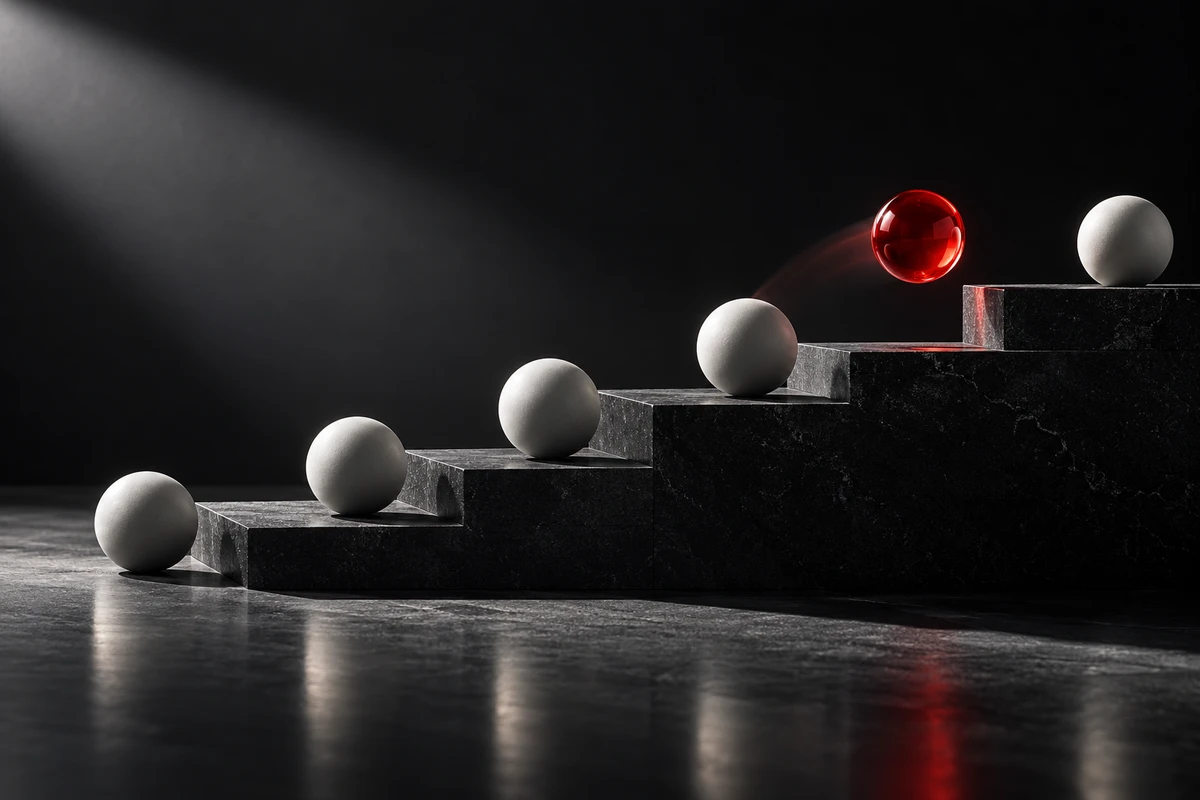
This essay checked The One Club's Film and Moving Image Craft archives for Nike's You Can't Stop Us, Honda's official 2020 retrospective of Cog, and The One Club's work record for Cog. Direct visual observation was limited to the lead images and stills available on those pages; we do not claim a frame-by-frame viewing of unavailable masters. Production quantities, dates and the join between two live-action takes come from those records. The three-clock model, the comparison between compression and accumulation, and the three-version exercise are ONCE Editorial methods for creative review, not universal laws of psychology. The cover is an original concept image about edited time, not a client campaign or documentary production scene.