Imagine a creator livestream goes well. The product is explained clearly, questions arrive in the comments, and the brand wants to put paid media behind the momentum. Then the team discovers three problems: paid usage was never agreed, the broadcast contains music and stickers that are not cleared for advertising, and the only recording is a compressed platform replay covered with interface elements.
The livestream did not fail. The procurement brief did.
In September 2026, Meta moved creator collaboration, permissions and media activation closer together. Its Creator Marketing Hub brings creator discovery, messaging, content-level permissions, permission expiry and ad-readiness tools into a more unified workflow, with features rolling out through the rest of 2026. Instagram Live content can also be amplified as a Partnership Ad rather than ending when the host signs off.
Availability should not be treated as identical across every account and market. Meta’s official Korean announcement on September 30 provides a concrete regional example: eligible professional or creator accounts with at least 1,000 followers can use Live Video Ads through Ads Manager, Meta Business Suite or Instagram; the live broadcast may appear across Stories, Reels and Feed. The same announcement says Stories preview up to 15 seconds, while Feed and Reels continue until the viewer scrolls away. Brands elsewhere should confirm local eligibility and the controls actually visible in their accounts.
The commercial implication is broader than a new media placement. Once a livestream can be amplified, edited and reused, rights, production and post-event delivery need to be designed before the broadcast.
Platform permissions are becoming granular. Brand contracts need to catch up.
Meta Blueprint treats creator-content permissions as a distinct part of the Partnership Ads workflow. The Creator Marketing Hub’s content-level permissions and expiry dates point in the same direction: the operational question is no longer simply “Can we work with this creator?” but “Which content can we advertise, where, and for how long?”
A platform permission is still not a substitute for a contract. A useful brief should specify:
- the creator identity, broadcast and derived edits covered by paid usage;
- territories, platforms, start date, expiry date and extension terms;
- whether the brand may re-edit, subtitle, replace music or add product close-ups and calls to action;
- whether clean masters, isolated audio, raw camera files and stills are included;
- who pauses or replaces an ad if permissions are revoked, product claims change or a compliance issue appears.
This is why a livestream fee and an ad-ready livestream asset should not be compared as if they were the same line item. One buys a moment. The other buys rights, records, editability and future use.
One broadcast now has to work in three viewing moments
Live viewers, paid-media viewers and short-form viewers do not enter the same piece of content in the same way.
A live audience may join near the beginning, wait through context and ask questions. A paid viewer may arrive at any second and needs to understand the product, the speaker and the benefit quickly. A cutdown needs its own opening, complete action and ending.
That means an Instagram Live production should be built in recognizable modules. Re-introduce the product at planned intervals. Start important demonstrations from a complete action. Give each recurring objection a self-contained answer. Repeat essential product facts verbally while the camera holds a readable close-up. Make the call to action understandable without relying on a comment thread.
Vertical composition also needs room for paid distribution and later edits. Keep critical product details away from interface-heavy edges. Capture close-ups that actually show ports, controls, textures and the result of an action. Brand elements do not need to occupy every frame, but product identity and the purpose of each segment should be re-established within seconds.
For teams buying across social, retail media and connected video, our earlier guide to procuring video for different viewing conditions makes the same distinction: product truth and capture foundations can be shared, while entry point, information density and action path often cannot.
The ONCE Live-to-Library Capture Spec
We recommend evaluating a creator livestream as five connected deliverables instead of asking what can be rescued after the event.
1. Rights layer
Record the account identity, content ID, paid-use territories, start and expiry dates, editing scope, and the status of music and third-party elements. Every final ad version should trace back to an active permission.
2. Live layer
Define audience questions, product order, demonstration actions, host prompts, comment handling, calls to action and contingency plans. A live script is not a line-by-line performance; it is a structure that ensures every material product claim is seen and heard clearly.
3. Paid-safe layer
Prepare approved product claims, price and promotion language. Avoid uncleared music, stickers or visual elements. Keep captions, brand graphics and calls to action as replaceable layers rather than burning them into the only master.
4. Clean-master layer
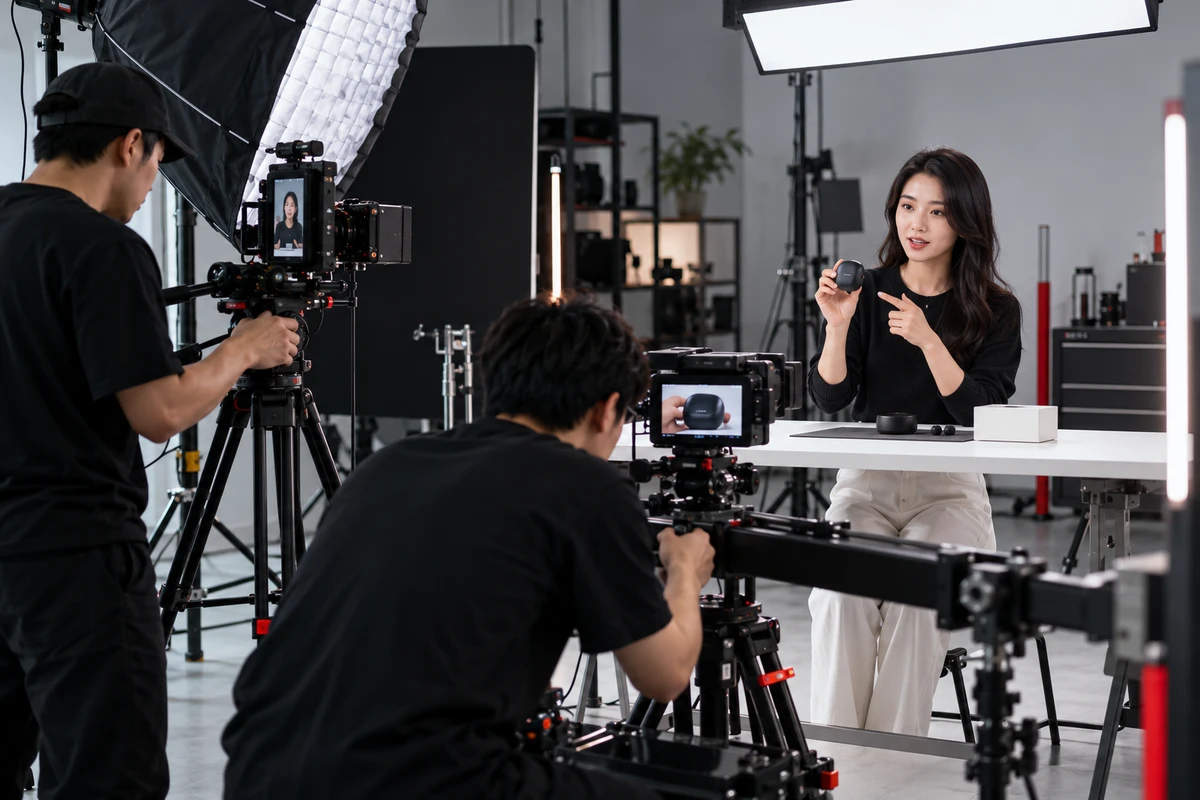
In addition to the platform stream, capture a clean local vertical recording whenever the project value justifies it. Higher-value programs may also need product close-ups, isolated host audio, room tone, a backup connection and a recorded fallback. A platform replay is useful for review; it should not automatically carry the entire post-production plan.
5. Clip-inventory layer
Pre-mark moments that can become 6-, 15- and 30-second assets: a hook, a core demonstration, one objection, one credible answer and one call to action. Deliver files with product, topic, version, approval status and rights-expiry metadata—not only one long recording.
This division of responsibility also complements our analysis of what brands should still outsource when platforms bundle AI creation. Platform operations can become more automated. Product truth, original capture, rights judgment and reusable footage still need clear owners.
When is a phone enough, and when is production worth the budget?
A light setup may be sufficient when the goal is community interaction, no paid amplification is planned, the demonstration is simple, and the brand accepts the platform replay as the only record.
Additional production and delivery budget becomes rational when any of the following is true:
- the launch will be promoted for weeks or months after the live event;
- the creator partnership is expensive enough that reuse materially improves its value;
- the product needs close-ups, multiple angles or sequential proof;
- several markets require different subtitles, prices, claims or calls to action;
- a dropped connection or an expired permission would create meaningful loss;
- later ads must remove interface elements, music, stickers or live comments.
A simple comparison avoids invented industry averages:
Cost per approved reusable asset = (creator fee + live production + paid usage rights + post-production) ÷ the number of approved assets usable within their permission window.
The cheapest livestream can produce the highest asset cost if it leaves the brand with no ad rights, no clean recording and no self-contained product demonstration. Rebooking the creator, shipping another sample and recreating the demo is where apparent savings disappear.
The real change is the order of procurement
Not every livestream needs to become a large production. But if paid distribution is a plausible next step, rights should be confirmed before shots are designed, and downstream uses should be defined before the live setup is chosen.
Meta is making creator content easier to move into the advertising system. The opportunity is not merely to avoid making one additional ad. It is to let one authentic interaction leave behind an asset that is paid-ready, editable and traceable.
For overseas brands whose product samples, factories or production resources are in China, ONCE can help connect Shenzhen-based product capture with remote creator participation, vertical live production and market-specific cutdowns. Start by defining the creator, the permission window and the three most valuable post-live assets; those answers will determine whether a phone setup is enough or a fuller production plan will lower the real cost of reuse.
Sources: Meta’s official Korea launch notice, September 30, 2026; Meta Blueprint’s Partnership Ads course; and Marketing Dive’s September 17, 2026 report on Creator Marketing Hub. Production and procurement recommendations are ONCE analysis. Account eligibility, feature availability and ad policies should be verified in the target market at campaign launch.
Production examples and next steps
Plan the real product actions and outdoor conditions together. The WISE TIGER inflatable-tent film provides a reference for setup and camping scenes.
Review Ecommerce product video production in China. and WISE TIGER: Day and Night Camping Experience with One-click Inflatable Tent. To discuss your project, send the product actions, locations, weather options and delivery versions through the English project enquiry form.