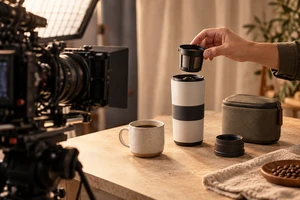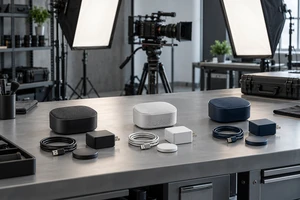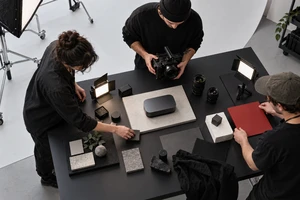
A viewer is halfway through a product ad and asks, without opening the landing page: “Will this fit in carry-on luggage?” “Can I use it in rain?” “What changed from the previous model?”
If the answer lives only in a support agent’s memory, on page 18 of a PDF, or in an old video that is not tied to the correct SKU, a beautifully produced ad has created interest without preparing the next decision.
On September 16, 2026, Google said it was inviting eligible US retailers to a beta of Business Agent for YouTube ads. The conversational assistant can appear directly within ads that use product feeds, allowing viewers to research and ask complex product questions without leaving their YouTube context. Google repeated the announcement in its September 24 Demand Gen update. This is a US beta for eligible retailers, not a universal rollout, and the announcement does not establish a conversion result for every advertiser. Google’s commerce update defines the current scope.
The structural implication is still important. A product video no longer has to end where the edit ends. When a shopper can continue the conversation beside the ad, the film, approved product facts and structured commerce data become parts of the same sales explanation.
A video and a product feed do different jobs
Google now provides several Merchant Center inputs that can support this journey.
The video_link attribute associates video with a specific product. Linked videos can appear in free listings and may be used in Google Ads campaign creation. Google allows up to ten video links for a product; eligible assets must be 6 to 240 seconds long, use 9:16, 16:9 or 1:1, meet a minimum 720p resolution, remain publicly crawlable and stable, and be covered by marketing rights.
Conversational attributes provide a different layer. Optional fields such as question and answer, document link, related product, item group title and variant option help AI systems understand product nuances. They complement the primary product specification; brands do not need to duplicate information already expressed clearly in descriptions, highlights or details.
The distinction matters. Footage can show how an object folds, fits or responds. Product data identifies the exact dimensions, model, variant and approved condition behind that demonstration. When those sources disagree, a shopping agent does not erase the conflict for the brand.
Imagine footage showing a device operating in heavy rain while the approved specification says only “splash resistant.” The operational risk is not merely a slow answer. The visual may imply a stronger promise than the product team has approved.
Classify the question before adding a shot
Not every product question deserves more production. Start by deciding what kind of answer it needs.
Questions that benefit from seeing are good candidates for captured evidence: assembly, control response, opening and closing, scale against a person, surface finish, ports, storage footprint or the real operating condition. Text can describe them, but well-designed footage reduces interpretation effort.
Questions that require an exact value should be answered by approved product data or documentation: dimensions, weight, compatible models, warranty, package contents, certifications, shipping markets and current price. Video may add context, but it should not be the sole source of truth.
Questions that require policy or human judgment should not be inferred freely by either an edit or an AI assistant. Suitability for a sensitive use, permission to publish a claim in a particular market, or accessory coverage for a production batch may require escalation to product, legal, compliance or support.
Agent-ready production is therefore not “film every selling point.” It is giving each high-value shopper question a reliable place to find its answer.
The ONCE Agent-Ready Product Story Map
Before scripts and boards, ONCE recommends building an Agent-Ready Product Story Map. Each row begins with a buyer question, not a slogan, and contains six fields:
| Buyer question | Approved answer | Visible evidence | Data destination | Conditions and limits | Owner |
|---|---|---|---|---|---|
| Will it fit in carry-on luggage? | Exact folded dimensions and relevant standard | Folding action and scale against a typical bag | Dimensions, weight and package data | Airline rules vary; no universal guarantee | Product owner |
| What changed from the previous model? | Confirmed functional or structural differences | Same-condition operation and detail comparison | Model, variant and related-product fields | No unverified performance multiplier | Product and marketing approvers |
| Can a first-time user operate it quickly? | Correct sequence and prerequisites | Uninterrupted first-use sequence | Q&A and manual link | Safety steps cannot be cut for pace | Engineering or support owner |
| Where should it not be used? | Environmental, load or compatibility limits | Correct versus incorrect conditions | Product details, Q&A and documentation | Do not hide a material limit in tiny end-card text | Product and compliance owners |
The map is useful because scripts, production, editing, commerce operations and support refer to the same approved answer. When something changes, the team can tell whether to reshoot evidence, update a field, or revise only a Q&A.
Let conversational shopping data shape the shot list
Google’s AI performance insights are available for English-language queries for eligible Merchant Center accounts in Australia, Canada, India, New Zealand and the United States. The report covers conversational shopping queries in AI Mode and AI Overviews, including share of voice, popular attributes, top intents and products showing. It also separates discovery, evaluation and ready-to-buy stages.
The limitations are equally important: current reporting is limited to organic AI traffic, not paid ads, and the data arrives with a lag. It is not a complete measure of demand for an entire category.
Used carefully, the report can function as a pre-production question finder. Suppose “fits in a small space” is a frequent evaluation intent while the catalog lacks folded dimensions. First confirm and publish the factual dimension. Then decide whether buyers also need to see the folding action, storage sequence or scale relationship. If the field alone resolves the uncertainty, production budget need not be forced into another shot. If seeing the action materially changes confidence, promote it to an evidence module.
A repeatable loop looks like this:
- Collect actual questions from search intent, customer support, returns and sales conversations.
- Have the product owner approve the answer and its limits.
- Decide whether the answer needs text, documentation, still imagery or motion evidence.
- Film only where visual proof meaningfully reduces uncertainty.
- Review new questions after release and update the same map.
Move from a hero-film mindset to evidence modules
The hero film remains valuable. It creates desire, makes the use case imaginable and establishes brand tone. But if every useful moment is locked inside one 60-second timeline, commerce and support teams cannot easily retrieve it when a specific question appears.
For conversational commerce, capture a modular evidence layer alongside the hero edit: complete product actions, critical steps, multiple angles, scale, variant differences, correct use conditions, and the approved claim and SKU associated with each clip. Not every module needs to become a public short-form ad. It does need a clear identity and relationship to the product it proves.
Google’s video specification includes a practical versioning consequence. When replacing an existing product video, Google recommends submitting a new, unique URL. A new URL typically prompts a new crawl within 24–72 hours; changing the content while retaining the same URL can take up to six weeks to be detected and recrawled. Stable links and asset versions are therefore part of commercial readiness, not post-production housekeeping.
A stronger delivery package can include:
- the hero film and channel adaptations;
- short evidence modules associated with each SKU;
- the buyer question, approved answer and limits for each module;
- captions, spoken transcripts and short commerce descriptions;
- stable public URLs, asset versions and update dates;
- a field list for Merchant Center video, Q&A, documents and variants.
This is different from simply increasing the number of exports. It creates product knowledge that media, support teams and AI systems can reuse. Brands already planning multi-stage advertising can combine this approach with ONCE’s discovery–proof–action framework, then make the proof layer retrievable by individual buyer question.
Production close to the supply chain has an information advantage
For global brands connected to Chinese manufacturing, working remotely with a Shenzhen production team can offer more than a lower production cost. Samples, engineers, packaging, accessories, variants and revision units are often near the supply chain. When a question emerges, the production team can more readily verify which model is on camera, whether an action matches the manual and whether an accessory has entered mass production.
Proximity does not automatically make content accurate. The brand still needs a named product-fact owner. A production company should not infer water resistance, effect duration, compatibility or comparative performance from what makes the most dramatic shot. The useful operating model is to approve the Product Story Map across product, marketing and relevant review owners before cameras roll.
The procurement question has changed
The next product-video quote should not stop at “What does a 60-second film cost, and how many cutdowns are included?” It should also ask:
- Which real buyer questions will this production answer?
- Which answers require visible evidence, and which belong in product data?
- Which SKU, version and use condition does every evidence clip represent?
- Who publishes the videos, Q&A, documents and variant data after delivery?
- When the product changes, how will the team identify every affected answer and asset?
Business Agent for YouTube ads will not make conventional product video obsolete overnight. The beta simply makes a persistent weakness more visible: after an ad creates interest, buyers still have detailed questions, while many brands have scattered the answers across scripts, manuals, support messages and commerce systems.
When an ad can be questioned, the most valuable product video does more than make the product desirable. It lets the brand explain what each shot proves, which product fact it represents, under what conditions the answer remains true, and what must be updated when the next question changes.
Sources checked October 1, 2026. Product Story Map, shot-priority and delivery recommendations are ONCE production analysis, not Google requirements. Platform availability and specifications may change.