Global brand film localization is often mistaken for a finished Chinese film with an English voiceover and a new subtitle track. Language matters, of course. But what makes people trust a film is decided earlier: what the film treats as valuable, who is using the product, which details in the setting feel familiar, and whether the way people speak looks like life rather than a translation of a Chinese script.
A film can work perfectly in China and still fail to land naturally in another market. The issue is not simply that overseas viewers do not understand Chinese. They may never be given a reason to enter the story. For a brand expanding internationally, localization is not a post-production translation step. It starts with strategy, casting, setting and production choices: what stays consistent and what must be allowed to speak in the target market’s own voice.
Before translation, identify the value a market can recognise
The product’s core capability may remain the same, but the order in which people need to see it often changes. A Chinese film for a home device may lead with technical innovation, R&D investment and feature count. In another market, the first message may work better as “how does this fit into my day?”, “which small task does it remove?” or “does it make sense in this space?”. None of these angles is inherently superior. The right one is the one that meets a real decision the local audience is making.
Google’s international-growth guidance makes a similar point: expansion should not copy one playbook unchanged, but build experiences that make sense in each market’s cultural context. Think with Google’s guide to international growth is a useful reminder to ask “why would people in this market care?” before asking “which language should we translate into?”.
In a brief, we encourage clients to write one sentence for each market: what should this version make the viewer feel first? It may be reassurance, ease, efficiency, aesthetic affinity or curiosity about a new habit. Without that sentence, English copy, casting and location choices easily become cosmetic substitutions.
Casting and settings are not solved by swapping in a foreign face
The quickest—and least convincing—localization move is to change the cast’s nationality while leaving everything else intact. Viewers can immediately see when a person has been placed into the same frame: they do not use the product naturally, objects in the home do not form a real life, and the camera is still telling a story from another context.
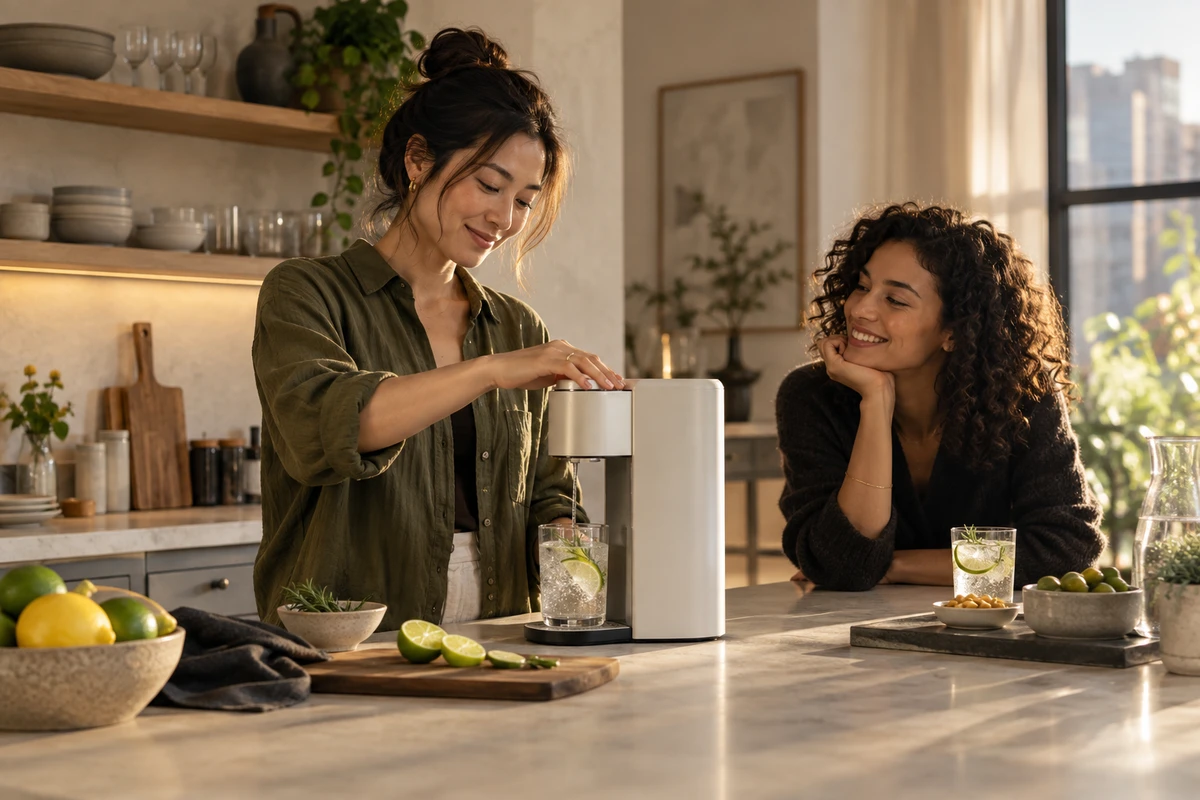
A stronger approach treats each person as the owner of a believable moment, not decoration. Before the shoot, confirm at least three things: why this person would use the product at this moment; whether their space, clothes and actions fit the story; and what relationship they have with the friends, family or colleagues in the frame. A natural pause, an unforced reaction and a real interaction often persuade more than another product slogan.
This is a shared decision for both brand and product films. ONCE’s brand-content approach puts products back into situations people genuinely experience: a visual style can be unified, but a life relationship cannot be copied from a template.
Leave choices for local versions on the shoot day
Localization should not begin after picture lock. Good pre-production leaves options for different markets in the same shoot: a function is filmed once as a clean, universal action and again in several everyday contexts; dialogue has clear, replaceable pauses; product close-ups do not depend on a particular language; and settings include clean plates for later subtitle, packshot or screen-content changes.
This does not mean every market needs a new shoot. The material worth planning early is the material that changes a viewer’s way into the story without weakening brand consistency: the first three seconds, a human reaction, the space in which the product appears, the order of feature explanation and the final call to action. Product texture, core functionality, brand colour and visual rhythm can remain shared assets.
When one launch shoot is serving a website, product page and paid social cutdowns, add localization needs to the shot-asset list: which shots can travel across markets, which fit only one region, and which need to be captured without text. For a practical view of how a main launch film can leave room for later cutdowns, see our video-marketing work.
Captions, voiceover and music cannot be dropped in on the final day
Many Chinese commercial films rely on dense voiceover and an escalating emotional rhythm. Squeezing English into the same timeline often produces long sentences, tiny captions and an uneasy relationship between picture and tone. Worse, a viewer reads the captions and misses the moment the product is actually used.
Let the image carry part of the message first: what the product does, who uses it and what changes as a result. Language can then add the details the image cannot carry. During production, retain clean plates, actions without visible lip sync and product close-ups free from Chinese text. In post, preserve editable subtitle files instead of permanently burning every language into the picture.
W3C’s definition of captions is not merely “translated dialogue”: it includes speech and significant sound information needed to understand the content, in sync with the video. W3C’s caption guidance is best treated as a basic quality check for international versions, not a final visual task. LinkedIn likewise recommends considering burned-in captions and checking format requirements while planning a video ad. LinkedIn Video Ads Tips is a helpful pre-launch reference.
Bring local review forward to the storyboard
What most often makes an overseas film feel like it was made for that market comes from a review before production—not ten rounds of post-production changes. Ideally, local sales teams, partners, customer researchers or creators familiar with the culture answer a few simple questions during storyboard and casting: does this use situation feel real? Which value claim sounds too much like advertising? Could a gesture, family relationship, dining habit, spatial cue or joke be misunderstood?
This review does not need to become a long committee process. A handful of clear opinions before the shoot lets the production team decide what to keep, remove or capture differently. If multiple markets are launching at once, begin with one universal master and one local version for the priority market; use media and sales feedback to decide where to expand next instead of copying ten languages on day one.
More versions are not automatically better
If only units, subtitle language, voiceover and the closing CTA change, a reshoot is usually unnecessary. If the product’s lived setting, user relationship, humour, price sensitivity or core promise has changed, it is worth considering new casting, art direction or an independent script. Forced reuse makes every market feel that the film was not made for them; unnecessary reshoots spend budget where there is no meaningful difference.
A practical principle is to lock the part of the brand that should remain constant, then choose only one or two variables in each market that genuinely change how people understand it. That protects brand assets while giving each local version room to breathe. If you need to plan a brand film, product video and localized media as one system, start with an ONCE global-brand video localization plan.
Get a Global Brand Video Localization Plan
Sources (accessed September 2026)
- Think with Google: Master international growth with winning strategies
- W3C Web Accessibility Initiative: Captions/Subtitles
- LinkedIn Marketing Solutions: Best practices for video ads
- TikTok One Creative Suite: Localization and translated-video capabilities
Production examples and next steps
Agree the picture, speech and music priorities before post-production. Huawei Music × Sound X provides a finished brand-commercial reference for the viewing and listening experience.
Review TVC and commercial production and Huawei Music × Sound X: Immersive Sound in an Instant. To discuss your project, send the picture edit, dialogue needs, music references and delivery versions through the English project enquiry form.