A factory can look advanced without explaining how a product earns trust. A precision-manufacturing film needs a visible proof chain: where a part is machined, how it enters measurement, who assembles it in a controlled environment, and what verification happens before the finished product appears. Each shot should answer one question that leads to the next.
ONCE's public DZOFILM Linglung 20-70mm corporate-film case (Chinese) moves through machining, measurement, clean assembly, optical testing, documentation and the finished lens. DZOFILM identifies the Linglung 20-70mm as an M4/3 zoom cine lens and describes its mechanical control and optical design on the official product page. This guide stays within what the public footage and approved product information can support. It does not infer tolerances, yield, certification or campaign performance from a shot.
Start with one decision the viewer needs to make
“Show our manufacturing strength” is too broad to direct a camera. A more useful question is: how does this precision product move from machined components to a deliverable lens? The film can then retain only the processes, people and records that help a buyer follow that change.
This decision also sets limits. A wide shot locates the workstation. A close-up shows the action. Measurement and testing establish review points. The finished product resolves the sequence. If a specification is confidential or cannot be confirmed from the image, it should not become a claim. For a broader process-first structure, compare ONCE's guide to turning a manufacturing site into an understandable story.
| Manufacturing stage | Question the shot must answer | Useful coverage |
|---|---|---|
| Machining | Where and how does a component take shape? | Workstation relationship, tool or part movement, resulting component |
| Measurement | How does the machined part enter review? | Operator, measured object, instrument action and an approved result |
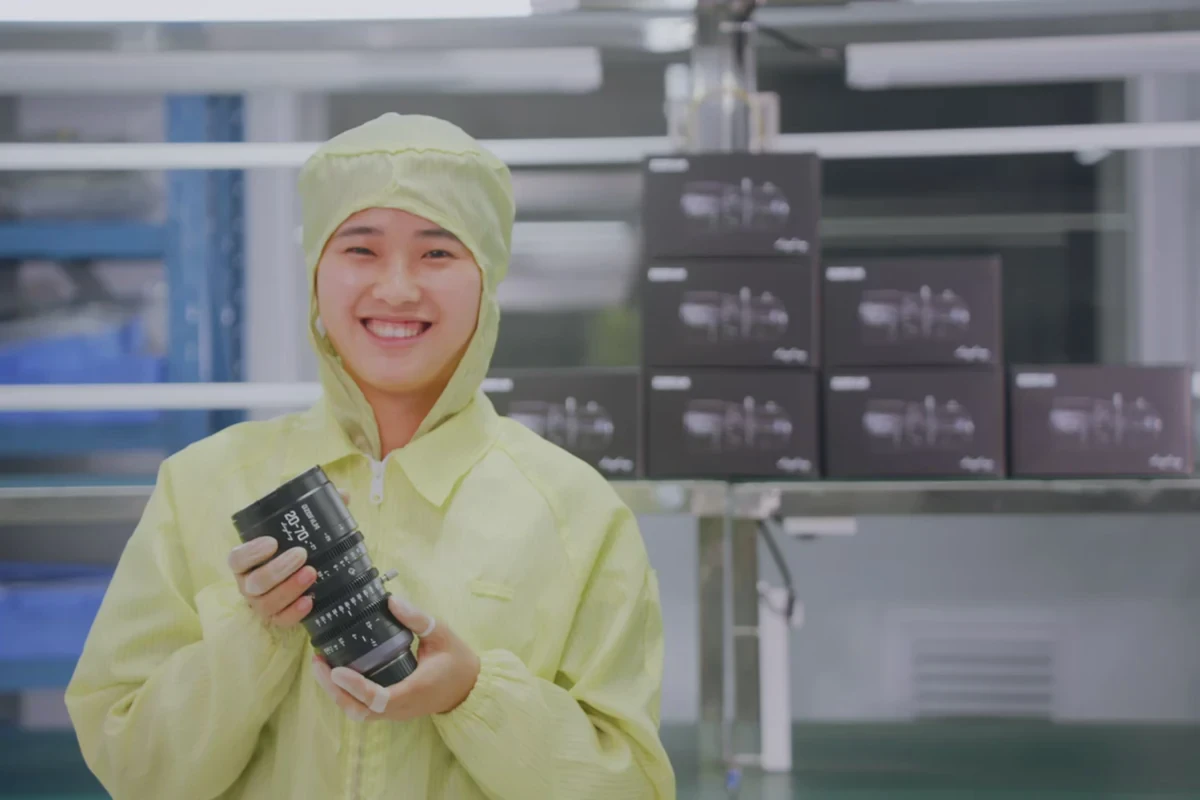
| Clean assembly | How are critical elements handled in a controlled space? | Environment, hand action, contact point and assembled state |
| Optical testing | How does the product enter another verification step? | Test position, operator action, interface state and documentation |
| Handover | What did the preceding work produce? | Finished product, record or packaging, and the responsible person |
Film verification as action, state and record
A measurement sequence often fails because it shows an instrument or a screen without cause and effect. Viewers cannot tell who placed what, why the interface changed, or how the result relates to the part. A useful micro-sequence has at least three beats: the operator positions or adjusts the object, the instrument enters a working state, and an approved record or decision follows.
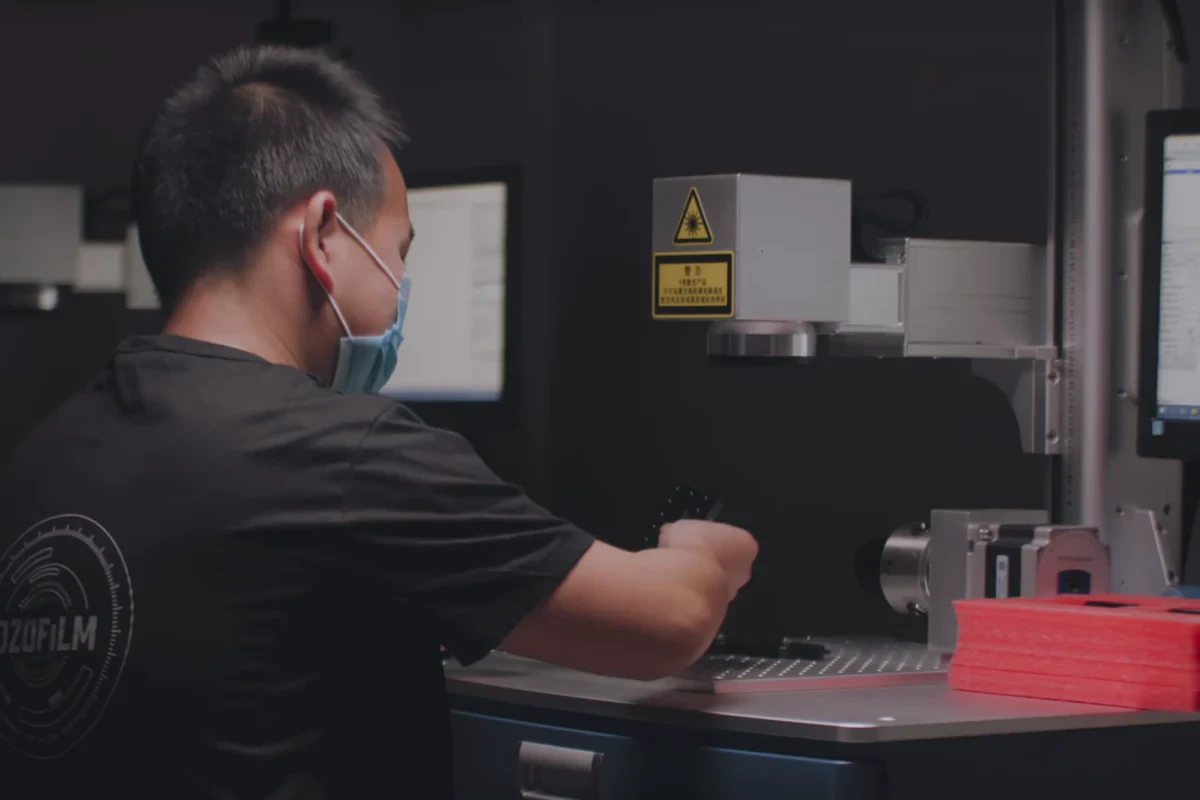
Do not enlarge numbers on a screen merely to create a technical look. Engineering or quality owners should first confirm which fields may be shown. The production team can then decide whether to capture a legible value, show only a change of state, or explain the step with an approved graphic. On-screen language must use the company's verified terminology.
Keep the hand, component and environment in the assembly sequence
Precision assembly can become a montage of attractive hands with no process relationship. The close-up should still identify the component, tool or contact point. Place an environment or workstation shot before and after it so the viewer understands where the action belongs. The hand then becomes process evidence rather than an abstract performance.
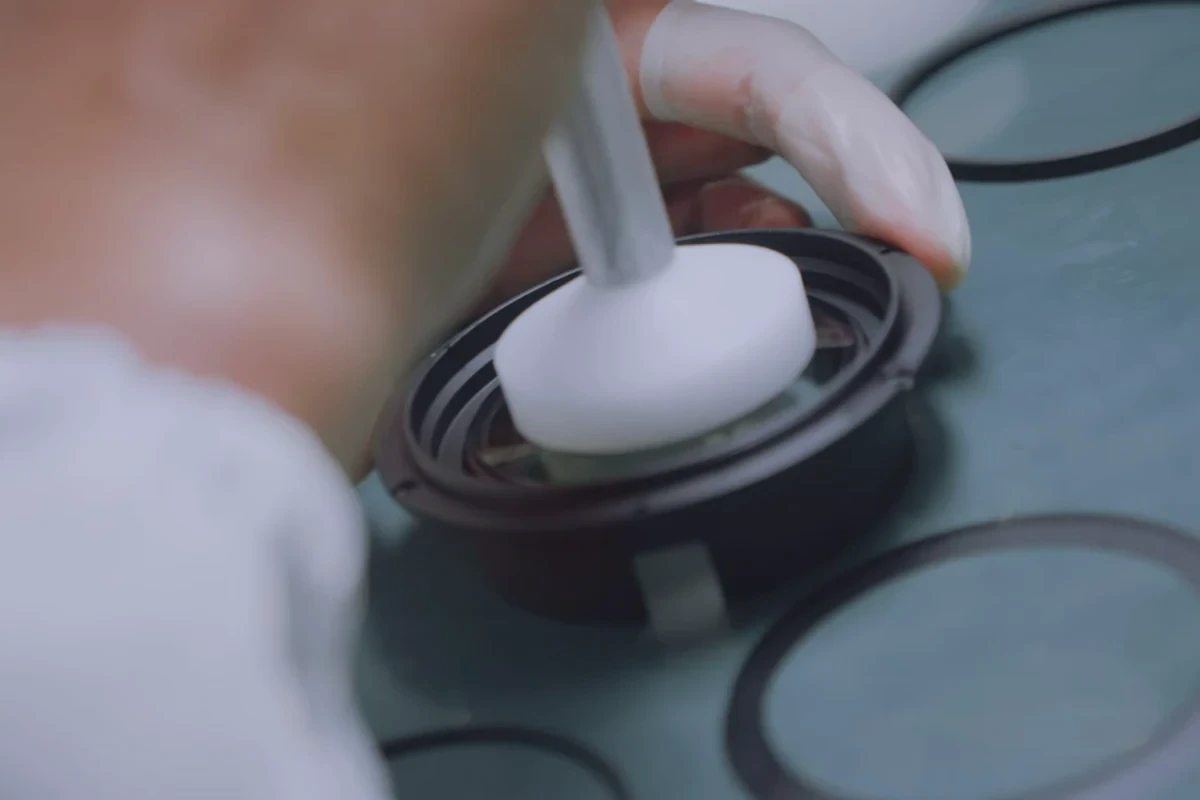
A controlled environment changes the production plan as well. Personnel access, equipment cleaning, camera position and operating state belong in the call sheet. The crew should not interrupt a validated workflow simply to obtain one more close-up. ONCE's guide to filming quality-management processes covers when a quality step deserves its own sequence.
Use testing as a narrative turn
When the film moves from assembly to optical testing, the story should change clearly: the product has taken shape, but the process is not finished. First show how it enters the test position. Then connect the operator, interface state and documentation. A graph without the tested object has weak context; an exterior shot of the machine does not explain its job.
The official Linglung product page identifies the 20-70mm focal range, M4/3 mount and optical-design features. Those facts help establish product identity. They should remain separate from any claim about what a particular on-screen test proved. Product documentation, captured footage and the manufacturer's explanation need their own source trail.
Let the finished product resolve the preceding work
A rotating product shot by itself turns the sequence back into surface advertising. A stronger ending places the finished lens beside a record, packaging step or responsible person. The viewer can connect machining, assembly and testing to a concrete deliverable.
People do not need to deliver slogans. They can collect, inspect, document or hand over the product. If the film also needs a portrait or team image, place it after the proof chain is complete. It can close the brand relationship without replacing the process in the middle.
Approve a six-field evidence sheet before filming
| Field | What to lock before production |
|---|---|
| Viewer decision | The manufacturing capability the film must help a buyer assess |
| Process order | Real sequence, available windows and acceptable substitutes |
| Action owner | Person, machine, tool and component in each shot |
| Disclosure boundary | Whether parameters, batches, screens, drawings and identities may be visible |
| Approver | What engineering, quality and brand owners each confirm |
| Resolution | How the product connects to a record, package or team |
Walk this sheet through the location with the storyboard. Mark every planned shot as visible fact, approved explanation, or prohibited inference. If a sentence in the edit has no corresponding frame or source, remove it, qualify it, or schedule a pickup. A more confident voice-over cannot repair missing evidence.
Edit for cause and effect before editing for pace
Precision-manufacturing footage is visually rich, so it is tempting to cut by colour and motion alone. Build the first edit around cause and effect: component enters the station, operator performs an action, state changes, record is made, and product advances. Once this sequence reads clearly, close-ups, natural sound and timing can compress it.
Sound should support the same chain. Machine start-up, tool contact, room tone changes and documentation actions belong at the point where they explain the image. Music can carry mood, but it should not erase every useful production sound. Captions should add only verified information that the picture cannot communicate directly.
Separate what the audience can see from what the company must verify
During review, classify every statement: visible in the image, confirmed by the company, or inferred by the production team. Footage of machining, measurement, assembly and testing proves that those stages are presented. It does not automatically prove a tolerance level, pass rate, capacity, certification or customer outcome. Titles, subtitles and descriptions should contain only sourced facts.
For a precision-manufacturing, optics or industrial-product film, prepare one buyer question, five process stages and the six-field evidence sheet. Then review ONCE's video-production solutions or share existing process material through the project enquiry page. The first discussion should establish which verification the audience needs to understand before deciding how many machines to show.