A polished AI audit can describe the hook, pace and call to action of every competitor video in your category. That is not yet a reason to buy it. For a brand team planning its next product film, the useful question is whether the system can show exactly which clip, moment and modality support a comparison—and say when the footage cannot answer the question.
Public creative reveals what an advertiser chose to show. It does not expose the competitor’s spend, conversion, targeting or independently verified product performance. The procurement method below is ONCE’s proposed acceptance exercise, not a reported client test or a claim that any vendor has passed it.
Why the new research matters, and what it does not prove
In an October 2, 2026 preprint, Jinghan Zhao and colleagues introduce AdsCVR, a benchmark built from 2,483 ecommerce videos and 6,110 questions. Its comparison groups contain two to four videos, and its questions cover six dimensions including creative strategy, visual composition, temporal structure and information density. The paper also presents AdSeek, a system designed to look for relevant visual and audio material over multiple steps instead of treating every frame as equally important.
This is a model-evaluation setting, not a buyer study, an ad experiment or a certification of commercial software. The questions and answers come from the researchers’ construction and verification process. An accuracy figure on their test split cannot be transferred to your catalogue or translated into a promised sales lift. The durable lesson for procurement is more modest: finding the decisive evidence across videos is a different task from producing a plausible summary of one video.
The ONCE cross-video evidence trial
Before a demo, choose two to four product clips you own or are authorised to process. Keep the product version, market, source and file ID attached to each. Write the buyer question before the vendor runs its analysis. If you ask only for “insights,” it can return an attractive creative report without ever making a falsifiable comparison.
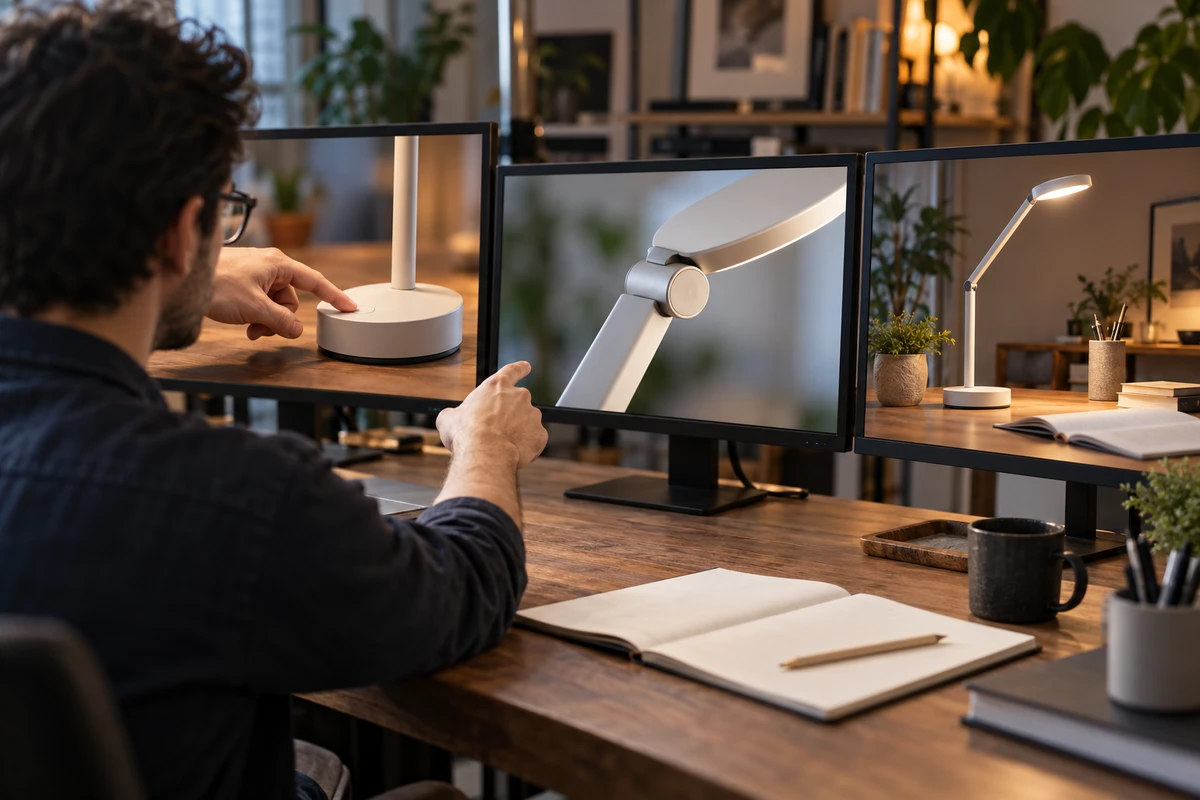
Consider a purely hypothetical set of desk-lamp clips. Clip A shows a hand pressing the switch. Clip B has a voiceover claiming all-night illumination. Clip C shows the arm being adjusted in close-up. Ask, “Which clip visibly shows angle adjustment?” Then ask, “Which clip proves all-night battery life?” C can support the first answer; a short voiceover claim in B does not establish the second. These are invented teaching clips, not observed ads or ONCE test results.
Keep your own answer key and source timestamps. Ask the vendor to return, for each answer, the clip ID, approximate moment, whether support came from footage, speech or on-screen copy, what remains unknown, and the conclusion it is willing to make. If the video was recut or transcoded, reconcile the version before comparing timestamps. A timestamp attached to the wrong export is not traceability.
Four failure modes worth pricing separately
- Missed evidence: The answer might sound right, but the decisive action was not located. More selective frame retrieval, audio review or human inspection may be required.
- Cross-clip mix-up: A detail from A is attributed to C, or two product versions are merged. Fix identity and version handling before allowing the output into a creative brief.
- Claim promoted to fact: The narration in B becomes “verified overnight runtime.” Record it as an advertiser claim until separate product material supports it.
- Absence treated as incapability: A video does not show an adjustment, so the report says the product cannot adjust. “Not shown in this clip” is the defensible statement.
Rather than inventing an industry accuracy threshold, log how long your team spends correcting each type, which items remain unresolved, and who must approve a product assertion. This reveals the actual human work sitting behind a per-video subscription price.
What should the contract deliver?
Separate three deliverables: a readable summary, a traceable evidence record, and a recommendation for the next production decision. Ask whether the service analyses full audio as well as images; whether it preserves file and version identifiers; whether references can be exported; how errors are reviewed; and how submitted material is retained or deleted. A cheap batch summary and a reviewable research record are not the same purchase.
Suppose similar clips all show a lamp turning on, while your own buyers need to see whether its arm stays where they position it. Your next shot may be a continuous adjustment-and-use sequence, not a louder opening. But first confirm the actual product’s behaviour and conditions. A competitor’s omission does not establish a market gap, and an AI report cannot turn an unverified feature into a shootable claim.
Sometimes the appropriate output is not another film. A specification question may belong on a product page; a runtime or safety assertion requires product substantiation; a demonstration deserves filming when motion genuinely helps someone understand use. ONCE’s video production solutions are a possible next step only once that task is clear.
When a human review is enough
For a small set of clips and one well-defined question, watching side by side may be faster than onboarding a tool. Do not upload restricted or unlicensed media just to run a trial. If the decision hinges on technical performance, market-specific claims or advertising effectiveness, cross-video analysis can locate questions to investigate; it cannot replace validation, local review or your own campaign experiment.
Shopify’s September 22, 2026 guide to types of ecommerce video marketing distinguishes product demos from side-by-side comparison content. That is platform editorial guidance, not evidence that this procurement exercise improves performance. The test for your vendor remains concrete: can a colleague follow the returned trail to the original video and agree on what was seen, what was merely said, and what is still unknown?
Bring two answerable cross-video questions and one deliberately unanswerable one to the next vendor demo. A system that can point to its evidence—and decline to invent the missing part—is a more credible component of a long-term content workflow than one that always has a confident conclusion.