AI smartphone video production often goes wrong in one predictable way: it turns “intelligence” into floating light, animated cards, and a final line about a phone that understands you. The film may look new, but the viewer has not seen when the capability happens, whose problem it solves, or why this particular device is necessary.
This category is no longer only a chipset story. Shenzhen’s 2025–2026 action plan frames an AI phone as a stack spanning chip, operating system, model or agent, and application ecosystem, with services centred on intent. That is a policy direction rather than a promise for any individual handset, but it captures the production challenge: a launch film has to make a chain of capability legible.
A credible AI-phone film connects four things: the signal a person gives, what the device sees or hears, the understandable feedback it returns, and the physical reason this phone can deliver the experience. Remove one of those links and “AI” becomes an effect people cannot retell.
Write every feature as a moment someone can trigger
“AI helps you travel” and “AI makes you productive” are not filmable actions. The script has to go further. Is someone asking a question through the camera, selecting information on screen, speaking, pressing a control, or moving the phone toward a real object? What is the first visible response?
Reduce each capability to three beats: trigger, feedback, and action. First establish the gesture—raising the phone, framing something, calling voice assistance. Then show the approved UI or the minimum graphic enlargement needed for clarity. Finally return to one concrete action the person completes with that result. The device does not need to solve an entire life; it needs to complete one scene.
This is where AI differs from a conventional product claim. Material, construction, specifications and one strong close-up can establish a traditional benefit. An intelligent capability needs cause and consequence: without a trigger the audience does not know why it appeared, and without an action they do not know who it helps.
Give “screen truth” its own production workstream
The most common launch-stage failure arrives after the hardware has been filmed: the UI is still changing, feature names are unsettled, or a demo build differs from the shipping version. The easy fix is to make it look plausible in post. That turns the least reversible part of the job into the least traceable one.
Before shooting, product, legal and marketing teams should agree a screen-truth sheet: approved device and software builds, the interaction path that must appear, waiting time that may be compressed, conditions that require qualification, and outcomes that cannot be represented illustratively. Any feature that depends on region, language, account, connectivity or hardware should be named there, not explained away in a late review.
That caution is practical, not theoretical. Apple’s current support documentation ties certain Apple Intelligence capabilities to eligible hardware, supported languages and regions; Samsung says feature availability can vary with device model and software version; Google’s Gemini Live documentation also states feature and account compatibility constraints. In a launch film, the approved product truth—not a visually persuasive approximation—has to set the boundary.
Controlled AIGC and VFX still have a useful role: they can clarify invisible data flow, environment or transitions. They should not replace real control placement, interaction order, identifiable product detail, or an unapproved AI result. A reliable rule is simple: if a buyer must operate it, media must be able to capture it, or retail staff must demonstrate it, let a real device, approved build or traceable screen recording carry the claim.
Make the hardware evidence, not the backdrop
If intelligence exists only inside a floating screen, it could belong to any black rectangle. The film has not answered why it is this phone. Each feature scene should return to a physical relationship: camera, microphone, display, button, speaker, grip, folding form, or how a person handles the phone while moving.
For visual understanding, establish the camera framing and the stabilising hand before revealing the response. For cross-language communication, first make the physical distance, speaking rhythm and phone placement believable. For an efficiency scene, do not show only the generated result; show how information on screen leads to a next action. The aim is not to turn every feature into a tutorial. It is to let on-device capability, interaction context and hardware truth corroborate one another.
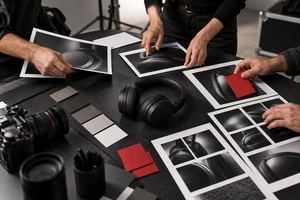
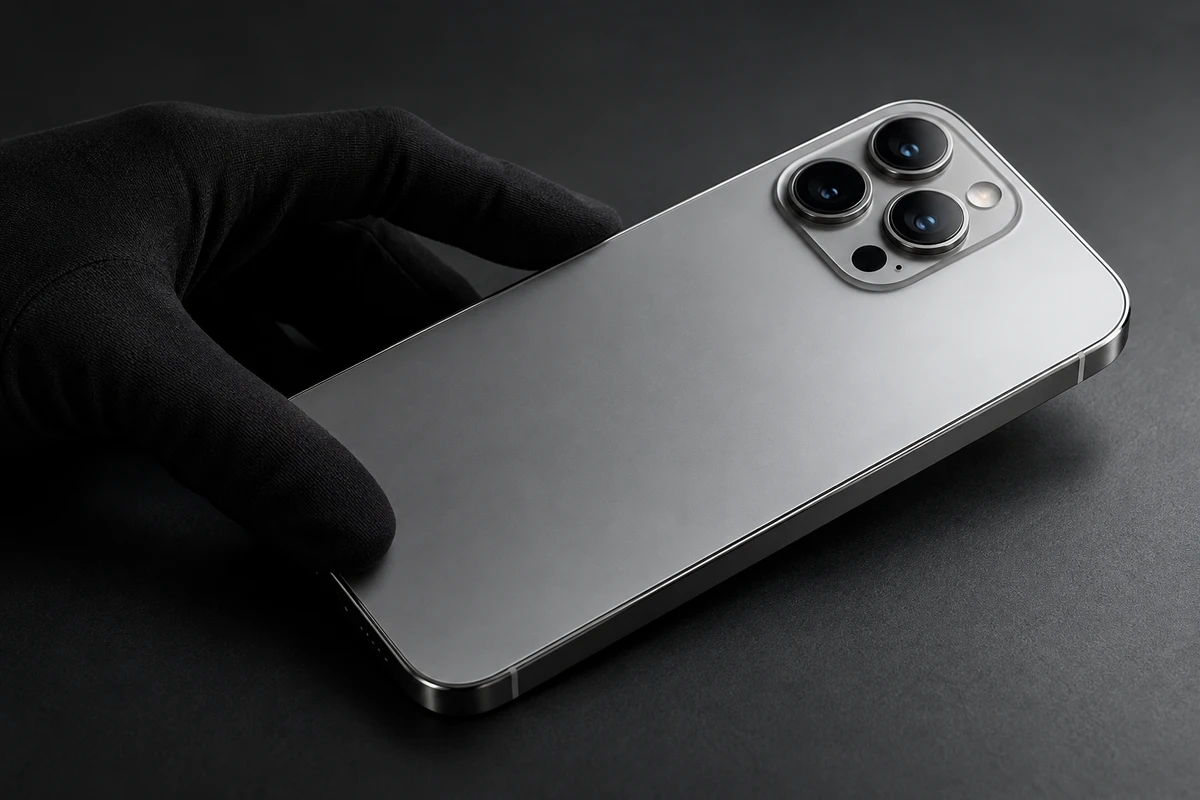
That is also why product stills remain essential. Release-level material close-ups, ports and camera modules, and display readability in changing light create physical trust. Feature scenes explain value in use. When these roles are separate, AI does not swallow the product.
Share evidence across formats, not one identical explanation
A 60-second hero film can establish context, character and feature logic. A 15-second cut may only need one distinctive trigger and outcome. Vertical social has to make clear, at a glance, what the phone is doing. If the team films a landscape hero first and crops it into every destination, it often keeps mood while losing evidence.
For each core capability, reserve four asset types: a hardware-establishing shot, a real interaction shot, a result shot, and a cut that can open on its own. TikTok’s current performance-ad guidance recommends materially different creatives for testing and maintaining an asset library for refreshes; that is one commercial reason to plan these proof assets before the shoot rather than after it. Explore ONCE’s video-marketing insights for a broader view of multi-version content planning.
Ask the product team these five questions before the shoot
- Who triggers this feature first, and can the audience see that within two seconds?
- What differences between shipping, prototype and demo builds must never be mixed?
- Which outcomes can be clarified graphically, and which need a real UI or real interaction?
- Would the picture still explain the help the user receives without a voice-over?
- Which hardware action or material detail proves this is not a generic AI demonstration that could be moved onto another device?
If those questions have no answers, the next deliverable is not a storyboard—it is an approved product demonstration. The best AI smartphone launch film does not make technology sound more mysterious. It lets people see the conditions in which it works, how they use it, and why it belongs in the hand.
ONCE VISUAL can turn prototype status, feature lists, launch timing and multi-platform requirements into an executable product-video plan. If you are preparing an AI smartphone or intelligent-device launch, explore ONCE’s video production solutions and request an AI-terminal product-video plan.