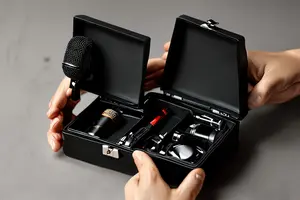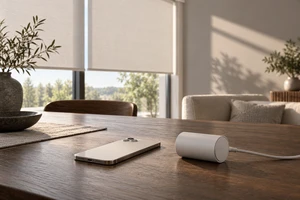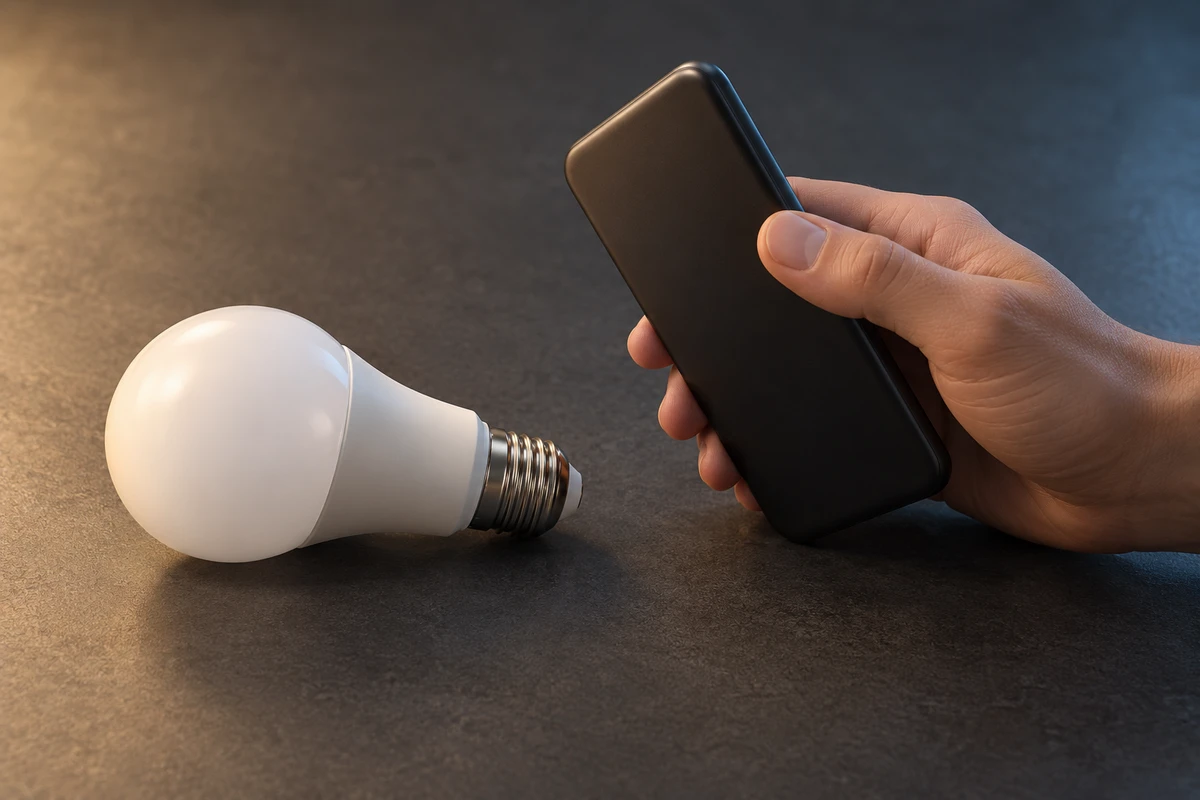
Your supplier demonstrates a phone approaching a smart bulb. The marketing edit cuts straight to a lit room. Before approving “tap and use,” ask which state the interaction actually reached. Reading setup information, exchanging commissioning credentials and operating a powered device are different milestones.
For overseas brands working with Chinese hardware partners, ONCE recommends buying a defined setup demonstration rather than an isolated tap shot. If the product supports pre-commissioning before main power is connected, the film needs to explain where that preparation ends and operational use begins.
A useful change in sequence, not the removal of every condition
The Connectivity Standards Alliance's June 17, 2026 Matter 1.6 announcement describes bidirectional NFC commissioning, including exchanges before a device is fully powered. It distinguishes this from the NFC onboarding payload in Matter 1.4.1, which provided setup information while commissioning still depended on Bluetooth LE.
That creates a practical possibility for installed equipment: prepare it while it is accessible, then place it in its final location. The specification does not establish that a particular shipping product, app or controller implements the feature. Sources were checked October 23, 2026; this is analysis of an announced capability, not a launch-day report or a claim that 1.6 is the latest release.
ST's ST25DA-C implementation article supplies an important endpoint: after its phone interaction, the product is pre-commissioned with network credentials and ready to join the operational network when main power comes on. The page contains an original section dated June 17 and an update dated September 15, 2026. We use that implementation explanation, not its supplier-leadership or market-benefit claims.
The commercial story may therefore be “prepare before installation.” That is a more precise benefit than compressing preparation, installation and first use into an apparently instantaneous gesture.
The power requirement belongs to the implementation
There is a useful counterexample in Nordic Semiconductor's current Matter Template documentation. Its described Nordic Matter SDK implementation supports powered mode only: the SoC must already be powered and running. That does not describe every Nordic product. It does demonstrate why the standard's allowance cannot be copied automatically into a specific product's advertising.
Before production, have engineering identify the actual sample, firmware, NFC implementation and commissioning application. State whether the phone uses a consumer-facing app or an engineering tool. A development demonstration can be appropriate for a trade presentation while still failing to represent what a retail buyer can do.
If the only input is a standards announcement, scope product confirmation first. An NFC tag that opens a webpage and NFC-based Matter commissioning can both be filmed, but should not be given the same description.
ONCE's three-state filming brief
This is a proposed production method, not certification or a client-tested result. Apply it to the flow the product owner has confirmed.
| Segment | What production must establish |
|---|---|
| Before configuration | The sample, its power state, whether it is already bound and what preparation has occurred |
| NFC interaction | The approach position, required hold and genuine app feedback; the precise state reached at completion |
| Subsequent operation | Any remaining power or preparation step, followed by the promised real control result |
Imagine a hypothetical bulb supporting pre-commissioning before main power. Show it outside the socket, record the approved application interaction, then explain the connection between appropriate installation, power and operation. Qualified people should handle the installation according to the product instructions; the camera plan does not justify improvised electrical arrangements.
An advertisement need not include every second. It does need a truthful sequence. A version selling pre-commissioning can end at that milestone with the remaining condition clear. A version promising operation needs to account for the prerequisites to that result.
Choreograph the actual hold, not a fictional instant
Nordic's documented test flow keeps the phone within NFC range during the exchange until the commissioner reports success. We do not turn that implementation's timings into an industry average or prescribe them to another product.
Rehearse the real action before choosing the hand movement. The phone antenna, product sensing area and grip affect what the camera can show. Use a relationship shot and a corresponding screen capture. If a separate capture is necessary for legibility, identify the matching operation. An already-bound accessory's success screen should not stand in for another device's first setup.
Resetting is part of the assignment. Have the product owner supply the approved unbinding or reset procedure and confirm when another take can begin. An initial addition and the later recall of an existing device may look similar but represent different experiences.
ONCE's earlier smart-home setup filming article addresses general production planning. This brief concerns the specific distinction between an NFC preparation milestone and a later operational state. A demonstration explains a confirmed capability; it does not replace engineering validation.
Compare three different deliverables
A gesture insert establishes the location or visual idea of the interaction without independently claiming completed setup. A pre-commissioning demonstration documents the NFC milestone and the remaining activation conditions. A first-use demonstration includes the necessary preparation and a genuine operating result.
Ask quotations to identify which one they include. First-use work may add an installation setting, power preparation, synchronized capture, reset time and technical review. Extra seconds alone do not describe that workload. Conversely, a project explaining pre-commissioning may not need a full installation tutorial.
Retain a reference demonstration, clean screen capture, advertising edit and a short explanation of the states shown. Product owners should approve the English terminology: pre-commissioned should not casually become ready to use, and reading a tag should not automatically become commissioned.
For ONCE, the useful long-term capability is a collection of reviewable hardware demonstrations that later teams can understand and reuse. Whether it supports a recurring service depends on real demand and maintenance work; this article supplies no savings, margin or conversion claim.
Complete two lines before the next brief: “After the phone approaches, the product has completed ____.” “Before the user can operate it, ____ still needs to happen.” Those answers determine whether “tap and use” is accurate, needs qualification or should be replaced.