An overseas distributor commissions listening samples from a production team in China. The audio arrives, and the editor levels each sample separately to make the video play smoothly. That may suit a comparison of tonal character. It may also remove the output difference the distributor wanted to demonstrate.
This is a fictional commissioning problem, not an ONCE project. Its lesson is practical: decide what the speaker demo is comparing before anyone records or polishes it. “Make the comparison fair” is not a complete brief.
Decide whether level is a condition or a result
Crutchfield's Understanding speaker sound profiles, currently dated September 8, 2026, links speaker sensitivity to how loudly a speaker plays under the same amplification. It also distinguishes descriptions of sound character from individual preference. We checked the page on October 20. This does not establish the performance of any particular pair of products; it explains why output and tonal character deserve different questions.
When the question is tonal character
If buyers want to compare the presentation of vocals, bass and treble, controlling playback level can be part of the comparison design. An appropriate audio professional should define the matching method, reference signal, position and tolerance for the task. Matching the visible peaks of two waveforms is not a substitute for that plan.
The resulting sample is intended to help listeners compare character under those conditions. It is not a demonstration of the original output difference, a maximum-output test or proof that one speaker will sound better in every room.
When the question is output under defined input
If the question concerns output differences under an agreed input condition, preserve the relevant level relationship. Independently boosting, compressing or limiting each recording may change the very difference the video is supposed to show. Agree permitted processing before the session.
Define and verify the input condition itself. An identical knob position should not simply be labelled an equal-power test. This discussion primarily concerns commissioning passive-loudspeaker comparisons. Powered and Bluetooth products have their own controls and processing modes; setting every product to halfway does not, by itself, establish equivalent conditions.
Neither approach is automatically superior. They answer different questions. Trouble begins when post-production follows one approach while the title and sales copy promise the other.
ONCE's comparison agreement sentence
Before commissioning the shoot, complete this sentence: We are comparing these products to answer this question, holding these conditions fixed, allowing these adjustments, and drawing no conclusion about these other things. This is an ONCE production-briefing proposal, not an acoustic testing standard or a method with measured commercial results.
For the fictional distributor, a tone-focused brief could identify the exact samples and approved music excerpt, require an agreed level-matching method, and retain placement, capture and processing notes. It would explicitly exclude conclusions about maximum output, distortion limits or performance in the buyer's home. It would not presume that a meaningful audible difference—or a winner—must emerge.
An output-focused brief needs a different agreement: how input is established, what level relationship must survive, and how capture avoids unapproved changes such as automatic gain adjustment. If the method remains unresolved, commission that design work or a limited recording exercise first. Do not promise a finished comparative advert before its comparison has been defined.
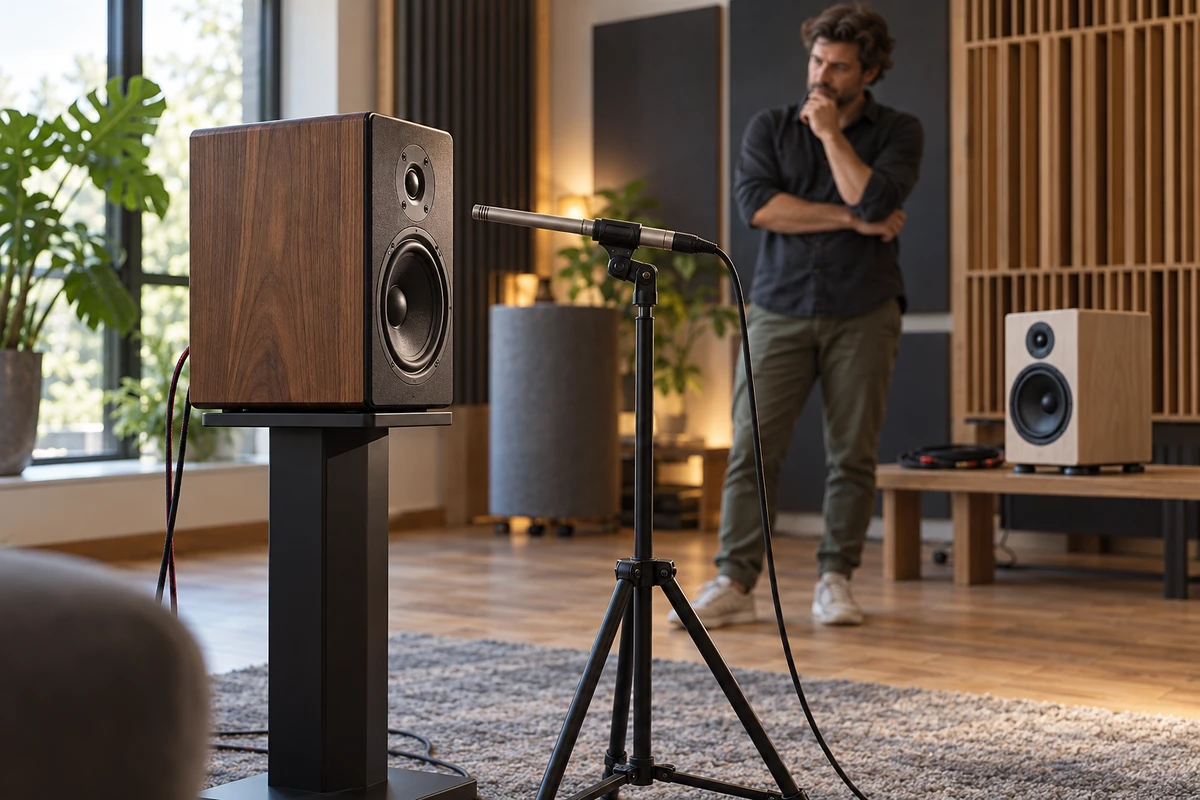
Nakamichi's DRAGON Single 12 product page describes its listening samples as using the same room, placement and microphone, and states playback limitations for the bass demonstration. The section has no publication date; we read it on October 20, 2026. These are the manufacturer's declarations, not conditions we independently verified; we did not audition the recordings. The useful commissioning point is that capture conditions should be stated, but those details alone do not define the question your own demo should answer.
An apparent difference may be either the result you want to preserve or an influence you need to control. Have the product and audio teams decide which. Do not leave that decision to an editor trying to make the transitions more pleasant.
Buy a recording with an explanation, not just a finished mix
Separate the proposed recording method, sample preparation, room and placement documentation, audio processing and video packaging in the scope. Ask whether “audio post” permits independent leveling, and whether delivery includes unprocessed recordings, the processed comparison track and a record of changes. Name the person approving product versions, modes and the explanation shown to viewers.
Keep the comparison agreement and relevant notes with the finished file. A later social edit must not lose information needed to interpret the samples. If removing the explanation changes the meaning, the recording is not unrestricted mood footage.
Online listening also has a limit. Crutchfield's current SpeakerCompare introduction describes laboratory measurements adapted for headphones, while explicitly saying the tool cannot reproduce exactly how speakers will sound in a customer's room or car. The page has no publication date; we checked it on October 20, 2026. That is a useful limit for a production brief, not an independent assessment of the tool's accuracy. An ordinary video should not promise complete reproduction of a buyer's future listening environment either.
A lifestyle film can still be the right purchase when the task is to show design, placement or an occasion for listening. It does not need a comparison bolted onto it. If listening samples are necessary, bring the intended question and approved product information to ONCE's production planning discussion before agreeing recording and editing deliverables.
For a continuing content programme, retain client-authorized comparison agreements and processing notes, not just finished films. Reuse starts by checking whether the next product shares the same question and conditions. This is a proposed operating practice, not a claim of existing savings or client outcomes.