Is an unboxing video finished when the lid comes off and the product is visible? It might be, if the purpose is to present a gift box. If viewers also need to understand how a product enters everyday life, an orderly display of everything inside may only be the middle of the story.
An unboxing idea can work backwards from a more specific destination: once the product is out, what can the person finally do? This does not turn every film into a complete tutorial. It gives the opening somewhere to go. Packaging makes an object visible; the next action gives it a purpose. The handover deserves some attention.
Packaging can be a stage or an entrance
Zenpack's project description, Dwell Dripper for Verve Coffee Roasters, describes a triangular cardboard structure with a handle and a separate place for the accompanying scoop. The designer also explains that the scoop carries through the dripper's shape language. The page was consulted on 18 October 2026. This is the designer's written account, not a shot-by-shot observation of an advertisement or evidence of campaign performance.
The useful idea is not that other brands should copy a triangular box. Packaging, product and accessories can be related participants. The package presents the object in a particular way, while the accessory has a connection with the main item. In a film, those relationships can motivate actions rather than merely supply design details for a camera to pass over.
Where the content centres on display, collecting or gift presentation, the package may legitimately be the main attraction. The film can finish with the opened arrangement, allowing viewers to understand how it presents the object. For a product whose everyday use matters, the package's role may gradually end after removal. These films need different destinations, not the same slow lid lift, accessory line-up and smile to camera.
Nor does anticipation require keeping the product behind paper and decoration indefinitely. If viewers do not know what they are watching, a prolonged wait may offer missing information rather than suspense. Product identity can arrive early, leaving interest in what happens next rather than only what is inside.
Give an accessory a next action
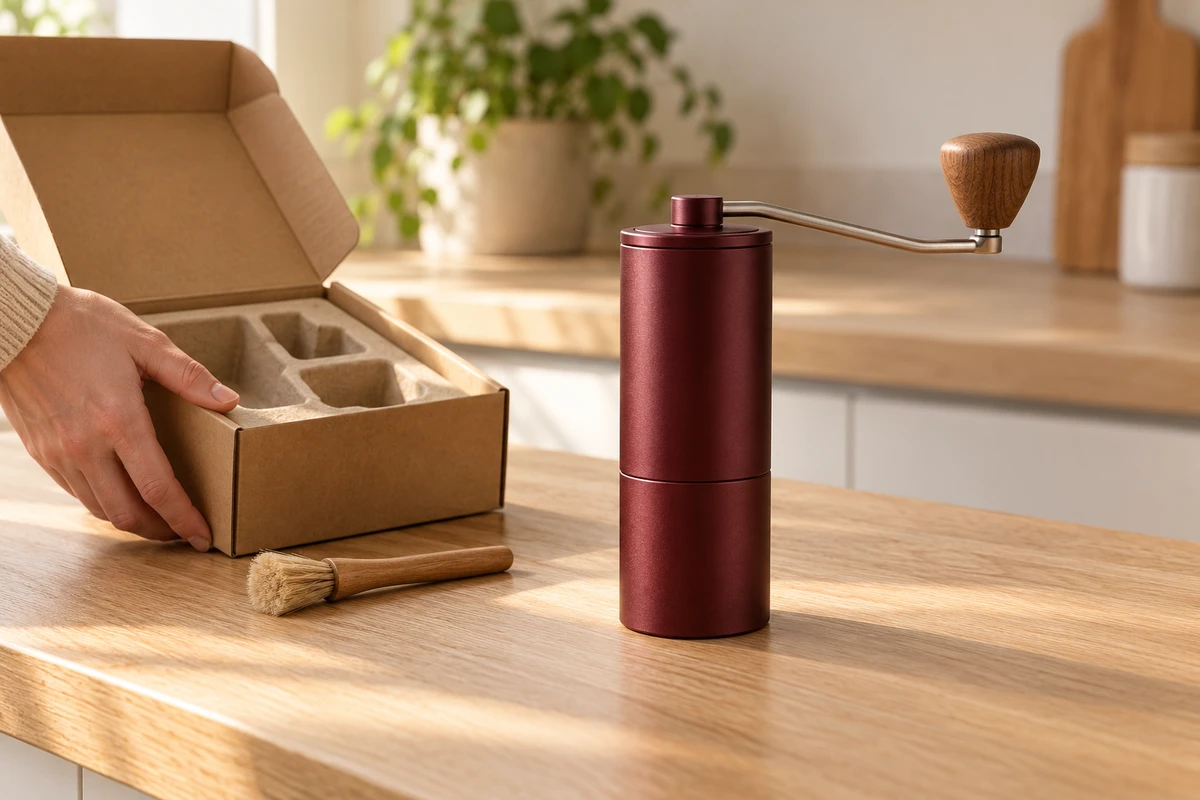
Consider a fictional hand-grinder unboxing. This is not an ONCE client project, instructions for an actual model or a filmed test. Assume the product has a handle that needs attaching and includes a cleaning brush. Real content must follow the actual retail contents and instructions.
One treatment removes the grinder, handle and brush in turn, lines them up across the table and adds a usage shot at the end. Everything is present, but the reason for the handle and brush waits for a later explanation. Another treatment introduces the handle once the grinder is held securely: the person sees the connection point, retrieves the handle, attaches it according to the real mechanism and moves towards an appropriate first use. The camera follows an unfinished action rather than reading an inventory aloud.
The brush need not be used immediately. Its purpose comes after use, so it can find a place during the closing tidy-up or receive a brief explanation without interrupting the first grind. Making every accessory active as soon as possible does not necessarily make the film complete. Finding it when it is needed can explain why it belongs in the box.
A complete contents shot still has value. It can provide a clear confirmation before the main action continues. Alternatively, product photography can list the full set while the video concentrates on one entry into use. Distinguish what is included from how the pieces work together; a single flat lay should not be expected to explain both.
Change the camera's task as the product changes hands
During opening, viewers need to see where the hand opens the package and where the product sits. During use, attention may shift to a connection, a grip or the direction between person and object. A single overhead angle may hide an action behind a hand or box edge. Cutting straight to an extreme close-up whenever something is removed can lose the overall relationship.
A wider view can establish the package and product positions. Preserve enough of the removal for the action to be understood, then choose an angle that reveals the relevant relationship during assembly or first use. The camera changes because the question changes, not because extra angles automatically make a film richer. Nor does every process need a single uninterrupted take.
The box can leave through an action too. Moving the empty packaging aside clears the working area before use begins. A display surface becomes a place to do something. If the package still serves storage or display, it may remain, provided it does not obstruct what the film now needs to explain.
Editing can remove repeated moving and waiting while retaining the actions that establish a relationship. If a loose handle becomes attached between shots, does the omission matter? That depends on the film's task. If attachment is the entry into use that viewers need to understand, show it. If it is unrelated to the main message, it can be omitted clearly without turning the whole advertisement into operating instructions.
Let sound follow the action without inventing quality
Paper unfolding, a lid being set down and an accessory touching the table can help distinguish events. Recorded pickups or constructed sound should fit the material, force and timing on screen. A heavy mechanical sound should not make thin packaging appear robust, and constant tearing should not compete with the first use. These are narrative sound choices, not acoustic or durability tests.
A staged advertisement can own its designed actions
A brand unboxing advertisement can be rehearsed and actions repeated for different angles. The problem is presenting a designed, practised and repeated reaction as an uninformed first experience. If the film speaks as a creator review or genuine personal experience, that experience needs to be real. Handheld framing and conversational delivery alone should not manufacture an unplanned identity.
A response need not always be an exclamation. Taking out the handle, locating its connection and starting something the person already wants to do can express understanding through continued action. An advertisement can have a performance without giving every box the same delighted response.
Before shooting, walk through the real package without trying to impose the final pace. Notice when the product becomes fully visible, which accessory changes the next action and when the empty box no longer needs the table. Then decide what to compress, where to move closer and where to finish. This is a creative rehearsal, not user research: it locates shot purposes without proving purchase intent.
For products that require charging, assembly, cleaning or waiting, first use may not belong immediately after opening in an apparently continuous sequence. Indicate elapsed time or enter use after the necessary preparation. Fluency is no reason to imply instant readiness incorrectly or omit information important to safe, correct operation. A short film need not replace the manual, but the use it depicts must make sense.
If you are planning a product unboxing, bring the actual packaging, product and intended first-use scene to ONCE for a discussion of product video ideas and production. Beyond deciding how many attractive opening shots to make, find the action worth watching after the box is open.
Sources consulted on 18 October 2026. This article develops creative analysis from Zenpack's project text, not a viewing or evaluation of the product's unboxing films. The grinder scenario and original AI-generated cover are fictional illustrations, not client work, operating certification or advertising-performance tests.