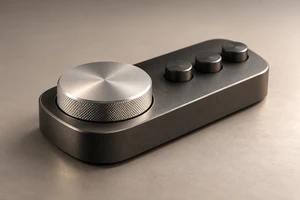
Imagine a fictional desktop-organizer advertisement. A composed-looking adult has just tidied her desk, but her voice is bright with barely contained excitement: “Nobody touch anything now.” A colleague reaches for a pen, and her eyes immediately follow his hand. This is neither a real brand campaign nor an ONCE project. Its comic possibility lies not only in the mismatch between voice and appearance, but in what the line reveals: she wants the newly arranged order to last a little longer.
Simply making the voice higher or faster, without giving the character something to protect, risks a novelty effect that is exhausted after one hearing. Voice can contribute more to advertising creative by changing how we understand a person—and consequently where the actor looks, what they wait for and how they respond.
HARIBO gives its contrast a specific brand reason
In its June 17, 2024 retrospective on Kids' Voices, HARIBO UK describes the creative approach, launched in 2014, of adults in everyday settings speaking and behaving with children's voices and mannerisms. The brand connects it to releasing an inner child while sharing sweets. This article discusses the official text, not a complete viewing of the adverts or making-of films, and draws no sales-effect conclusion.
The mismatch is a technique; why it should exist is the brand question. HARIBO connects children's voices with its expression of childlike happiness. Another brand cannot simply borrow the same vocal setup because it is conspicuous and place an unrelated product at the end.
A useful creative question is what state this person normally conceals, and what now allows it to emerge. Someone habitually serious might reveal a little pride; someone apparently casual might become unexpectedly solemn. The voice need not cross an age boundary, and a larger contrast is not automatically better. It should reveal an understandable layer of the character, not merely prompt viewers to identify the voice actor.
Starting with sound changes the actor's task
HARIBO's German production explanation describes recording children's conversations, editing dialogue from them, then having adult actors lip-sync on set. The page's publication date was not confirmed; it was consulted October 18, 2026. This is an account of that approach, not a universal workflow for dubbed advertising.
Starting with sound is different from finding a suitable voice for finished pictures. Pauses, hesitations and emphasis already establish timing conditions. The actor must decide how to think and act within them. Accurate lip movement alone can still leave voice and body feeling like separate performances.
In the fictional organizer scene, “Nobody touch anything now” could sound quietly triumphant or like a momentous declaration. Each reading suggests different pictures. She might admire the arrangement before looking up to warn her colleague; alternatively, she might treat the little organizer as an important matter and wait for acknowledgment before taking her hand away. An enlarged expression is not enough. The vocal attitude needs a physical reason.
Someone is still thinking during the pause
An empty stretch in the track raises a question: is the person waiting for an answer, watching for a reaching hand, or realizing how seriously they have taken this? These possibilities add no dialogue, but change gaze and gesture. A pause with a task becomes more than waiting for the next recorded line.
The colleague's performance also belongs to that timing. A hand approaching the pen after the declaration can give her gaze something to follow. If he has already taken it before she speaks, the line becomes a complaint after the event. Either can be written, but they are different scenes. Establishing that cause and effect is more useful than asking everyone to make it funnier.
A fixed track has a cost: changing dialogue or response length on set means considering the sound as well. A simple blocking rehearsal with the intended dialogue can expose actions that do not fit or pauses with nothing happening inside them. This is creative rehearsal, not advertising-effectiveness research or a guarantee of laughter.
Let the product participate in the revealed state
Her reluctance to let anyone disturb the desk can connect with the satisfaction of finishing a tidy-up. The pen's position and the reaching hand give the organizer a role in the relationship. None of this proves increased efficiency, changed habits or an unverified function. A scene can exaggerate a person's seriousness while keeping product facts separate and accurate.
Consider what remains if the product is removed. If any desk or prop can replace it without changing the scene, the voice may be an effect laid over generic comedy. Every joke need not become a feature explanation, but the product should relate to something the character is seeking, enjoying or protecting.
Camera and editing choices can preserve that connection. When the unexpected voice first appears, give viewers a chance to identify its speaker. A key pause might keep both characters in frame so we can follow their attention, rather than cutting to the product at every vocal accent. Close-ups can amplify small reactions, but cannot replace a relationship never established. Choose coverage for the scene's needs, not a fixed imitation of another advert's cuts.
Language and short versions need more than the same meaning
A different language may need different line lengths and stresses. The creative question is what the voice is doing: declaring, bargaining, showing off or trying to sound calm. Preserve that attitude, then find a locally natural line, performance and lip-sync relationship. Replacing the voice does not establish that the original waiting and response timings still fit.
Subtitles communicate words but cannot, by themselves, retain every aspect of the contrast between a voice and an appearance. A sound-off version might make pride in the tidy desk or the attempt to stop a hand more legible. It can also accept a simpler product situation rather than promise the identical vocal joke. Whether to make a different opening or a separate short should depend on its use; one asset need not provide the same experience in every viewing mode.
What is worth retaining is the moment a character becomes newly understandable. Vocal tone opens an unexpected possibility; performance and response give it substance; the brand needs a reason for that possibility to belong to it.
If you are developing a sound-led brand film, bring a short dialogue passage, a character appearance and a specific product situation to a creative and production discussion with ONCE. Hear what the scene is trying to do before deciding how to film it.
Sources were consulted October 18, 2026. This is creative analysis based on official texts, not a shoot or audience test. The organizer scene and AI cover are independent fictional concepts, not HARIBO films, client projects or records of real performers.