Choosing an old song for a brand film is only the beginning. Should the familiar recording remain, or should a different voice tell the story? Should the phrase people are waiting for arrive as expected, or a little later? “More emotional” is not a sufficient answer. A new interpretation can bring a song into a new story, but it can also become little more than an attractive nostalgic filter.
Reimagining advertising music involves two separate questions: why this song, and why this version? The first connects the work to the concept. The second decides who seems to be addressing whom, and from what emotional distance. Separating them keeps the discussion from becoming a vote for everyone’s favourite singer.
One song can belong to two different relationships
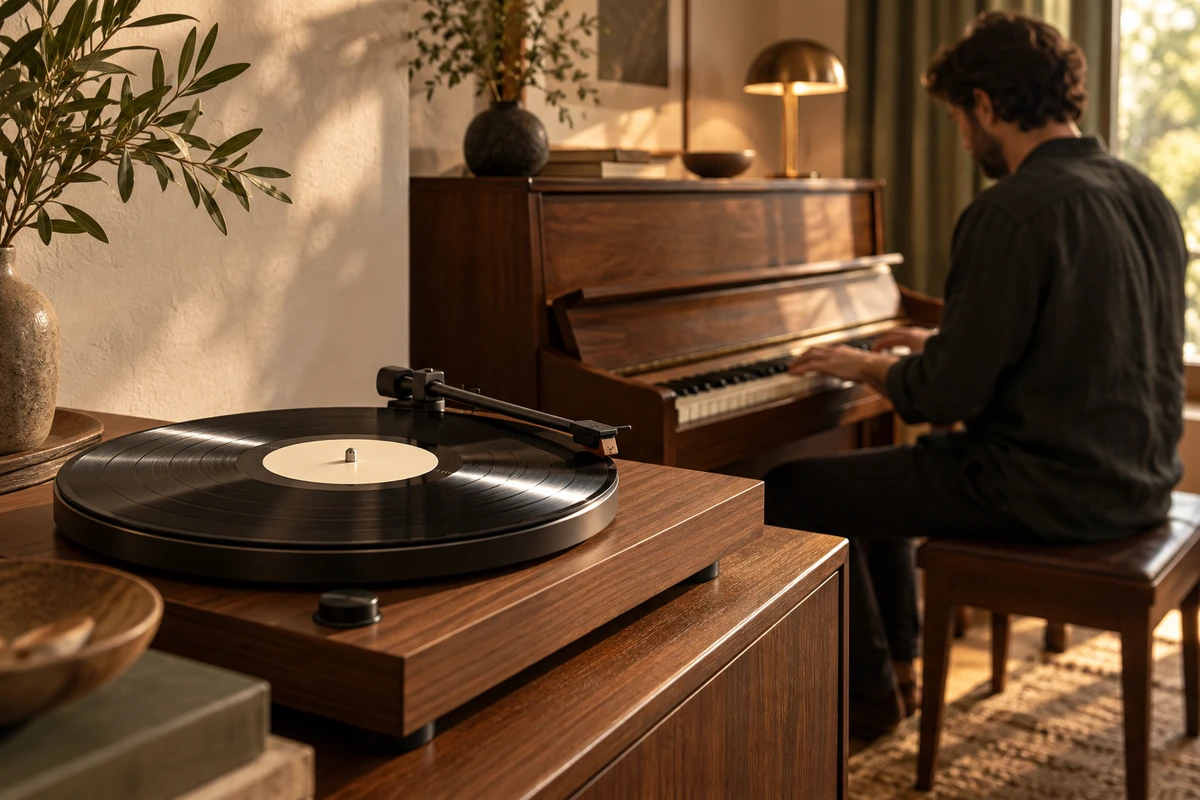
In its November 4, 2025 official announcement, John Lewis describes a record given as a gift connecting a father and son. The campaign uses Alison Limerick’s “Where Love Lives” and a reimagined version by Labrinth. This article draws on the written account, not a complete viewing of the commercial or an audio comparison.
The premise suggests a reason to revisit a song: the same work can connect with someone’s earlier life and enter a present-day relationship. The interesting question is not simply whether an old song evokes memories, but why it needs to be expressed again. That gives us a creative question to explore, without treating particular instrumentation, vocal details or audience responses as observed facts.
A new version need not reject the original. In a reunion story, familiarity might keep the past present, while a changed interpretation makes room for the people involved now. Those tasks can coexist. Conversely, if a brand only needs an energetic atmosphere, with no relationship to reconsider, a new recording may add little meaning.
Macy’s June 20, 2024 announcement of Summer’s Greatest Hits introduced a new “Lovely Day,” performed by Amber Mark and produced by Ryan Tedder. Reinterpretation can serve a seasonal atmosphere, not only an intimate or melancholy one. That is our creative reading, not an assessment of the campaign’s results.
What survives need not be the whole sound
Working within music already confirmed as usable for the project, begin by asking what the concept needs people to recognise. It might be the direction of a melody, the start of a phrase, or an explicit connection between the work and a character’s past. Not everything needs to remain. But if the part carrying that connection disappears, a famous song title may not do the storytelling on the film’s behalf.
This does not mean everyone must identify the original. Allow for both familiar and unfamiliar listeners. Those who know it can gain another association; those who do not should still understand the film through its actions and relationships. If the plot only works after someone recognises the song, do not assume the production team’s familiarity is shared across markets or age groups.
A quieter performance needs a reason to feel closer
A sparse arrangement or a lighter vocal delivery can be useful directions. Neither automatically creates intimacy. Making a confident character sound overly fragile may misread them. Giving an easy relationship too much melancholy can make the brand prescribe an emotion the scene has not earned.
A more useful proposal describes the intended relationship: “This should feel less like a group celebrating together and more like one person finally speaking to another.” It does not yet dictate an instrument or tempo. It does give the music collaborator a question to answer: how can the performance feel less presented without losing the character’s strength? How can hesitation remain without making every pause sad?
The direction might be the opposite. A character may be ready to leave private reassurance behind and step into a shared public space. A more open, participatory interpretation could serve that movement. The point is not that smaller sounds are more sophisticated. It is whether the changed version makes sense as someone addressing someone else.
Give proposals different questions, rather than changing everything
Start a creative discussion with a short, unchanged section of picture. One proposal might preserve the musical phrase’s momentum while changing the performance’s emotional distance. Another might retain the vocal attitude but change when the music enters. This is not a way to prove an isolated variable caused a marketing result. It helps a team understand what it is choosing.
If the singer, tempo and picture edit all change together, “the second version is more moving” may be an honest response, but it offers limited direction for the next revision. “The music announces reconciliation before the character has chosen it” is more actionable. Perhaps the cue should enter later, or the performance needs more space.
These are proposal methods, not listening sessions or audience experiments conducted for this article. Internal preference can help establish a direction. It should not be presented as a response consumers are guaranteed to have.
The reinterpretation must make sense within this film’s length
A long film can establish a character’s connection to a song before a new interpretation introduces a turn. A shorter version may lack that setup. Extracting the ending can preserve the music while leaving viewers unsure why it appears. Reconsider whether one recognisable phrase is enough, or whether an action needs to return to give the cue a reason to be there.
Allow a version to work without recognition, too. For someone meeting the brand for the first time, understanding what the product does in life may be sufficient. The song can supply character without explaining an entire personal history. The complexity of the reinterpretation should fit the viewing task, rather than turn a clear, simple film into a maze of memories just to accommodate a famous track.
A useful music direction therefore goes beyond “a classic song with a modern interpretation.” It explains why the work belongs to the concept, what connection should survive, what distance between people this version should change, and what makes the story understandable to someone who does not recognise it. The final version may stay close to the original. If it already fits, there is no need to change it merely to demonstrate the technique.
Bring a core scene, its relationships and the task music needs to perform to a discussion with ONCE about the overall creative and production approach: explore video production solutions. Answering “why this version?” gives the music a better chance of belonging to the film, rather than simply being a good song.
Source note: the two official announcements linked above were consulted on October 17, 2026. Their accessibility from mainland China was not tested. This article does not determine permission to use or adapt any particular song.