A twenty-second product film can contain continuous voiceover, a tightly cut music track and several important visual changes. Commissioning audio description after picture lock then creates a practical problem: the new information has nowhere intelligible to go.
For overseas brands coordinating production in China, that is a scope decision worth making before the final edit. Does the visual explanation belong in the main script, in available audio space, or in a separately extended version? More narration is useful only when the listener can follow it.
A production example brings timing into focus
In its June 19, 2026 CoorDown #JustEvolve account, Scribely describes joining at the early-edit stage, arranging descriptions around the comedy, and delivering standard and extended described versions. This is the provider's account of its own work. ONCE has not watched or measured the campaign for this article and does not attribute its reach to description.
W3C WAI's Description of Visual Information, updated September 17, 2024, explains routes including integration into the main script, a separate track and a described video, selected with content, timing and player support in mind. Here those options inform production planning, not a legal conclusion about any brand or channel.
ONCE proposes an audio storyboard rehearsal to make the timing choice concrete. It asks what the listener needs at each event, rather than treating description as another file added to delivery.
Rehearse one meaningful product sequence
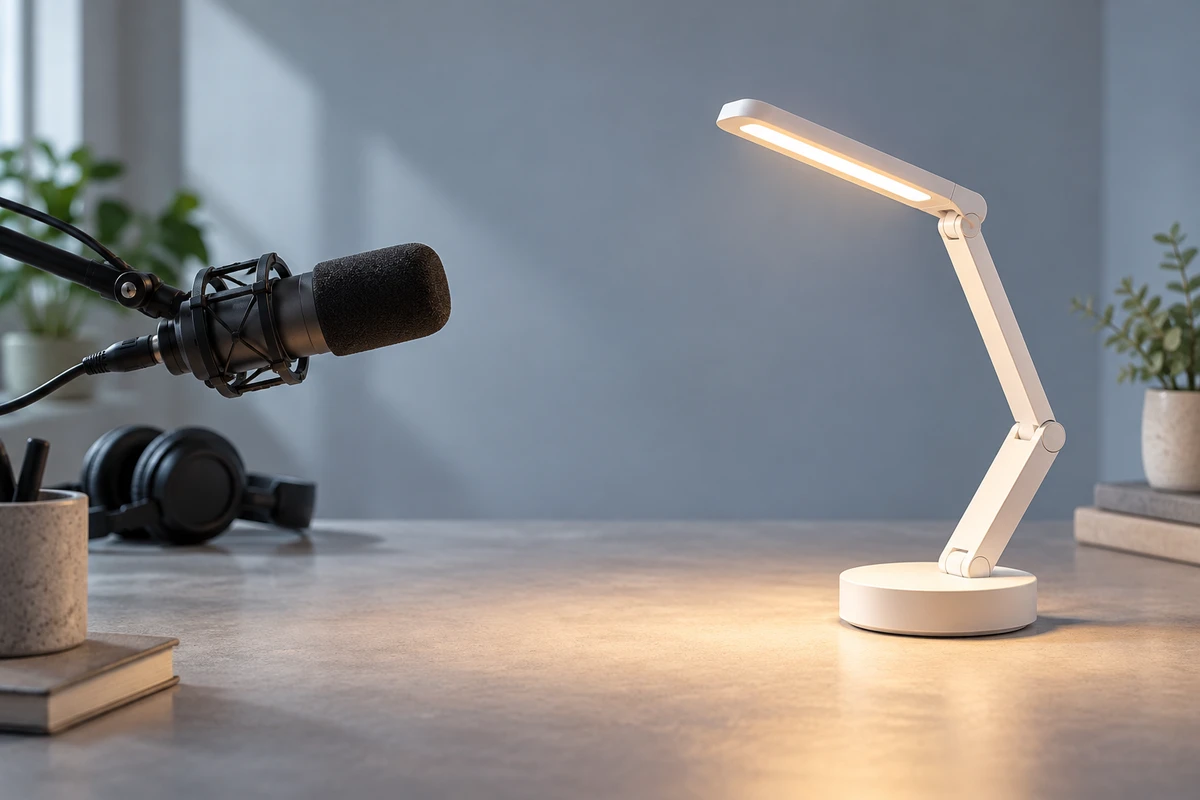
Consider a hypothetical portable lamp. A hand unfolds the arm, turns a dial on the base and the lamp illuminates; the ending displays the model and an action destination. This is an invented demonstration. A real brief must use the approved sample's actual construction and behavior.
Map each event against four questions: what changes visually, what the existing soundtrack explains, what remains missing, and what edit or script adjustment to try.
| Event | Potential comprehension gap | A useful rehearsal |
|---|---|---|
| The arm unfolds under a general lifestyle line | The object and movement are unexplained | Try a concrete action phrase in the main narration while preserving the complete movement. |
| A base dial turns and the lamp lights | The control's location and the visible change are missing | Try the necessary information near the action, then judge the recorded length. |
| A hinge makes a small sound | Extra speech masks a useful action cue | If it helps understanding, leave room to hear it; do not turn it into an unsupported safety or locking claim. |
| The ending carries model and destination text | The final information exists only visually | Give the listener access to the model and action information corresponding to the final page. |
This is an ONCE creative rehearsal, not a universal description specification. It does not prescribe a word rate or require narration over every shot. Repeating information already clear in the soundtrack consumes space without resolving a gap.
Replace an empty line before adding another voice
In this example, a mood line and an explanation of the folding movement do different work. For an instructional demonstration, the action may deserve priority. A brand film may retain its original line and commission a fuller described version. The purpose of the piece should decide the choice.
A revised main line can sometimes carry both voice and fact. “Unfold the arm and bring the light onto the page” is a possible creative draft, provided the real product and scene support it. Smooth language must not invent an adjustment or function the product lacks.
Then record a temporary track and place it into the rough cut. A sentence fitting between waveform peaks does not establish intelligibility. Listen for whether the object is introduced before the change becomes relevant, whether the description corresponds to the action, and whether the next sentence interrupts understanding.
For the hypothetical twenty-second demonstration, try establishing the folded lamp first, then unfolding it, explaining the dial and visible change near that action, and reserving an ending for the model and destination. Let the actual performance and recording determine the timing. Twenty seconds is an illustrative creative choice, not a placement rule.
On set, retain the start, full movement and settled result around important actions. Those handles give the editor real material if more time is needed. If the soundtrack refers to the dial while the image still shows the previous operation, fix the sequence rather than asking the listener to reconstruct it.
Decide what can move—and what must remain audible
Rehearse the narration, description and useful action sounds separately, then together with music. For the lamp sequence, identify which sounds aid recognition and which supply atmosphere. A crowded moment may need one line removed, a cut moved or a decorative sound reduced. Raising the added voice alone does not resolve competing information.
If a missing fact fits naturally into the existing script, revise and rerecord the affected line. If the script is adequate but the action ends too quickly, use the available complete movement or result hold. If essential information still cannot be understood within the original duration, discuss a separate extended described version and its actual release destination.
Those choices have different costs. Script changes affect recording and captions; recuts may affect music, translation and approvals; another version adds production, publishing and maintenance. Quote the intervention and the available source materials, not just a description price per minute. Missing raw footage or separate audio elements can limit the available solution.
The final selection should involve the product, creative and accessibility specialists responsible for the work. Bring intended users into review where needed and record the scope honestly. Do not remove an important limitation merely to keep a short running time, or describe every decorative object at the expense of the product action.
Scribely's example invites attention to tone and timing, but its comedy approach is not a template for every product demonstration. The lamp sequence calls for clear, concrete relationships. Brand character can remain present without weakening the information.
Accept comprehension and the released version
Run a listening-only review with someone who did not write the script. Ask them to explain the product's state, the action, the result and the final destination. Return misunderstandings to the corresponding event in the storyboard. An internal review is a production check; it is not proof of intended-user validation or accessibility certification.
Restore the picture and check the sequence, then find and play the correct described version in the real release environment. A finished recording that audiences cannot locate has not completed its intended delivery. Changes to product facts, the ending or the order of the edit must also trigger review of the related description and text.
For the next brief, supply the hardest rough-cut passage, approved product facts, any dialogue or sounds that must remain, and the target page. ONCE's video production solutions provide a starting point for defining that scope. Rehearse the passage before commissioning the full revision: the valuable outcome is a clear decision about writing, editing or another version.
Sources checked October 15, 2026: Scribely's June 19, 2026 case study and W3C WAI's resource updated September 17, 2024. This is an evergreen production analysis using current accessible materials, not a new-launch report. The lamp example and original AI cover are concepts, not client work or measured results.