Should a shot list be the first document in a 3C product video project? Imagine that a pair of AI glasses needs to demonstrate live translation. A finger taps the temple, followed by a polished lifestyle shot. That does not prove translation happened. The viewer needs to see where the input came from, when the device responded, where the result appeared, and under which conditions the function works.
This is why a new product film can look premium yet still fail review: product, marketing, and ecommerce teams do not share the same answer to “What does this shot prove?” The fix is not more coverage. It is a shot evidence map built before the storyboard.
New AI terminals need more than an exterior reveal
Shenzhen's official AI Terminal Industry Action Plan for 2025-2026 names AI phones, computers, tablets, model appliances, wearables, and imaging devices as priority categories. Their value is not limited to industrial design. The plan describes active services, cross-platform collaboration, spatial perception, live translation, health monitoring, intelligent tracking, and multi-device shooting. These capabilities have to be understood through actions and visible results.
A 3C launch film should therefore not translate every selling point into “rotate the product.” Material appearance, functional interaction, and channel use are different production tasks.
Evidence layer one: material is a response to light
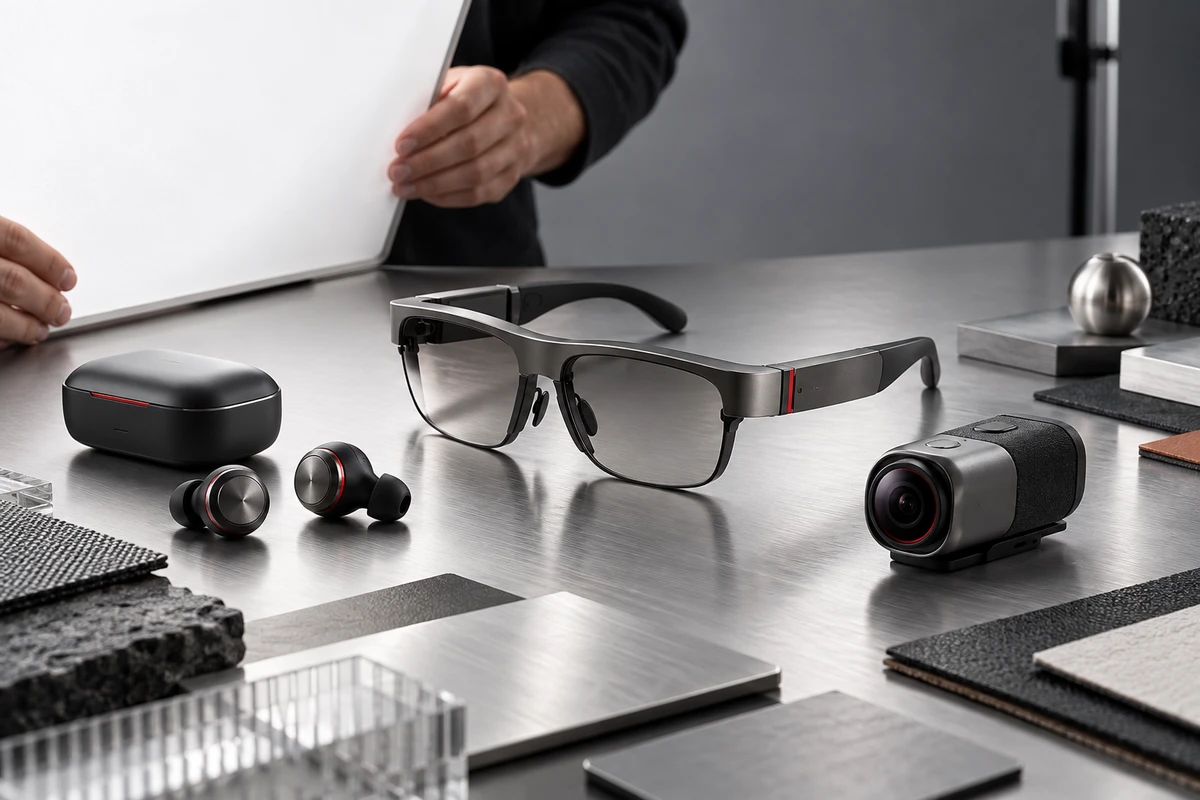
“Space-gray metal body” is not yet an executable shot requirement. The team still needs to know whether the finish is matte or glossy, whether a chamfer must remain visible, where glass, metal, plastic, or ceramic meet, and which reflection belongs to the design rather than the lighting equipment.
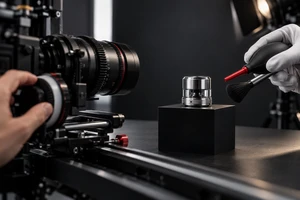
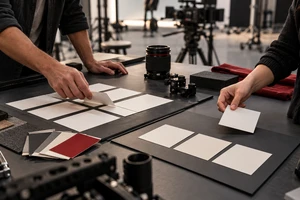
For every material claim, the evidence map should record three conditions: the approved sample or CMF reference, the surface characteristics that must survive photography, and the permitted scope of retouching. Fine brushed metal, for example, is not proven by a generic bright close-up. Its texture should remain readable as the highlight moves, without grading the product into a different color. If a micro-texture is a key selling point, define the sharp area and surface condition before the shoot; ONCE's guide to texture and depth in product close-ups provides additional context.
Evidence layer two: a feature needs a start, action, and result
A complete interaction usually needs four visual beats:
- Start state: the viewer understands the device's current physical or interface state.
- User action: the press, touch, voice command, wearing action, or connection is natural and complete.
- System response: a light, sound, interface, mechanism, or paired device changes visibly.
- Result state: the viewer can tell what problem the function solved.
A finger tap alone can turn “the product was operated” into a false impression that the feature was proven. If the function depends on a network, account, paired device, or controlled environment, record that condition. If the UI is not locked, compositing may be appropriate, but the team must preserve the approved build and touch coordinates. Post-production should not rewrite the real interaction for visual convenience.
The screen and the body also should not be expected to look perfect in the same exposure by default. A screen emits light; the body depends on reflected light. Decide whether a shot is proving interface content or proving thickness, ports, bezels, and material before choosing direct capture, layered compositing, or CGI.
Evidence layer three: one feature needs different channel depths
A launch page usually establishes product identity and primary value. A product detail page often needs a clearer setup, operation, and outcome. A performance placement may isolate one highly relevant feature. Amazon's current shoppable-video workflow distinguishes Product overview, Unboxing, How-to, Setup, Troubleshooting, and Brand story. Its Sponsored Products video format also allows multiple feature videos for one ASIN within an ad group, with shopper relevance influencing which features appear.
Channel adaptation is therefore not merely three crops at the end. Capture three asset types during production: a self-contained identity shot, a complete feature-evidence sequence, and a result shot that can work independently in a short cut. After the shoot, use a version tree for multi-platform delivery to track orientation, language, SKU, and revision.
A shot evidence map needs six fields
- Product claim: the product fact this shot must support.
- Start state: what the viewer must see before the action begins.
- User or device action: who does what, for how long, and which parts cannot be hidden by a cut.
- Visible result: the change that makes the feature understandable.
- Failure boundary: whether network, prototype, UI, reflections, temperature, or safety conditions can distort the demonstration.
- Channel use: which section is intended for a launch page, event, product page, ad, or sales presentation.
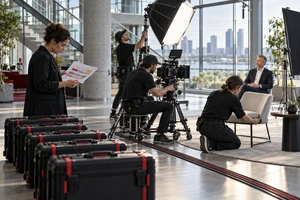
The product manager owns factual accuracy. Marketing sets the information priority. Ecommerce or media teams define channel use. Production then translates the map into shots, light, performance, and post-production. The storyboard becomes an inspectable proof plan rather than a collection of attractive drawings.
When the prototype is early, disclose the boundary
Engineering samples, demo modes, concept UI, and production-ready states should be recorded separately. If the enclosure is locked but the feature is not, shoot material and structure first. If a function works only in a controlled environment, capture the real condition and disclose it. If only concept animation exists, define it as a future-experience visualization rather than filmed feature evidence. A pure mood film does not need a functional result in every shot, but any image that carries a product promise should return to the evidence map for review.
If you are preparing an AI phone, computer, glasses, wearable, or imaging device launch, contact ONCE VISUAL for an AI terminal product video plan. Put the claims, prototype status, and channel uses into one shot evidence map before deciding what the production actually needs.