Before commissioning another channel cut, read the script as if a different store were selling the product. “We’ll include an extra cup” may survive a logo change visually while becoming a different promise commercially. A reusable product demonstration and a reusable sales pitch are not necessarily the same asset.
For overseas brands working with Chinese product and production teams, this is an important briefing distinction. The factory can confirm what the machine does. It may not be the team that can approve what a particular retailer offers the shopper.
A new sales context, not merely another video placement
In its September 22, 2026 announcement, Best Buy said it planned to enter TikTok Shop in late October. It described Best Buy fulfillment and in-store or mailed returns for eligible purchases. As checked on October 17, this is an announced plan—not confirmation that the launch has happened or that every purchase qualifies.
ONCE’s production inference is narrower than a market forecast: moving content between sellers calls for checking whose offer the speaker appears to represent. This announcement does not establish an industry-wide operating model.
Best Buy’s April 8, 2025 creator-program announcement described curated storefronts and eligible referral commissions. It is a useful reminder that the person recommending a product need not be its manufacturer or seller. It does not establish permission to reuse any particular creator’s footage.
The ONCE Seller-Voice Read-Through
We propose a simple pre-recording exercise. Highlight personal pronouns, location words and service statements: “I,” “we,” “here,” delivery, returns, installation and included accessories. For each relevant line, identify the speaker, the seller being represented and the intended buying destination.
Now change the destination while leaving the spoken sentence intact. Read the whole scene, not just the end card. Would a reasonable viewer now assign the promise to a different business? If so, the line needs a fresh decision, even when the product is identical.
This exercise separates three kinds of material:
| Material | Question before sharing it | Production implication |
|---|---|---|
| Product demonstration | Are the model, configuration and demonstrated conditions the same? | Preserve a complete action and result without embedded seller-service dialogue. |
| Personal experience | Is this the actual speaker’s experience, and is the proposed use permitted? | Keep the account intact; do not edit it into an endorsement they did not give. |
| Seller-service statement | Has the relevant seller confirmed it for this buying destination? | Record it separately, with a usable transition and an alternative ending. |
An accurate sentence is not a license. A license is not proof that a service statement is accurate. Actor, creator, music and other permissions still need their own confirmation; the read-through does not grant them.
A blender brief that changes halfway through the demonstration
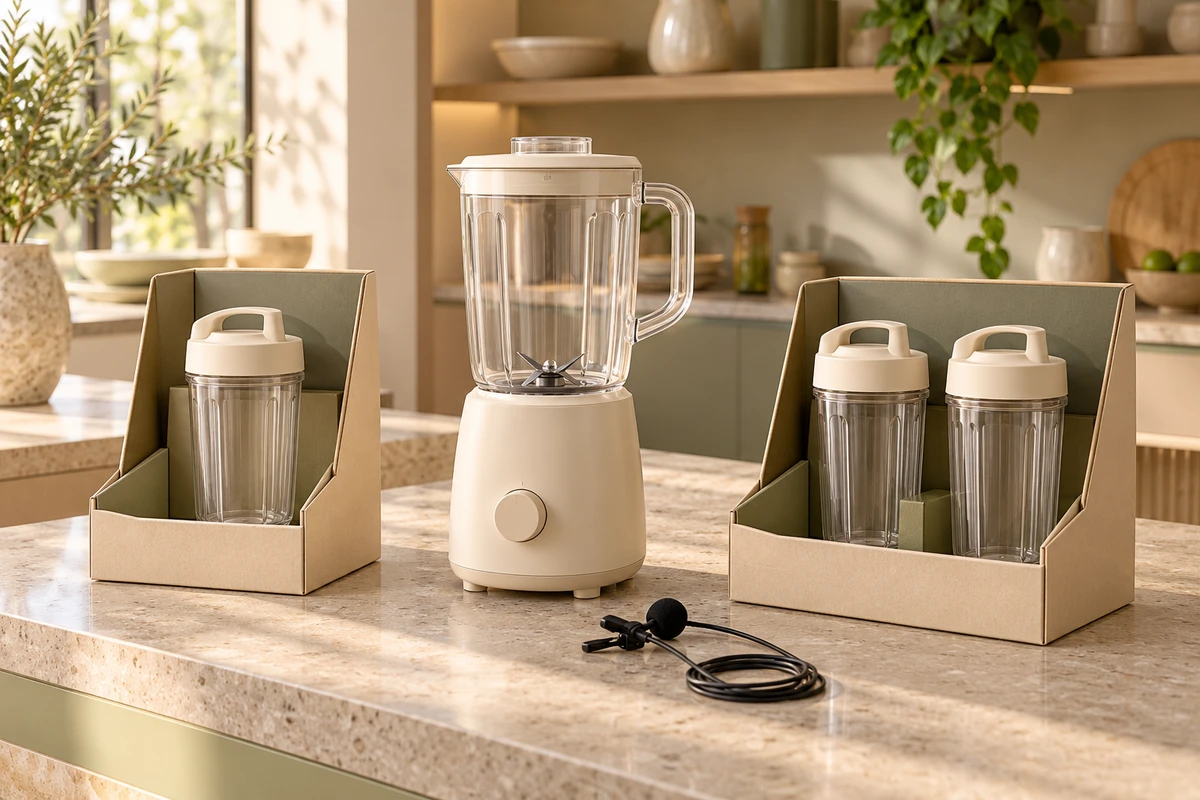
Consider a hypothetical blender film intended for both a brand-owned store and an overseas retailer. This is not an ONCE client project or a statement about Best Buy’s assortment or terms.
The presenter says: “I use this for breakfast. Buy here and we include another cup. You can return it at a store if it isn’t right.” These are three different propositions: personal experience, a bundle offer and a service arrangement. Swapping the shopping link does not validate all three.
Start with the box, not the graphics. If the extra cup belongs to only one seller’s bundle, an unboxing shot may need changing too. If the returns arrangement differs, obtain approved wording from the relevant seller rather than assuming a generic disclaimer will repair the scene. And if the presenter has not had the claimed experience, do not script a demonstration as a personal recommendation.
For a remote production brief, ask the China-based team to capture the full product action first, without seller promises. Then record the approved service passages as separate units. A pause after placing the product down, or a turn back to camera after the action finishes, can provide a natural edit point. Capture a non-service-specific ending as well.
This does not make every clip reusable forever. It gives the editor options. Where only the end card changes, an end-card adaptation may be sufficient. Where the offer lives in lip movement, visible accessories or the reason for the action, estimate the additional work honestly rather than calling everything “one more export.”
Buy a defined adaptation task
Digital Commerce Agency’s current production page describes in-house and partner-creator production, with different usage arrangements for those sources. That is one provider’s service description, not a universal rights standard. The procurement question worth carrying forward is who supplied the material and who can approve its proposed use.
Separate the common demonstration from seller-specific recording, any configuration pickups and one complete destination-change read-through. Assign product confirmation to the product team, offer wording and destination confirmation to the channel owner, and transitions and performance to the production team. Obtain usage approval from the people entitled to provide it.
Ask for a clearly identified version without seller-service promises alongside approved store versions. Record the intended use, approving person and changes that require another check. Define any later review window: a filming supplier should not silently inherit perpetual responsibility for monitoring retailer terms.
For ONCE, maintaining product demonstrations and channel-specific expression is a possible recurring service, not an established margin claim. It becomes worth discussing when a client actually sells through multiple stores and has recurring adaptation needs. A single-store campaign may need no elaborate library. Bring two real buying destinations and the proposed script to the next briefing; resolve who is speaking before counting the deliverables.
Sources checked October 17, 2026. The original AI-generated cover is a fictional commercial concept, not a retailer location, platform screenshot or client shoot.