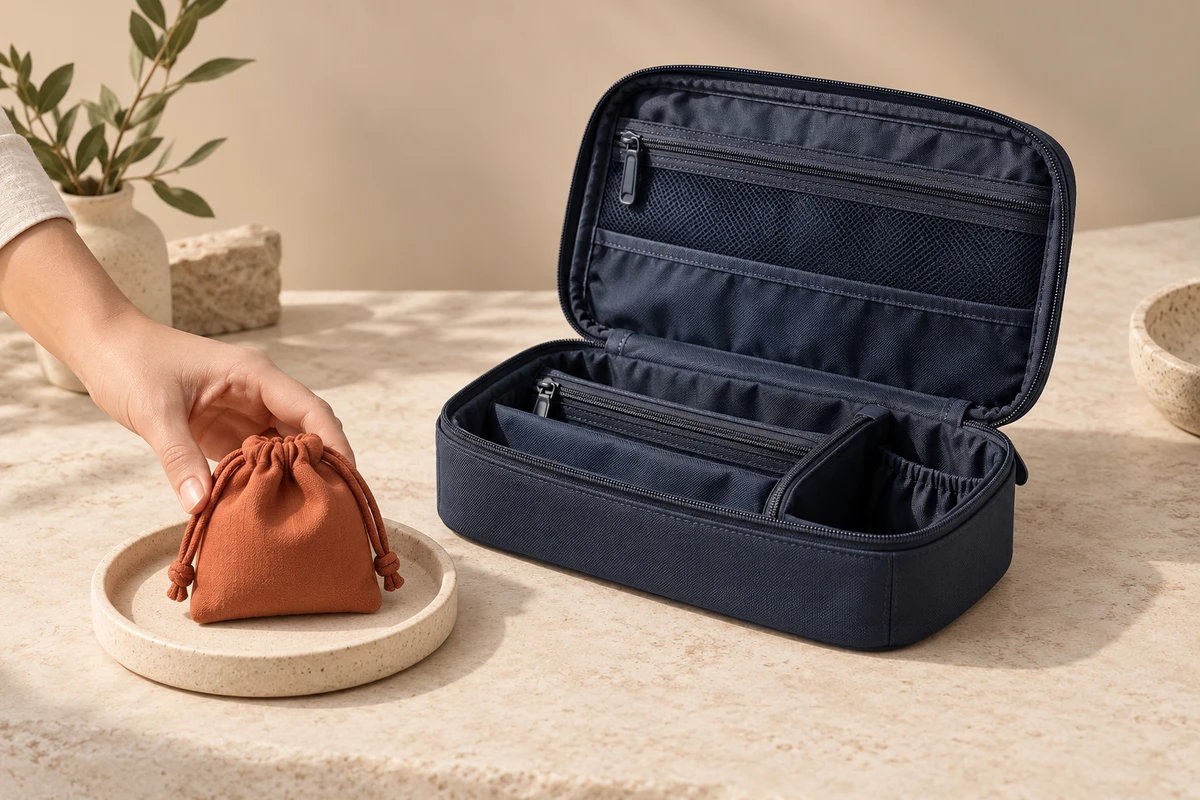
A beautiful product shot followed by “Secure yours” can leave a very specific question unanswered: has the viewer reserved the product, a price, or eligibility for a later bonus? That matters when an overseas brand is developing a campaign with a China-based product and production team. A vague ending can survive several rounds of translation while everyone assumes the payment means something different.
Consider a hypothetical travel-organizer launch offering an additional accessory pouch to eligible early supporters. The viewer pays a reservation fee after seeing both objects in a video and assumes the product is ordered. The actual arrangement requires a separate pledge after launch. This is an illustrative scenario, not an ONCE project or a reported customer incident.
The prelaunch film must explain the present commitment as well as the future product. The payment arrangement should determine its ending—not be attached after the hero edit is approved.
Verify the reservation before naming it
BackerKit’s “Pre-launch Reservations on BackerKit Crowdfunding”, updated September 16, 2026, describes following a project, reserving perks and returning to pledge at launch. The reserved reward is then added at checkout.
Its Pre-launch Reservation FAQ, updated September 14, 2026, says the fee is charged immediately, is not pledge credit and is non-refundable under the published arrangement. A separate pledge before the campaign ends is still required to receive the reserved benefit. These pages were checked on October 17, 2026. We have not tested checkout, and this is not a legal assessment of statutory refund rights in any market.
Do not automatically label every reservation a product deposit. The peer Prelaunch.com reservation-funnel guide, dated August 9, 2023, describes a page containing product price, discounted price and deposit amount, in a flow built around a promised launch price. That supplier description illustrates a different offer relationship; it does not establish BackerKit’s rules or a refund promise.
The source material supports a narrow conclusion: understand the specific arrangement before writing its name into the creative. It does not supply a universal conversion rate or prove that reservations guarantee demand.
ONCE’s Confirmation-First Ending
We propose writing backward from the payment confirmation. This is an original working method, not a tested industry standard.
Ask the project owner for the current offer, landing page and confirmation content. Mark unfinished setup as unresolved. A polished design mockup cannot establish what a platform or project will actually provide.
First describe the result in plain language: what payment has been made, what eligibility or benefit has been obtained, and what action remains. If the team cannot explain that clearly, “Secure yours” is not ready to become the final line.
For the hypothetical organizer, assume the approved arrangement is eligibility for the extra pouch after a later qualifying pledge. The ending should convey that relationship. Show the organizer to explain the product, distinguish the pouch as the additional benefit, and make the later pledge part of the next step. Fees, eligible tiers, deadlines and other material conditions must come from the real approved offer; this example is not a ready-to-use promotion.
If the benefit is access to a price tier rather than a physical extra, change the ending accordingly. Do not add a gift simply because it makes a more attractive composition. Nor should “reservation complete” cut directly to packing and dispatch when that progress has not occurred.
The aim is not to suppress product appeal. It is to prevent the appeal from silently changing what the current payment buys. Product-development claims still need their own review; clarifying the offer does not validate the prototype or its delivery plan.
Review the whole sentence across three surfaces
Do not approve only the video file. Read its ending, destination page and payment confirmation in the viewer’s actual sequence:
- What am I invited to do now?
- What am I paying for and retaining on the page?
- What has the confirmation completed, and what remains unfinished?
If eligibility becomes an order halfway through that sequence, revise the relevant copy, picture or destination. If the real mechanism is different, describe that mechanism rather than forcing it into the example above.
Material conditions should be clear where people make the relevant decision, not left solely to tiny text that requires pausing the video. The prominent creative promise should not conflict with the page. Appropriate owners and advisers must confirm payment and consumer-rights requirements; production must preserve the approved arrangement in its communication.
Also review two audiences separately. Someone discovering the campaign needs to understand the present invitation. Someone who already reserved needs to know what to do when the campaign opens. Repeating the original reservation pitch to both may leave the second audience without the instruction it needs.
For an overseas marketing team commissioning in China, keep one approved explanation of the offer with both language versions. Check the meaning of the action, not merely whether the translated button sounds natural.
Keep reservation signals distinct from completed support
Views, follows, paid reservations and pledges represent different actions. Preserve their counts, time windows and sources separately. Connect records only where the relationship is reliable; otherwise report the stages separately instead of claiming cross-platform deduplication or attribution.
A person may reserve because of a bonus and still make a different decision when the full campaign is available. Subsequent support also depends on the complete offer, product information, timing and other conditions. Do not treat a reservation count as confirmed production demand, or credit every later pledge to one video version.
Before commissioning more footage, identify where the explanation is failing. Is the benefit understood? Has the launch reminder reached the relevant audience? Is the remaining action clear? This article reports no campaign test, forecast or conversion benchmark.
A practical scope might combine product-value material, a reservation-specific ending with page explanation, and a launch reminder for reserving supporters. The number of assets should follow real gaps; every stage does not need a new shoot or a duplicate hero film.
For ONCE, maintaining alignment between the film, offer and next action is a potential longer-term content service—not a claim of an existing validated package or client result. Bring the real reservation and confirmation arrangement into the brief alongside the product and target market. Write what happens after payment first; then decide how to make the anticipation compelling.