If your product is manufactured in China and your launch audience is overseas, a finished film and a launch distribution programme may solve different problems. One provides the communication asset. The other organises how that asset enters particular channels and networks.
A proposal combining both can be useful. But comparing it with a production-only bid as though both sell the same video obscures what the additional fee buys. Before commissioning another shoot, establish whether the missing work is the film or its route to an audience.
A service model worth examining, not a verified result
Checked on October 16, 2026, The Launch Video Company’s website advertises guarantees of one, three or five million views. Its FAQ offers full production or distribution-only work for X and LinkedIn, describing coordinated creator-network amplification.
That verifies the supplier’s published offer, not its fulfilment or client outcomes. We have not obtained a signed project agreement, quotation or underlying performance data. This article neither endorses the provider nor assumes its guarantee conditions or remedies. One service model also cannot establish an industry-wide transformation.
ONCE’s interpretation concerns scope: adding distribution changes what a production proposal contains. Buyers should be able to distinguish making the asset from arranging its circulation, even when one partner handles both.
ONCE’s same-film scope split
This is a proposed procurement method, not an ONCE client test. Give the discussion one stable input: a completed film suitable for review. Hold its script, photography and post-production standard constant while asking what distribution adds.
Separate three acceptance questions:
| What is being accepted? | What the proposal should explain |
|---|---|
| Production delivery | The version, revisions and files, and who approves the finished content |
| Distribution execution | Channels or accounts, timing, agreed publishing and coordination work, and execution records |
| View commitment | The named metric, reporting source, measurement window and counting rules |
This is not a demand to reveal every proprietary relationship or to hire three suppliers. It makes the work legible. If a partner does not offer distribution separately, ask what makes the scope inseparable. If it requires a new edit, ask which audience or channel problem the change addresses.
Do not subtract two bundled prices and label the difference “cost per view.” The alternatives may also change the film, staffing, channels and reporting. First compare the actual work on a consistent basis.
Adapt the film for a reason
A technically polished film may open with terminology a new audience does not understand. Its final call to action may point to a landing page that is not ready. Those can justify a revised opening, clearer demonstration or different ending.
They do not justify removing information a buyer needs simply to increase the chance of a view. Preserve the relevant model, conditions and limitations. Ask who the revised film invites to watch, what they should understand and what they can realistically do next.
Put a named field behind the word “view”
LinkedIn Help’s current Campaign Manager video-metrics documentation, checked October 16, 2026, defines video-ad Views as at least two continuous seconds with at least half the video on screen. That is an advertising-reporting definition, not a universal rule for every organic post or a supplier’s guarantee.
X Business’s Post and Video Activity Dashboards guide, checked the same day, distinguishes post and video measures and describes exports with post links and organic versus promoted data. Whether you can receive the relevant records from a particular partner depends on the actual access and deliverables agreed.
Ask the supplier to complete one sentence: which platform field, over which dates, from which posts, with what record available to the buyer? A screenshot of an aggregate number may leave those questions unanswered.
Also distinguish plays or views from unique people and post impressions. Do not assume duplication can be removed across posts and platforms. Where it cannot, describe the result as a cumulative count rather than an equivalent number of distinct prospective buyers.
“Organic distribution” does not tell you whether a service is free or its participants receive no compensation. Clarify the work and fee basis separately. Likewise, agree what happens if a stated threshold is not met, by when and at whose additional cost, with appropriate professional review. We do not infer refund or make-good terms for any provider.
Choose the task before choosing the promise
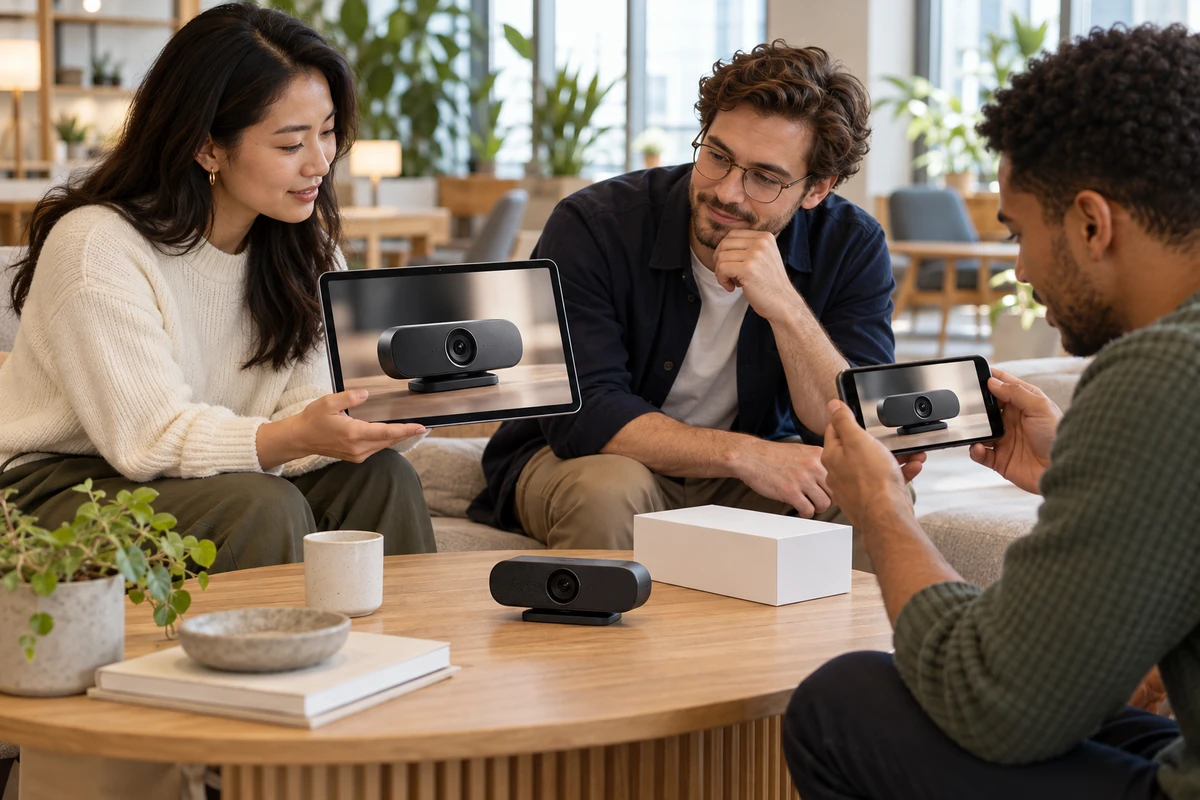
Consider a fictional conference-camera brand launching overseas with manufacturing and sample preparation in China. It wants enterprise IT buyers and meeting-room integrators. A candidate distribution proposal centres on a startup-founder community. This is an illustration, not an ONCE project.
That network might suit a company introduction to the startup ecosystem. It is not automatically equivalent to reaching the intended procurement audience. For the latter task, examine the proposed audience fit and how enquiries would be received and assessed, not only the size of the promised count.
Write down the work being purchased, the view measure being accepted and the commercial questions that remain open. Enquiries, trials, partner conversations and sales require their own observation. A view threshold cannot establish them, and the campaign objective should not be renamed after results arrive.
If those actions matter, prepare a functioning destination and an agreed recording process before launch. Where they are not measured, say so. Even an observed increase does not by itself establish that the film caused all of it.
For a production company such as ONCE, a possible extension is a clearly scoped collaboration with a capable distribution partner. It is not an invitation to promise traffic before knowing how to deliver it. Assign creative, publishing and media responsibilities explicitly, and identify actual distribution and reporting costs rather than hiding them inside a filming fee.
Bring an existing film, its target market and one clear launch task to the next content production discussion with ONCE. Use the same-film scope split to decide what is missing. Buying a strong film and buying a defined distribution service can both be sensible decisions; they should not be mistaken for the same purchase.
Sources checked October 16, 2026. This is procurement analysis, not a performance guarantee or legal advice. The original AI-generated cover is a fictional concept, not a customer launch or a record of measured exposure.