Your product team can explain every feature. A customer buying it for a friend may know only that the friend spends weekends outdoors. A polished demonstration can leave that shopper impressed—and still unsure whether to buy.
For overseas brands working with a China-based supply chain, the next production brief should not automatically request a festive version of the existing product film. First identify what a gift buyer can reasonably know about the recipient, what the film can demonstrate, and what still needs checking before purchase.
A timely prompt, not proof of a new market rule
Microsoft Advertising’s October 15, 2026 article, Gift them a reason: How to earn a place on the holiday shortlist, advises brands to support early gift consideration and connect seasonal creative with recipients and occasions. That is the platform’s recommendation; it does not establish that every category has changed or guarantee a sales result.
There is also a straightforward retail example. The US LEGO Birthday Gift Ideas page introduces choices through age, budget and interests. Checked on October 16, 2026, with no publication date displayed, it illustrates how one brand helps gift shoppers navigate. It is not evidence of conversion uplift.
ONCE’s interpretation is a production question: can your film translate a familiar human detail into a useful product choice without pretending the buyer knows more than they do?
Decide which buyer the film is serving
A shopper with an exact model on a wish list needs product identity and accurate purchase information. Packaging, availability and delivery details may matter more than another category introduction. Any delivery or service promise must come from the current selling operation, not the production team’s assumptions.
A shopper who knows an interest but not the equipment needs a different story. “She likes making coffee” does not reveal what machine she owns. “He takes photographs on hikes” does not identify his camera or mounting system. This is where gift-specific production can earn its scope.
A shopper who knows neither preference nor conditions should not be pushed toward a supposedly universal present. A genuine selection guide or a check-before-buy step may be more useful. Exchange, recipient-choice or similar services belong in the film only if the brand actually offers them under the relevant terms.
These are different content assignments, not three reasons to commission more footage.
The ONCE clue–demonstration–open question method
This is a proposed planning method, not a tested conversion model. For each recipient idea, write three statements before approving a script.
The clue is something the purchaser could recognize in everyday life. A relationship label alone is weak guidance: “for your sister” says little about product fit. “For the friend who stops on every walk to look at distant wildlife” gives the story an observable starting point.
The demonstration shows the product entering that activity. Capture a coherent action, not only isolated feature close-ups. The action should make sense without specialist vocabulary and remain faithful to the actual sample and approved product information.
The open question identifies what the footage cannot establish for this buyer. Model, size, interface, existing equipment or experience requirements may need checking. A performer using the product smoothly is not proof that it suits every recipient.
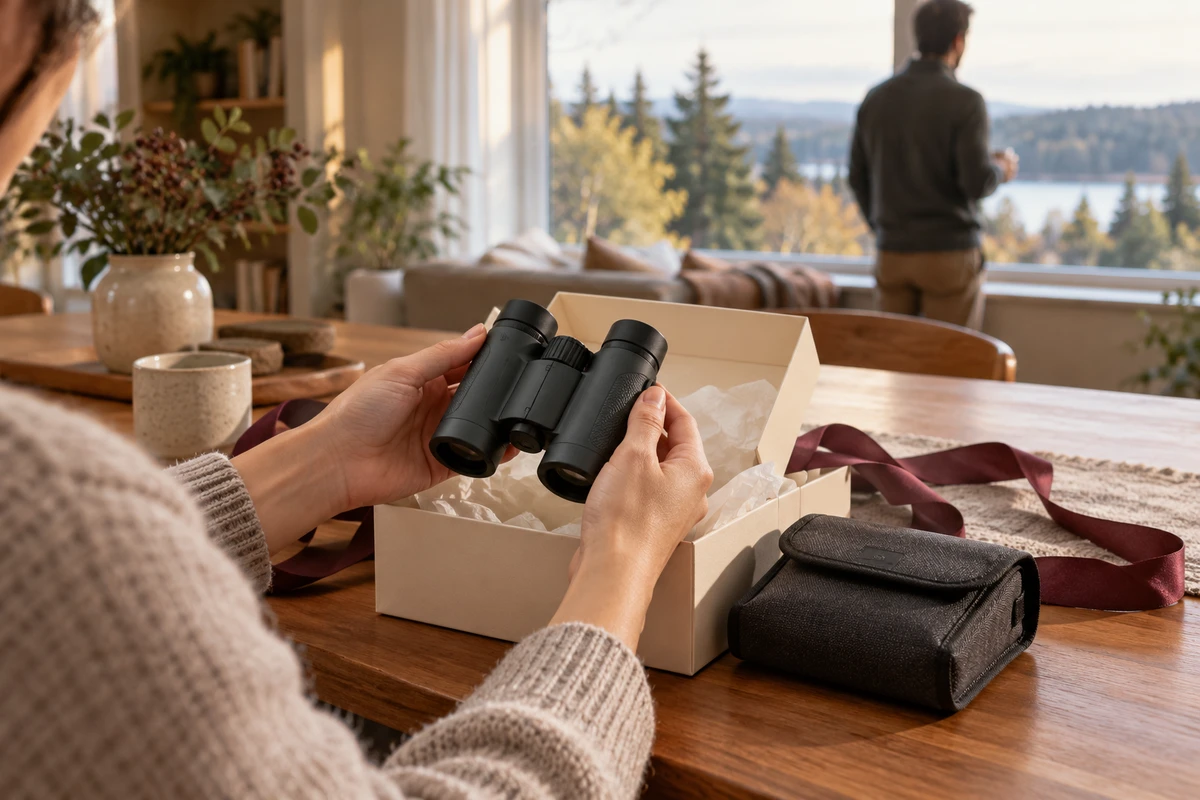
Consider a fictional gift campaign for a compact binocular. The film could connect an interest in watching wildlife with an honest view of the sample being picked up and carried. It should then direct the buyer to check the intended use and relevant specifications rather than imply that one model suits everyone. This is a creative illustration, not a statement about a particular binocular or a reported ONCE project. Even “lightweight” needs support; a clear hand-scale view can show size without inventing a performance claim.
The emotional story remains available. Remembering a small habit can communicate care more convincingly than asking an actor to perform an enormous reaction.
Buy the missing explanation, not a seasonal reshoot by default
In its September 25, 2026 article, 5 Black Friday Video Ideas to Plan Before Your Holiday Sale, Sparkhouse treats demonstrations and gift videos as separate assignments and recommends capturing footage without seasonal graphics. That is useful peer practice, not evidence that every brand needs another shoot.
Audit existing footage against the three statements. If it already contains a recognizable situation and a clear action, an edit and an accurate purchase reminder may be enough. If the action only makes sense to an enthusiast, additional coverage may be justified. If product suitability itself is uncertain, resolve the information before adding cinematic reassurance.
For remote production, specify the missing work in the quote: a new person or location, a complete action, scale references, the correct retail packaging, or SKU-specific guidance. Keep changing offers and dates separate from enduring footage. Three deliverables might be three openings to the same argument—or three genuinely different buying explanations. File count alone does not define comparable scope.
Review what an outsider can—and cannot—conclude
Before launch, ask a colleague unfamiliar with the category to watch the rough cut without a briefing. Have them describe the recipient habit, the visible reason for the recommendation, and what still needs checking. Do not lead with “Does this feel giftable?”
This suggested internal review can expose missing explanations. It is not consumer research and cannot predict demand or sales. If the viewer remembers the warmth but mistakenly concludes that no compatibility check is necessary, the edit has not done its job.
Bring one priority SKU, the current demonstration, confirmed packaging and real gift-selection questions to an ONCE production discussion. The useful outcome is a focused additional brief—not a promise to turn every product into a gift for everyone.