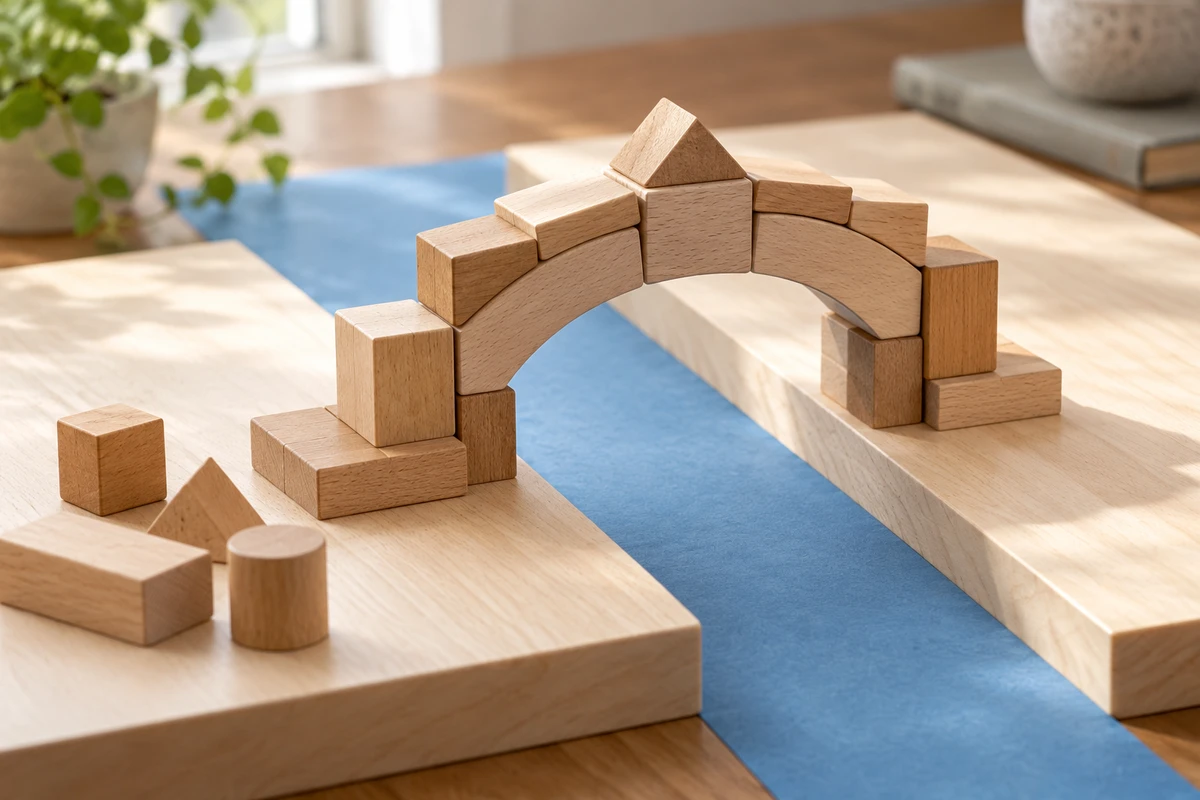
Imagine two advertising proposals for the same modular desktop product. In one, everything on the desk automatically moves into place and the user smiles. In the other, the user arranges the parts, finds the layout still awkward, then takes them apart and recombines them for the task at hand. The first presents an outcome. The second begins to express a relationship between a person and a product.
This does not mean the second will necessarily perform better. It answers a different question: how does this brand believe people can improve their lives? Brand advertising can have plenty of visual imagination while lacking a connection between its slogan and a concrete act of use.
LEGO’s Rebuild the World offers historical material worth considering. This article examines public descriptions from the brand and a participating creative agency. It does not claim to have watched or analyzed the films shot by shot, or establish their advertising effectiveness.
Creativity is the idea. Recombining is the action.
In its September 17, 2019 campaign announcement, LEGO positioned the initiative around encouraging creativity and linked building and rebuilding with experimentation and trying again. The proposition was broader than the number of models a box of bricks could produce.
BETC’s Rebuild the world case page similarly frames the idea around taking apart an unsatisfactory state and rebuilding it differently. We use the agency’s explanation of its creative direction, not research figures on that page that we have not independently verified.
As a creative distinction, “creativity” is broad; “recombining” is an action. One names the belief the brand wants to express. The other describes something a person can do with the product. Connecting them gives the story a direction: the character does not merely possess imagination but can try to change what is in front of them.
That is different from adding an “unlimited imagination” slogan at the end. A line can name the story’s meaning, but something relevant should already have happened. If mysterious forces resolve every problem automatically, with neither a person’s attempt nor a product’s contribution, even a wonderfully strange world may say little about creating anew.
An obstacle gives building a purpose. Another attempt gives rebuilding meaning.
LEGO’s September 20, 2021 campaign announcement describes a knight whose attempts to cross a river to visit a friend keep failing. A town helps find a solution, and the ending connects the imagined adventure with children’s brick play.
The useful relationship here is not the knight’s appearance. A character wants to reach a goal, the existing approach is inadequate, and a new combination becomes meaningful. The following is our creative interpretation of the official synopsis, not an observation of the film’s shot sequence or audience response.
If the character reaches the destination immediately, building may become decoration. If failure merely makes the character look foolish and the solution arrives through product magic, trying again loses much of its meaning. A richer approach lets what did not work change the next attempt: another idea, somebody else’s contribution, or a new understanding of the available material.
For a product ad, this raises a specific question: does the product complete a task for the character, or enable a different way of doing things? Both can work, but they communicate differently. The former can suit a direct functional demonstration. The latter may suit an exploration of why a brand exists and the kind of person it wants to support.
Not every ad needs a failed attempt. For safe operation, first use or straightforward buying information, adding difficulty deliberately may obstruct understanding. An unsuccessful attempt has a narrative purpose when trying and changing are central to the idea. It is not a reason to fabricate a real product failure.
Borrow the relationship between actions, not the brick-built spectacle
Return to the fictional desktop product. Assume it genuinely allows the user to separate and recombine its modules, with every demonstration respecting its actual construction and use conditions.
The first proposal treats tidiness as the only destination: every item has a place and the desk becomes clear. It can communicate an organizational result, but it may not explain why modularity matters rather than a fixed container.
The second proposal makes a changing task part of the story. The space the user originally reserved no longer suits the work, so they reposition a module to make room for an item in use. The ending is not a permanently perfect desk. It is an appropriate arrangement for this occasion. A choice gives modularity its meaning rather than leaving that job to a caption.
Such a story could express “a space that adapts to how you work.” It should not silently expand into “fits every situation.” If the product works only within particular dimensions or combinations, develop the idea within them. Do not invent convenience through disappearing objects, hidden supports or impossible connections.
Other categories need not seek a superficial equivalent to rebuilding. Clothing may involve combining outfits; a tool may involve adjustment; a service may involve collaboration. The useful question is which concrete behavior this brand can support. Rebuilding is not appropriate for every category: fixed arrangements, stability and fewer operations can also be valuable propositions.
Borrowing from a case therefore means more than substituting clothes or machinery for bricks. Ask which character decision depends on the possibilities this product provides. If almost any other object could replace the product without changing the story, reconsider its role in the plot.
Fantasy can enlarge an idea, not supply missing product functions
Turning use into a story rule does not require literal realism. An exaggerated world can make an idea vivid. That is an expressive choice, not a promise about real operation.
The team should nevertheless be able to explain which images express imagination and which explain the product. If the desktop system appears to identify every item and move its parts automatically, but lacks those functions, calling it a brand film does not resolve the discrepancy. How the fantasy works and what it implies about the product belong in the same discussion.
Production choices should follow this distinction. If the story turns on a person trying one layout and deliberately choosing another, preserve the physical action and the decision. If it turns on a space reorganizing as though it were built from blocks, models, art direction or compositing can create the impossible element. An impossible image does not automatically give a character a purpose or establish cause and effect.
Try writing the proposal temporarily as a plain paragraph: who wants to do what, why the original approach is unsuitable, what the product helps them change, and what they do next. Consider whether that paragraph speaks specifically about this brand before deciding how expansive its visual world should be. This is not an argument against spectacle. It gives spectacle a job.
How much of a brand belief can one action carry?
A brand claim should not travel far beyond what the story contains. A tool helping someone make an adjustment can open a discussion of flexibility and agency; it does not prove the brand solves every life problem. A product helping people collaborate does not establish that it has transformed society.
The value of this historical LEGO case is a way of making connections: start with the action in which the product participates, develop how a character responds to difficulty, then consider the belief the brand wants to support. It is not a success formula for every category. Copying a fantasy world does not ensure an equivalent brand expression.
A strong idea can let the product step away from the center of the frame while still determining why the story unfolds as it does. The ending then offers more than an attractive outcome: it leaves a relationship between people and a product that viewers can describe in their own words.
If you are developing a brand advertising idea, bring the real use behavior and the brand belief you want to express to ONCE’s brand and product video solutions. We can discuss which action belongs in the story and which images are worth producing for it.
Sources checked on October 15, 2026. The case draws on the LEGO announcements from 2019 and 2021 and BETC’s written case description. Embedded films were not watched; campaign performance and educational-effect statistics were not verified or adopted. The desktop product is a hypothetical example. The cover is an original AI concept image, not a LEGO campaign image or an ONCE client project.