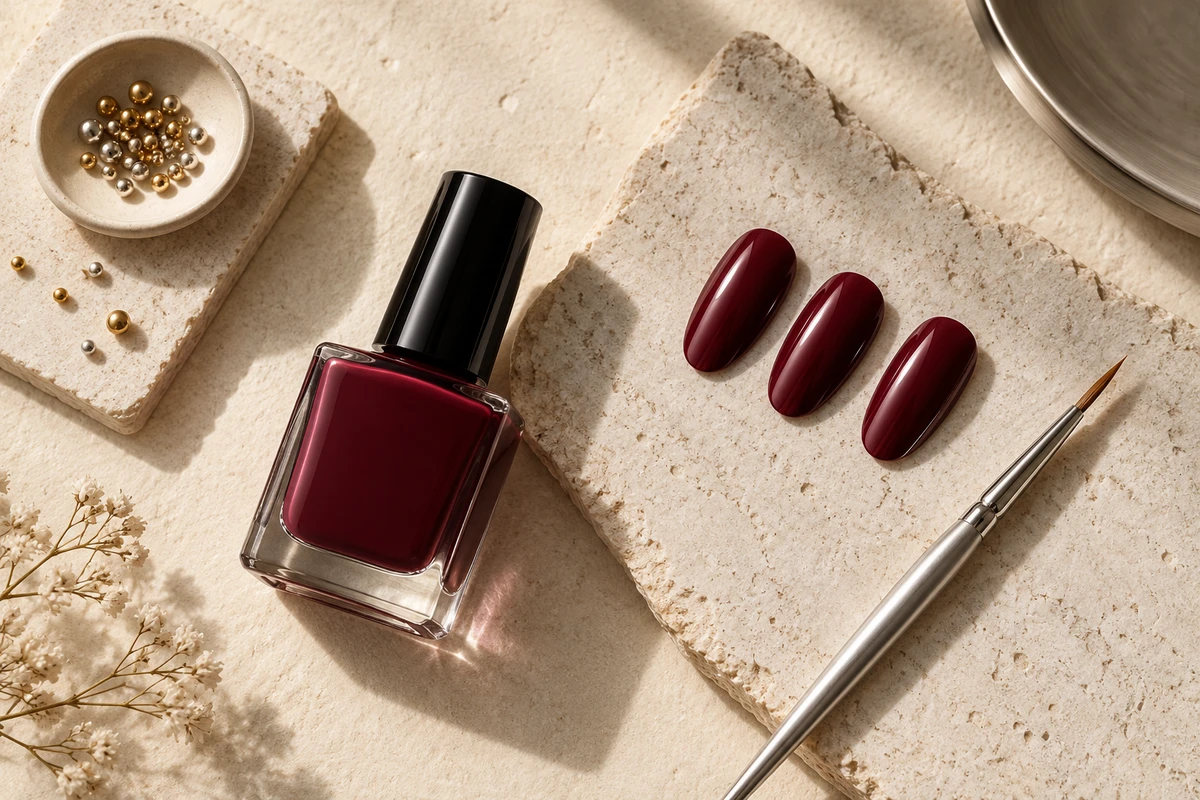
Imagine commissioning a nail campaign from a production team near your Chinese supplier. The finished image shows a rich base colour, fine decorative lines and a polished finish. Your store sells one bottle from that setup. A shopper wants the whole look; the product page offers one contribution to it. More beautiful footage will not, by itself, explain the difference.
For beauty brands, the useful question is not simply whether to sell a single product or a larger kit. It is whether the content makes clear what the purchase provides, what else the result depends on, and what the shopper can leave out. ONCE recommends resolving those questions before approving the shot list.
When inspiration becomes an instruction, product roles matter
On October 6, 2026, Pinterest announced Beauty Guides. The feature combines visual understanding and a large language model to turn hair and nail Pins into guidance including related products, steps and salon requests. The announcement specifies availability for U.S. iOS users; other regions and categories are expansion plans.
That is evidence of a platform capability, not proof that it will recommend your brand, identify the original SKU accurately or increase your sales. Our inference is narrower: as images can lead to advice about what to do and buy, a brand’s own destination should explain the relationship between the depicted result and the items actually offered. That explanation must remain useful without any AI referral.
Pinterest’s March 4, 2025 Premiere Spotlight creative guidance recommends opening a beauty tutorial with the outcome and showing the product in use. The advice concerns that advertising placement. We borrow the storytelling connection—not its format recommendations or performance examples as universal rules.
Map the look before building the basket
The ONCE Look Dependency Sheet is a planning method, not a Pinterest requirement or a tested sales formula. It keeps the desired result separate from the commercial bundle until the relationship has been checked.
| Question | What the brand must establish | What changes in the content |
|---|---|---|
| Which result is the shopper seeking? | A particular colour, texture, shape or decoration—not an undefined “same look” | Give the hero image a precise, supportable promise |
| What does the featured item contribute? | Its actual role in that result | Show that contribution clearly |
| What else is required? | Compatible products, tools and preparation confirmed from actual instructions | Identify included, separately purchased and already-owned items |
| What can be omitted? | Optional decoration or confirmed alternatives that do not undermine the core result | Separate options from essentials; do not preselect everything |
| What cannot be bought in the basket? | Skill, professional service or starting conditions unlike those shown | Change the next action where necessary |
“Required” needs a defined outcome. A decorative accessory might be essential for the complete reference look but irrelevant to someone seeking only its base colour. Conversely, a product that genuinely requires a specified system should not look self-sufficient merely because the necessary accessories appear only in fine print.
Product owners and appropriate professionals should confirm compatibility and instructions. The content team should not invent combinations, equipment settings or processing times. This sheet organizes information; it does not replace product instructions or safety requirements.
Three honest stories from one visual idea
Return to the hypothetical nail campaign. This is a creative exercise, not a real product procedure or an ONCE client case.
The single-item story can open on the complete look, then identify the featured product’s contribution. Other elements are explained separately. The buying destination offers that item accurately, without implying that one bottle recreates everything in the picture.
The kit story explains the role of each included item and the conditions that remain outside the box. A glamorous unboxing should not conceal an essential tool that the shopper must source separately. Optional decoration belongs in a distinct group, allowing a shopper with suitable existing equipment to buy less.
The service-led story acknowledges that the next step may be saving a reference and discussing it with a professional. A full-basket purchase is not always the right ending. The brand can still explain its product’s role without suggesting that buying products removes differences in skill or starting conditions.
These are pre-purchase decisions. A post-purchase tutorial has a different job: helping someone use what they already own. Combining both jobs into every short ad can make neither clear. For wider production planning, ONCE’s video production solutions provide a starting point for defining the deliverable rather than assuming every asset must be a complete tutorial.
What to commission from a supplier-side production team
Start with three linked deliverables: a truthful hero look, footage that explains important component roles, and a market-specific included/not-included list. The package need not document every operation. It must cover the information that changes what a customer should buy.
A practical sequence is a finished-look shot, a closer view of the featured item’s contribution, and a clean frame identifying the supporting requirements. This is not equal screen time for every object. It distinguishes the source of the effect, the conditions for achieving it and optional decoration. Background props do not automatically become products to purchase.
For brands working with Chinese manufacturers, compare the production sample kit with the retail configuration in the destination market. If the factory sends extra demonstration tools, record that difference before filming. A packaging-only change may call for a revised list and pickup shots. A different formulation, tool or key supporting item may affect the result and needs fresh confirmation before the previous visual promise is reused.
AI can organize approved information, explore visual directions and draft localized explanations. A generated image cannot establish what a real product delivers, and an inferred shopping list is not a substitute for the brand’s confirmed requirements. Production companies can develop reusable shot templates and explanation methods with appropriate permission; confidential formulas, unreleased products and private test results should stay out of shared assets.
Evaluate a useful basket, not just a bigger one
Before launch, ask people close to the target audience who did not make the content to explain what they would receive, what they would still need and what an experienced owner could omit. Trace misunderstandings to the image, wording or actual retail configuration. This is a comprehension check—not evidence of higher sales or a guarantee that every user can reproduce the look.
After launch, average kit order value is only part of the picture. Examine actual questions about missing essentials and cancellations or returns linked to misunderstood contents, alongside the single-item and kit journeys. To assess content effects, keep offers, pricing and traffic sources as stable as practical and record concurrent changes. Otherwise, treat movement as directional feedback rather than assigning every improvement to the video.
This approach is most useful when several products, tools or services jointly create the desired look. A clear single-product proposition does not need a wholesale reshoot just because a platform adds an AI feature. Spend first on the missing explanation that helps a shopper move from wanting the result to choosing the right part of it.
Sources checked October 14, 2026. Platform statements come from the two Pinterest publications linked above. The dependency sheet, hypothetical campaign and commissioning advice are ONCE analysis, not observed client results. The cover is an original AI-generated concept still life, not evidence of a particular SKU or product performance.