A range comparison that sends every shopper to the premium model may be an effective upsell ad. It is not necessarily a useful buying guide.
For overseas brands sourcing several configurations from China, the difficult creative decision is often not how to make the flagship look impressive. It is how to explain when its extra capability matters—and when it does not. ONCE recommends writing the conditions for staying with the base model before scripting the upgrade.
This is an evergreen production approach, supported by sources rechecked on October 14, 2026. It is not a claim that comparison videos have suddenly transformed the market, or that a particular edit will improve sales.
A product tour is not a choice
In its September 6, 2022 research article on comparison features, Baymard Institute explains two difficulties with specification-heavy products: listing cards cannot contain every relevant attribute, and products on separate screens are hard to compare. Those are ecommerce usability findings, not a sales experiment involving video.
The production implication is ONCE’s analysis: filming a complete tour of Model A followed by a complete tour of Model B can recreate the same memory problem. Viewers must remember the first demonstration while interpreting the second. Organizing an edit around a shared task gives them a more direct comparison.
First decide whether motion adds anything. A color difference, pack quantity or simple dimension may need good photography and a table, not another video. Shopify’s product-page guidance, updated September 25, 2026, recommends using video where it conveys something photographs cannot, such as movement, fit or assembly, while complementing the rest of the page. That is platform advice, not a guaranteed commercial outcome.
The ONCE no-upgrade script
Before writing a feature list, have product, marketing and support complete three statements:
- Stay with the base model if your task is… You do not need the upgrade to…
- Consider the premium model when you also need to… Its relevant addition is…
- Choose neither if your requirement is… Check another range or resolve that condition first.
This is a planning method proposed here, not a framework presented as validated by ONCE client tests.
The third statement prevents a false choice. An accessory may be incompatible with both models; an installation location may accommodate neither. A two-product shoot does not make the entire market a two-product market.
Next, separate required capability from convenience and preference. A premium feature can save steps without making the base product incapable. A finish can be desirable without being functionally necessary. Both are legitimate reasons to buy, but the script should not turn a preference into a requirement.
This changes the approval conversation. Instead of asking whether the premium model received enough screen time, ask whether a shopper with modest needs can reach a defensible base-model decision.
Film the everyday job before the exceptional one
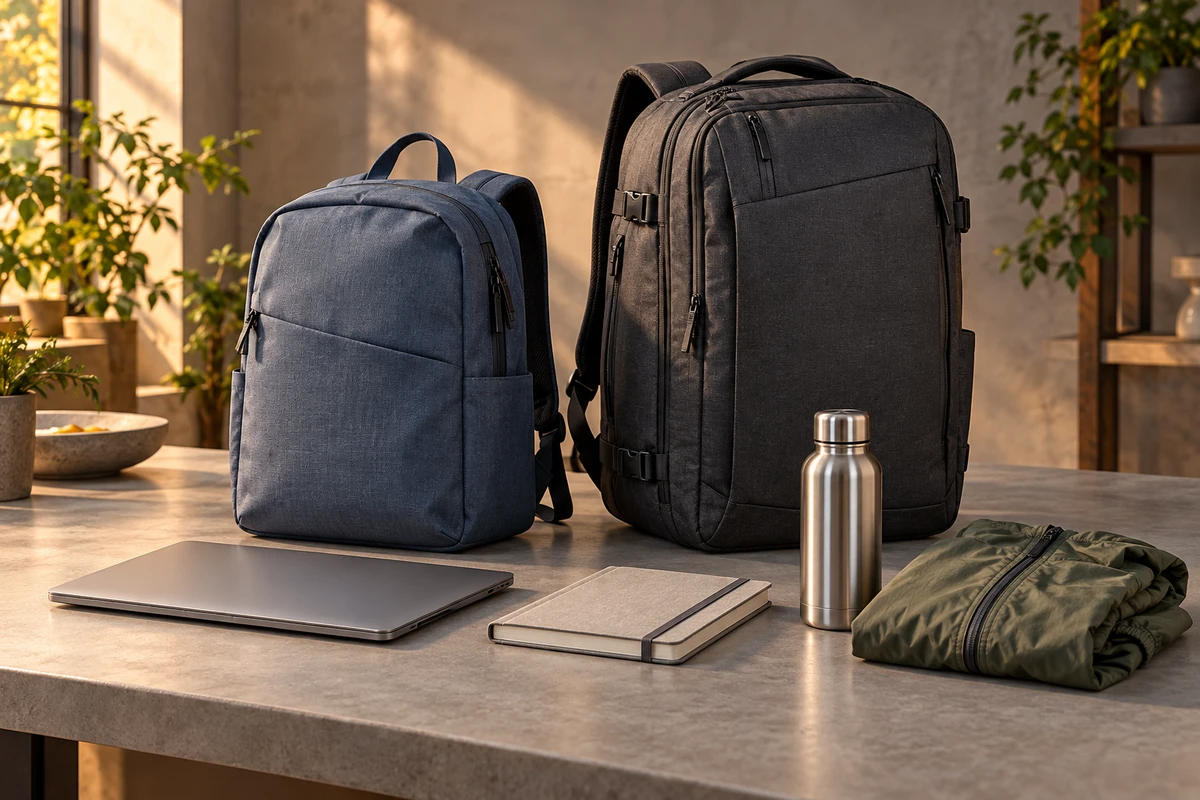
Consider a hypothetical brand commissioning a comparison of a compact commuter backpack and a larger expandable model. No real product specification or test result is implied by this example.
The predictable film puts a laptop in the smaller bag, then loads the larger one with a laptop, camera, shoes and clothes. The premium model wins the task the script assigned it. But an everyday commuter may still have no reason to carry the extra bulk.
Instead, use one agreed everyday packing list for both bags. Show loading, access and carrying. Only then introduce a specific overnight requirement. The question becomes whether that additional job changes the choice.
| Buyer question | Useful footage | Defensible conclusion |
|---|---|---|
| Will it handle my ordinary day? | The same items loaded and retrieved from both bags | If both meet the requirement, capacity alone is not this shopper’s reason to upgrade |
| What changes for an overnight trip? | A defined set of extra items, including closure and access | Discuss the value of extra space for that particular load, not every possible trip |
| What does the larger option ask me to carry? | Comparable views of empty shape, verified weight information and worn bulk | Make the capacity-versus-carrying trade-off visible without implying medical or ergonomic findings |
The point is not to mandate three tests. It is to challenge whether the task that makes the premium product win is a task the intended buyer actually has.
Do not sabotage the smaller bag with an unreasonable load or use different model sizes to manufacture a visual contrast. One laptop fitting does not establish compatibility with every laptop of the same screen size. Verify the actual dimensions and configuration before making the recommendation.
For a brand working with a Chinese manufacturer, confirm the destination-market pack before filming. An included organizer, cable or mount can change the apparent convenience of an option. A supplier’s domestic bundle is not automatically the bundle your customer will receive.
Let the edit follow the question—and let shoppers skip it
Build the sequence around a task, then show each model’s corresponding action. Use split screen only when both products remain readable on a phone; matched sequential close-ups may explain small details better. Keep model names visible where needed rather than expecting viewers to remember which product occupied the left side earlier.
End with genuinely different next steps: base, premium, or a reason to look elsewhere. If the commission is explicitly an upsell campaign, label and frame it as an upgrade pitch rather than presenting it as a neutral range guide.
Keep specifications, current prices and variant selection outside the video too. A shopper should not have to finish a film to find one measurement. Video earns its place by explaining movement and practical consequences, not by becoming a compulsory checkout detour.
AI can help organize questions, explore storyboards and adapt approved language. An invented shot of a product fitting, operating or outperforming another is not validation. The action on which the buying recommendation depends needs support from verified product information or a real demonstration.
A lower premium mix is not automatically a failure
If some viewers choose the base model, the film may be helping them choose accurately—or it may be overemphasizing the price gap. Neither conclusion follows from the model mix alone. Nor does a cheaper purchase prove that trust increased.
Before launch, run a small comprehension check with intended buyers. Give them a concrete usage scenario without naming the recommended model. After viewing, ask what they would choose, why and what information is missing. Include scenarios in which the base model is sufficient, the upgrade is relevant and neither fits. If every scenario produces the premium answer, inspect the script for a one-way recommendation. Treat this as qualitative diagnosis, not conversion evidence.
After launch, review the product family’s outcomes, not just flagship share: useful orders, cancellations, returns and support questions, alongside how clearly people explain their choice. If a randomized comparison is feasible, compare equivalent visitors assigned to receive or not receive the selection content, with equal follow-up windows for returns. Otherwise, changes around launch remain clues; promotions, traffic mix and stock availability can offer competing explanations.
For ONCE, the durable production opportunity is a maintainable task-to-model guide. A new configuration should reveal which comparison needs updating, rather than automatically triggering another complete hero film. This is a proposed service direction, not a claim about existing margins or client results.
Put one question at the top of the next brief: who should finish this video feeling confident that they do not need the premium model? If nobody can answer honestly, clarify the range positioning before commissioning the shoot.