A brand sources a small appliance from China and already has a library of English videos. A vendor can produce ten language versions quickly. That sounds like global coverage—until the team notices that some destinations cannot receive the product and others sell a different plug or accessory bundle.
The useful buying decision is not the number of languages. It is which market can serve the buyer today, which questions the existing footage can answer, and what must happen before the next batch receives funding. ONCE proposes starting with one commercially serviceable market and a complete set of buyer questions.
The structural change is distribution-side localization
YouTube announced a 27-language automatic-dubbing library in February 2026. Its current automatic-dubbing guidance still makes video and language eligibility conditional, warns about errors and says automatic dubs cannot be edited directly. Creator-uploaded language tracks are a separate route.
An ElevenLabs customer account about Vimeo, published September 7 and updated October 5, 2026, describes built-in dubbing into 40 target languages with editable text tracks. It establishes a specific integration, not a universal return on localization spending.
This is a durable planning question supported by current material. ONCE's inference is that, as platforms take on more generation, the scarce work shifts toward market selection, useful content coverage and maintenance. A technically available language does not establish a commercially viable destination.
Separate the reusable language layer from the market promise
Spanish can serve buyers in several countries; their available SKUs, prices, delivery, returns and warranty terms can differ. Geography, preferred language and the audio track actually consumed are different variables.
Before commissioning a language, build a market-by-SKU table. Identify the exact product configuration, a working purchase or inquiry destination, approved claims, service arrangements and a responsible local reviewer. Missing sales readiness does not prevent market research, but it should prevent the content from making an unsupported purchase promise.
For a global team buying from a Chinese production partner, this matters at the brief stage. If the local market sells a different accessory, translating the original footage may preserve the wrong product story. A short corrective shoot may be more valuable than another full-language export.
ONCE's four sequential investment gates
These gates are a proposed procurement method, not a platform ranking system or a tested client result. Apply them in order rather than averaging away a critical failure.
| Gate | Question to answer | Action if it fails |
|---|---|---|
| Serviceability | Can the viewer buy, inquire or receive a clearly defined next service? | Repair the destination or commercial path first. |
| Buyer demand | Do specific questions recur in inquiries, comments, search or distributor feedback? | Interview or explore on a small scale before funding the catalog. |
| Answer continuity | Can current footage explain selection, use and limitations for the same SKU? | Add the missing demonstration rather than dub unrelated winners. |
| Maintainability | Who will identify and update affected content when the product or promise changes? | Narrow the scope and assign maintenance before expansion. |
New markets do not need an established channel audience to begin. A small number of real distributor conversations can form a hypothesis; they cannot prove its scale. Existing audience evidence is useful, but population size alone is a weak reason to purchase localization.
YouTube's multi-language guidance recommends depth in one or two languages and provides views and watch time by audio language. That helps identify actual consumption. The brand must still establish whether it can serve those viewers commercially.
Select a buyer-question bundle, not the highest-viewed videos
An old traffic winner may have depended on a giveaway, a launch spike or an expired offer. First check current product accuracy and reuse rights. Then choose content that covers three jobs:
- Fit: Is this model suitable for my situation, and which configuration do I need?
- Use: How do I install, operate or maintain it?
- Limits: What is incompatible, excluded or purchased separately?
These jobs may be chapters in one video or several separate assets. Three files are not the goal. Continuity is: the next useful answer remains available in the same language for the same product configuration.
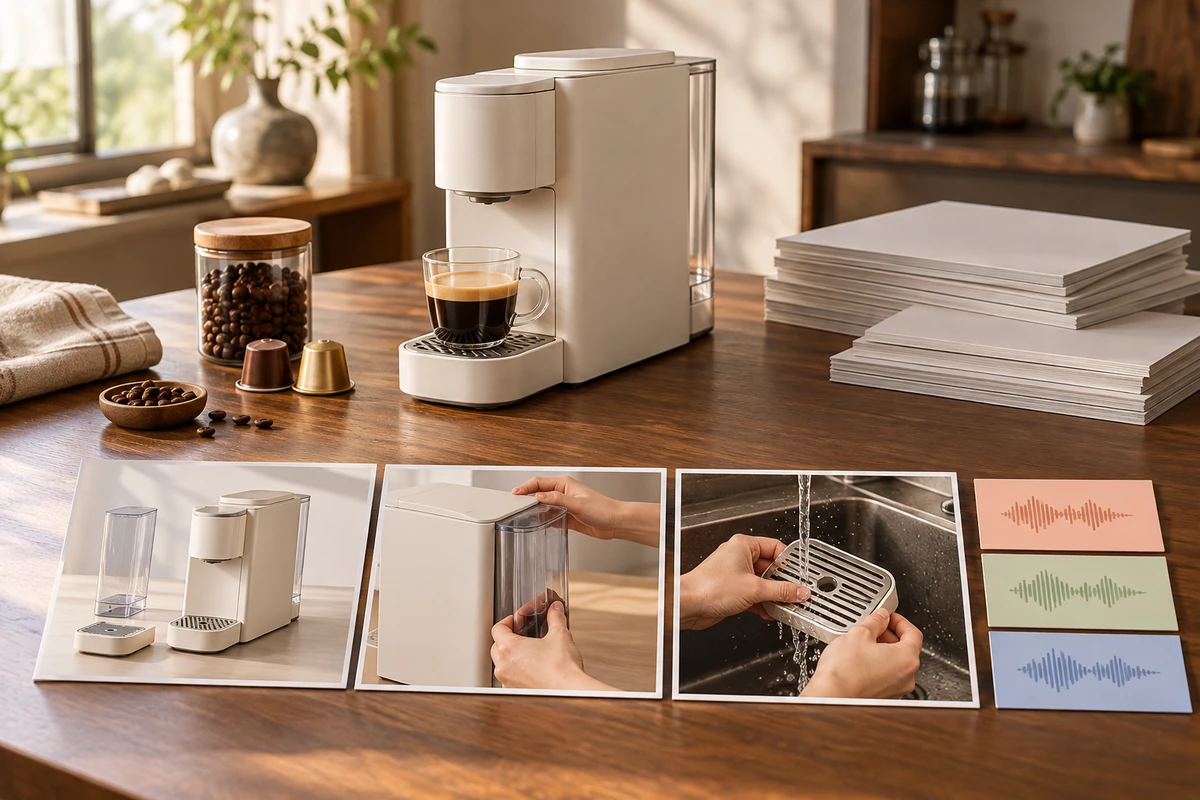
Consider a hypothetical appliance launch. A selection guide, first-use demonstration and consumables explanation can serve one market coherently. A popular lifestyle film showing a locally unavailable model should remain outside that bundle, however impressive its historical views.
This also changes instructions to the Chinese production team. Request footage for the unanswered job. Do not order a second hero film when buyers are waiting for a clear connector, cleaning or replacement demonstration.
Budget shared language work and market-specific work separately
Transcription, approved terminology, voice work and generic demonstrations may be shared across markets using the same language. Price, local configuration, claims, destinations and support information may require separate adaptation.
Use a planning identity:
First-batch investment = one-time catalog preparation + shared work for each language + specific adaptation for each market + maintenance allowance for the agreed period.
Ask the supplier to place review, visual corrections, upload checks and rework in the relevant line items. Add the brand's own destination and support work. This is a cost map, not an industry price benchmark.
For an order-based business, a scenario can divide a market's additional investment by contribution per additional order after relevant variable costs. A non-positive contribution produces no finite break-even order count. This calculation does not establish that all orders after a dub are incremental. Keep market results separate even when the audio is shared.
Let each batch authorize only the next decision
Agree on four possible outcomes before production:
Expand when the destination works, the language is being consumed, buyer questions are being answered and maintenance remains manageable. Add adjacent questions in that market before adding more languages.
Repair when demand exists but a compatibility, operating or destination gap prevents progress. Fix that gap rather than multiplying translations.
Wait when exposure or observation time is insufficient. A low-volume test cannot turn an absence of orders into proof that a language has no demand.
Stop when fulfillment changes, claims expire or ongoing upkeep exceeds the agreed investment. Locate the affected audio, metadata, visual text and destination together.
Consumption establishes that content was used; it does not establish profit or causality. Seasonal demand, traffic sources and other promotion can change during the test. ONCE's discussion of attribution and incrementality explains why an observed result needs stronger validation before supporting a major budget shift.
The useful service contract is therefore bounded: a named market, a buyer-question set, an approval scope and a maintenance period, with the brand retaining its assets and records. Cheap dubbing makes wider access possible. A complete, maintainable buyer path makes the first language investment worth evaluating.
Sources and limits
Platform facts were checked on October 12, 2026 against YouTube's automatic-dubbing and multi-language documentation, Google's February 5, 2026 auto-dubbing announcement, and ElevenLabs' Vimeo account. The gates, question bundle and budget method are ONCE analysis. The appliance example is hypothetical. No client results, universal success threshold or return on investment is claimed.