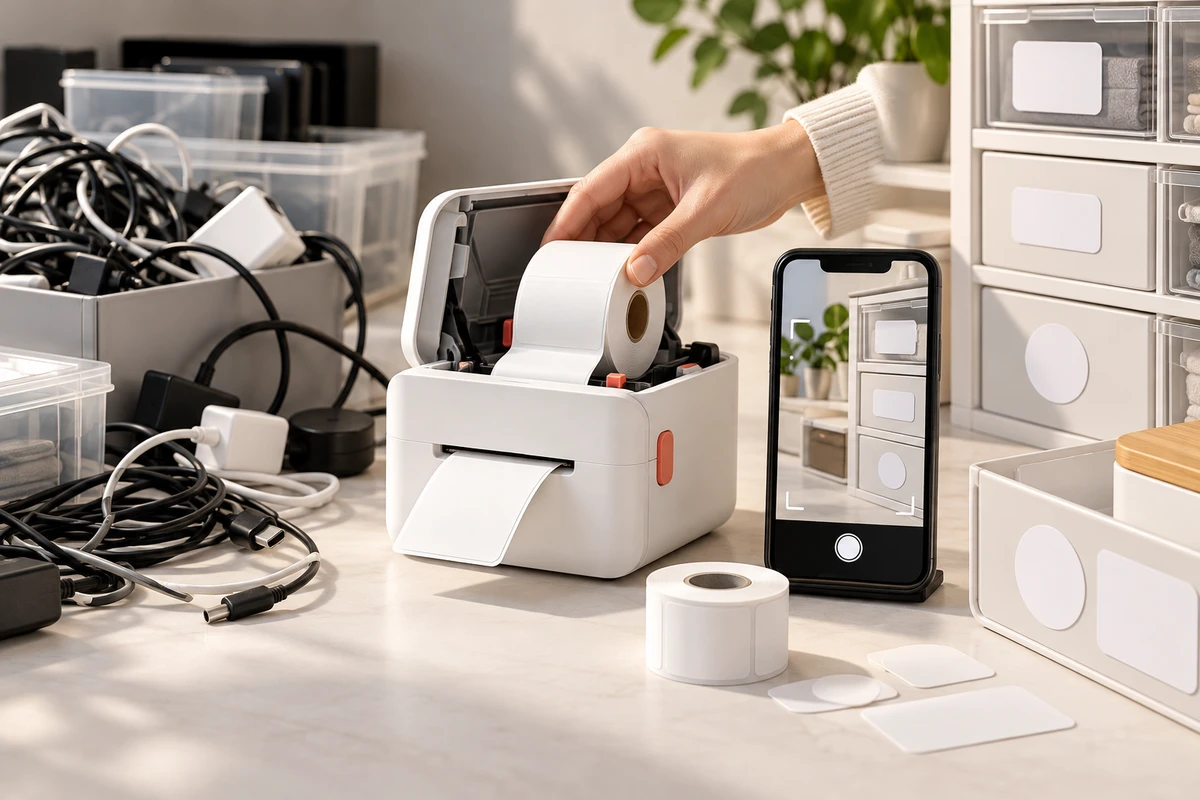
A portable label printer is about to launch. The team produces twelve vertical videos in one shoot. Some open on a cluttered drawer, some begin with the printing action, and others reveal the organised result first. The talent, music, captions, demonstration order and closing also change. Two videos perform better, but nobody can say what the next production round should repeat.
The problem is not a lack of assets. Creative exploration and variable validation have been compressed into the same batch. Changing one variable at a time is useful when the objective is to explain a difference. It is not a rule that every first-round concept must obey. A more practical system tests clearly different creative routes first, identifies an expression worth developing, and only then locks the route and commercial conditions while changing one execution variable.
When does one variable at a time actually help?
TikTok Ads Manager currently lists videos, ad formats, CTA copy and the opening two to three seconds as creative variables. Its standard Split Testing guidance also says that one variable can be selected in each split test. The accompanying best practices recommend writing a hypothesis first and making the difference between test groups large enough to detect.
The same compatibility table, however, lists TikTok Shop among the campaign types that are not compatible with that standard split-testing tool. Brands should therefore not present an Ads Manager feature rule as a universal native TikTok Shop testing capability. This article borrows the logic of controlled comparison: changing one variable helps isolate a creative difference only when the audience, budget, offer, product page, distribution method and test window are reasonably comparable.
When those conditions change together, the result may still be commercially useful, but it is no longer clean creative attribution. A stronger promotion, restored inventory, a creator account with more authority or a product page with more reviews can all make one video appear to win. The honest conclusion is then that a particular combination performed better in that window, not that one hook has been proven.
Separate two levels of creative variables
Route variables decide what the viewer understands first
A creative route is not a new line of copy. It changes how the buying reason is organised. For the hypothetical label printer, the first round might contain three routes:
- Problem first: open on cables, medicine boxes or storage containers that are hard to identify, then introduce the product;
- Action first: load the label roll, connect the phone and print immediately, using the operation to earn attention;
- Result first: reveal an organised drawer or tool case, then work backwards to show how it was achieved.
The openings, narrative order and tone can differ substantially because this round asks which buying entrance deserves further investment. The routes should still share the same SKU, core product facts, comparable offer and landing page, and verifiable demonstration conditions. Otherwise the team is comparing complete commercial bundles rather than creative routes.
Execution variables improve one selected route
After a route wins, the second round can lock the rest of the structure. Keep the action-first body and proof section, for example, while testing one of the following:
- whether a hand pushes the printer into frame or the label emerges immediately;
- whether the first spoken line stresses the time lost searching or the speed of identifying each storage box;
- whether the first product close-up is overhead or a side macro;
- whether the closing shows the organised result before the product CTA.
Each comparison should name one primary variable. Other changes should exist only to execute that variable, not to replace the talent, lighting, music, offer and demonstration setting at the same time. That makes media results, viewing curves and comment themes more useful for the next production decision.
Keep the product evidence constant across both rounds
TikTok's current Creative Codes recommend a 9:16 frame, footage at 720p or higher, space for the TikTok interface, and a hook-body-close structure. Those principles describe platform-native grammar. They do not tell a brand what the image genuinely proves.
The label printer should not communicate “convenient” through fast cutting alone. The shooting task needs to identify the model and consumable used, whether the phone is already paired, which essential actions remain visible, what counts as a completed state, and whether the caption turns a situational observation into an unsupported performance claim. The problem-first, action-first and result-first routes can reuse the same proof modules, but they should not remove the conditions that make the result understandable.
The evidence library answers what may be said and how it can be shown. The two-stage testing system answers which route to compare first and which execution choice to refine next.
Use one shoot to prepare both testing rounds
Do not film twelve complete videos from start to finish. A more economical production plan divides the material into four modular groups:
- Route openings: capture a complete entrance for problem, action and result. They do not need to share the same line of dialogue.
- Proof actions: retain the sequence from initial state through essential action to visible result, then add close-ups of hands, consumables, connections and outcomes.
- Controlled hooks: under the same lighting, framing and performer state, capture two to four opening actions or spoken lines.
- Replaceable commercial sections: keep prices, promotions, product links and market information out of the only master so operations can update them.
Production records should follow the variables. A filename such as DEMO_HOOK_ACTION_V02 is more useful than final-final-3. Beside each cut, record the SKU, script date, performer, opening type, proof module, CTA, intended market and test window. When the next round requires a reshoot, the team can locate one action instead of rebuilding the entire video.
Do not let one metric judge the whole creative
Better early retention may mean that the first second is clearer. More clicks may relate to the buying reason or CTA. Purchase changes are also affected by price, reviews, inventory, shipping and the landing page. TikTok's description of Video Insights says advertisers can inspect frame-level performance and use peaks and valleys to find elements worth repeating or removing. That is a diagnostic clue, not causal proof that one shot alone created the outcome.
A review sheet should separate early attention signals, product-understanding signals, click or product-interest signals, and changes in the buying environment. When media and commercial conditions differ, treat the result as a directional observation. Upgrade it to a controlled-test hypothesis only when the comparison is sufficiently stable.
The team also needs a stop rule. If a route fails to explain the product across two rounds, if the proof depends on exaggerated captions, or if the SKU and offer have changed, further hook adjustments are unlikely to help. Return to the route or evidence layer. Conversely, a stable route should not be cloned indefinitely. Audience fatigue, competition and distribution change, so an old result is a starting point rather than a permanent law.
Buy a learning system, not just a video count
If a brief says only “deliver 20 TikTok Shop videos,” the easiest output is twenty files with uncontrolled differences. A more useful production scope includes:
- a route matrix showing which buying question each route opens and which product evidence it uses;
- a constants sheet covering SKU, offer, landing page, audience, test window and production conditions that should remain stable;
- controlled variants with one named primary variable visible in the filename;
- clean proof footage, close-ups, location sound and replaceable endings;
- a one-page learning record covering results, concurrent commercial changes, reusable elements, the next hypothesis and stop conditions.
The real question is not whether every asset must change only one variable. It is whether the current round needs to discover a route or explain a difference. Exploration can compare substantially different routes. Control becomes essential when refining a route. Shared product evidence and consistent records keep both rounds from becoming disconnected batches.
If you are planning the first TikTok Shop content round for a new product, bring ONCE the SKU, product page, target market, verifiable claims, existing footage and media conditions. Our TikTok Shop video production planning can separate routes, proof modules and controlled variables before confirming what to shoot now and what the next round should learn.
Sources reviewed on October 11, 2026: TikTok For Business, About Split Testing Variables, Split Test Best Practices, Creative Codes and Video Insights. Platform features, account compatibility and media rules can change. Confirm the current official pages and target account before launch. The label-printer scenario explains a method; it is not an ONCE client case or a performance claim.