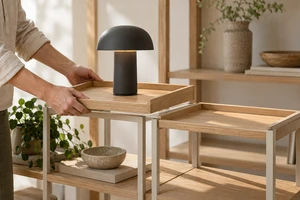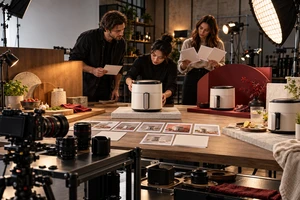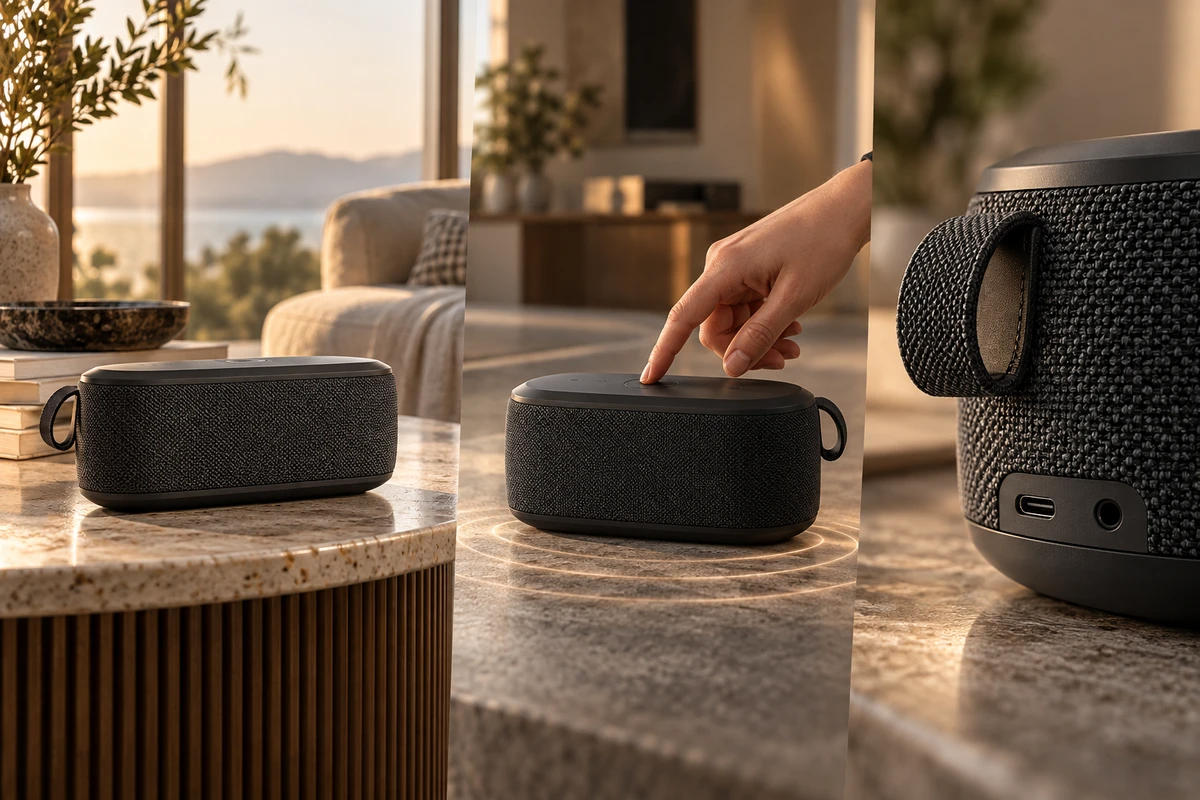
Start with three kinds of product evidence: where the product fits, how it works and what helps a customer choose. Brands do not yet need to rebuild an entire asset library around an ad specification that has not been publicly documented in full.
This approach is useful beyond one emerging placement. The same source material can support ecommerce pages, retailer listings, social campaigns, sales decks and future edits. For teams that manufacture in China and market abroad, it also creates a clearer production brief for suppliers on one side and market teams on the other.
What OpenAI has actually announced
On October 5, 2026, OpenAI announced a new visual ad format in ChatGPT. The initial test will take place during image generation for Free and Go users in the United States, starting later in October with an initial group of advertisers. The ads will be labeled and separated from the image being generated, and advertising will not influence ChatGPT's answers.
OpenAI describes a specific visual job: images can show product inspiration, usage or the experiences a product enables, helping people discover a brand, understand what makes an offer distinctive and decide what to buy.
The announcement does not publish a generally available set of image dimensions, placement counts, video lengths or approval benchmarks. ONCE's three-frame method below is a production response to the confirmed user tasks. It is not an official OpenAI template or a prediction of final specifications.
Frame one: show where the product fits
During image generation, a person may be planning a room, developing an event concept or imagining a new routine. A context frame should help that person judge scale, relationship and suitability.
A portable speaker, for example, needs more than a clean packshot. Show how much table space it occupies, how far it sits from the listener and whether the represented environment is indoors or outside. A polished scene must not imply water resistance, heat tolerance or professional performance the product does not have.
The acceptance test is simple: without reading the copy, can a first-time viewer explain who the product is for, where it belongs and what task it supports?
Frame two: make the mechanism visible
Lifestyle imagery attracts attention; action and structure explain the difference. The second frame should prove one meaningful feature through an observable input, action and result.
For a speaker, that might be a control response or connection step. For a beauty device, it could be the correct contact angle and operating sequence. For furniture, it may be the hinge, load-bearing structure or installation interface. Light effects can guide attention, but they should not replace the product evidence.
Ask the production partner to deliver a clean master, isolated product elements, the hand or person action, and a short text-free motion take where appropriate. If AI is later used to extend the setting, lock the real product's appearance, ports, scale relationships and operating direction.
The acceptance test is whether the image demonstrates a real capability rather than creating a vague impression of advanced technology.
Frame three: support the choice
Once a person moves from inspiration to a purchase decision, another atmosphere image adds little. The choice frame should clarify variants, included accessories, installation conditions, ports, packaging contents or relevant limits.
Avoid burning every specification into one flattened image. Deliver editable information layers connected to an approved source so that pricing, models and market conditions can change without recreating the photograph. Each frame should map to a SKU, market, claim source, approval date and destination page.
The acceptance test is continuity after the click: does the destination show the same model, distinction and qualification? A new distribution surface will amplify an old information mismatch if the ad, imagery and product page disagree.
Procure an Explore–Prove–Choose image pack
ONCE recommends treating the three frames as reusable evidence units rather than a three-image order.
| Visual job | Keep fixed | Variables | Minimum acceptance |
|---|---|---|---|
| Explore the fit | Product identity, scale and valid conditions | Setting, composition and person type | The scene does not imply an unsupported feature |
| Prove the use | Operating sequence, interface and real result | Camera angle, pace and background | The action and result are understandable without copy |
| Support the choice | SKU, accessories, limits and source data | Language, pricing layer and layout | Every decision fact matches the destination page |
The delivery should include source captures, editable files, clean images, crop-safe compositions and an asset register. The register states which customer task each image answers, its SKU, elements that cannot be changed by generation and the events that require review.
This specification also creates a practical link between a China-based production team and an overseas brand team. The factory can validate product identity and operation. The market owner can approve use context, claims and destination continuity. Neither party has to infer the other's decisions from a final JPEG.
Compare bids by qualified intent-image cells
Use this internal planning equation:
Cost per qualified intent-image cell = (planning + capture or generation + post-production + product verification + asset registration) ÷ accepted customer-task–image combinations.
A combination enters the denominator only when the product is accurate, the image answers a defined explore, understand or choose task, and the asset maps to a SKU and destination. A new crop or background does not necessarily add intent coverage.
This is not an industry price benchmark or a forecast of ChatGPT Ads performance. It makes two proposals comparable. One may deliver many attractive images that all perform the same job. Another may use fewer underlying captures to create a set of accurate, updateable evidence units across several channels.
Decide whether to invest now
An advertiser in the initial US test, with functioning conversion data and suitable product pages, can start with a small number of representative SKUs. Test which visual task is useful in the relevant context before commissioning a whole catalogue.
A brand without access can add these frames to its next normal product shoot. They remain useful for its website, marketplaces, social channels and AI discovery surfaces, reducing the risk of tying the production budget to one experimental placement.
Measurement needs the same discipline. OpenAI announced expanded data, attribution and measurement partnerships, while describing its incrementality work as early stage. Click and conversion attribution can confirm that the path functions. Causal lift requires a suitable incrementality design when available; an attributed visit alone should not be reported as a new purchase caused by the ad.
OpenAI's earlier advertising principles also state that answers remain independent, ads are clearly labeled and conversations remain private from advertisers. A visual production brief should therefore be built around useful product evidence, not an assumption that the advertiser controls the answer.
The structural change is that product imagery is entering a moment when a person is actively imagining, comparing and deciding. For the next shoot, make one representative SKU complete across Explore, Prove and Choose before multiplying formats for every possible channel.
Sources and limits
- OpenAI, Building advertising for the way people use AI, October 5, 2026.
- OpenAI, Our approach to advertising and expanding access to ChatGPT, accessed October 7, 2026.
The three-frame pack, acceptance table and cost equation are ONCE production and procurement methods. This article does not report a client test, an industry-average cost, general advertiser availability or future creative specifications.