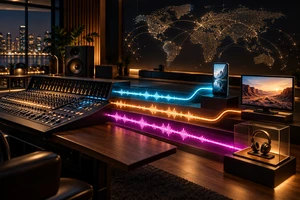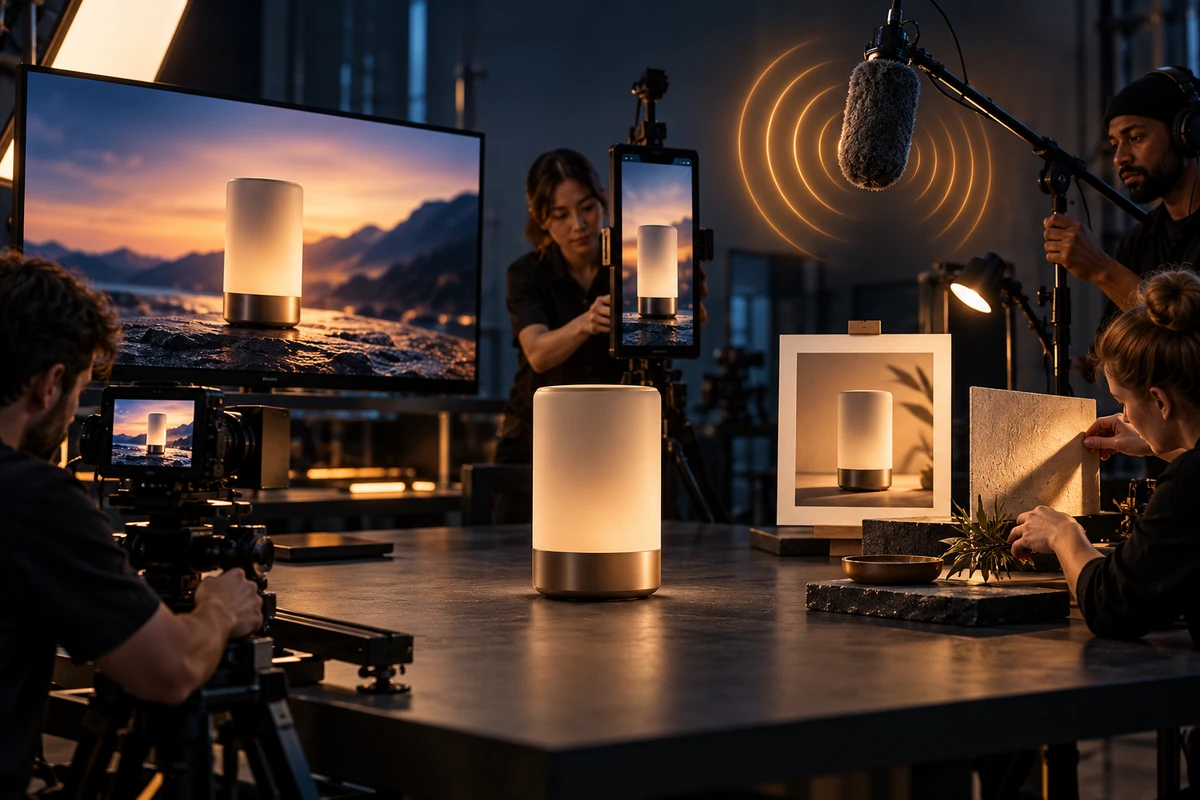
Display, online video, streaming TV and audio have traditionally arrived as separate briefs, budgets and files. Amazon is now pulling them into one campaign. Announced on September 29, 2026, DVA+ asks advertisers to choose an objective, products or a brand URL, review creative, set a budget and launch. Amazon says the system can then manage targeting, inventory, format allocation, bidding, creative generation and ongoing optimization.
That does not mean DVA+ is globally available. At the time of the announcement, it remained in an extended closed beta in the United States. Amazon expects an open beta to begin in late October 2026, international expansion during Q4, and general availability across 35 markets in Q1 2027. The company also says audio availability will expand after launch later in Q4 2026.
For brands without access, this is not a reason to commission an “Amazon DVA+ campaign” prematurely. It is a useful production signal: media formats are being combined inside the buying system, but human senses are not. One idea now has to survive with sound, without sound, without pictures and sometimes as a single still.
One claim now enters four different environments
On streaming TV, a product story can be full-screen, non-skippable and built for a 16:9 canvas. In online video, the same idea may appear in-stream, between text and images, on mobile or with the sound off. In display, the story may collapse to one picture and a short line. In audio, every visual proof—packaging, gesture, interface and caption—disappears.
Amazon’s current specifications make those differences concrete. Its online video guidance supports in-stream and out-stream inventory across desktop, mobile and tablet. Its general video-ad guidance recommends that the message remain understandable without sound. Audio ads typically run for 10–30 seconds with a square companion image; on smart speakers, the action cannot depend on “click here.”
DVA+ can place a budget across those environments. It cannot make a visually dependent idea intelligible on a speaker, or turn voiceover-dependent storytelling into a useful silent frame.
The expensive failure is therefore not aspect-ratio loss. It is meaning loss.
The ONCE cross-sensory creative spine
Instead of starting with “one 16:9 master plus crops,” lock five components before deciding how many outputs to make.
1. One substantiated claim
Write the one promise the campaign is allowed to make, with its evidence, model scope, market and effective date. It should be speakable in audio and compressible into display copy. Mood cannot carry a product claim on its own.
2. One visually self-evident product action
This is the proof unit for video and stills. Rather than having a presenter say that setup is simple, show alignment, attachment and the finished state clearly enough that the action works as a short shot and as a frozen key frame.
3. One audio-only scene
An audio asset is not the video voiceover exported as a separate file. The listener cannot see the pack, button or gesture. The script must identify the brand, product category, main benefit and one clear action. Product sounds, spatial cues and rhythm can build memory, but they cannot replace substantiated information.
4. One silent visual proof
With sound removed, a viewer should still understand what the product is doing and why the action matters. Product behavior, framing, the resulting state and a concise headline should cooperate. This is different from covering the frame with a transcript of the voiceover.
5. One standalone static anchor
Capture a clean product relationship, sufficient background space and adaptable copy area during production. This is not a random frame grab. It must independently carry recognition, one claim and one action for display or an audio companion tile.
All five components share the same product facts, but they do not need the same expression. The platform may generate sizes and combinations; the brand still decides which facts are immutable, which sensory cues may change and which outputs are approved.
Four stress tests are more useful than counting files
Before approving the system, test it in four modes:
- Watch it muted. Can someone identify the product and action within the opening seconds? Is the promise still understandable without narration?
- Listen with eyes closed. Can someone name the brand, product category, benefit and next step without seeing the screen?
- Freeze one frame. Is there a still that can carry the claim in a display placement, or only attractive atmosphere?
- Replace the music. If dialogue, product sound and action remain, does the idea still work? If not, brand memory may be rented from the track rather than designed into the asset.
These tests also determine how much to buy. A short campaign confined to one online-video placement may still need only a strong finished film and a few adaptations. A brand with DVA+ access and genuine multi-format plans should buy the full cross-sensory spine. A brand preparing for US multimedia buying but not yet eligible can build the reusable claim, action, audio script, key frames and rights record first—without paying for a large batch of speculative platform exports.
Deliver a master system, not a bag of dimensions
A practical package can include a product-claim sheet, cross-sensory script, 16:9 visual master, standalone product-action shots, dialogue-and-effects stems without licensed music, a 10–30 second audio script and master, square companion images, display anchors, and an inventory of markets, rights, versions, approvals and expiry dates.
If an automated system will also generate, select or publish creative, the package needs approval, observation, intervention and exit controls. Our earlier framework on six control rights for automated creative systems answers who can put which asset live. The cross-sensory spine answers what remains of the idea when its sensory environment changes.
Compare proposals with a more revealing internal variable:
Cost per approved sensory-mode × market combination = (claim substantiation + cross-sensory scripting + production + sound + stills + adaptations + QA + rights/version management) ÷ (approved sensory modes × markets)
This is not an industry benchmark. It exposes false economies. A cheap hero film that becomes unclear when muted, unintelligible without pictures and useless as a still has to be rebuilt as formats expand. A system that costs more in pre-production can carry one verified promise through sight-and-sound video, silent video, audio and display, while limiting each new market to the parts that genuinely need localization.
Amazon reports performance results from its own internal datasets and specific test conditions; those figures are not a general forecast for every advertiser. What a brand can control is the creative input: before an optimization system distributes the budget, make sure the idea does not disappear when the sound, the picture or all but one frame is removed.