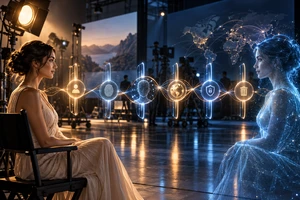
No. “Commercial use allowed” is not a complete AI talent agreement. It may tell a brand that a supplier will license one finished asset, but it does not define whether the performer consented to face generation, whether their voice may be cloned, which markets can receive the ad, or whether new languages and derivative edits are covered. It also does not satisfy a platform’s AI disclosure requirement.
YouTube is making those gaps easier to surface. The procurement question is no longer simply whether a brand can download the video. It is whether every published identity version can be traced to a specific permission.
Detection changes discoverability, not the legal conclusion
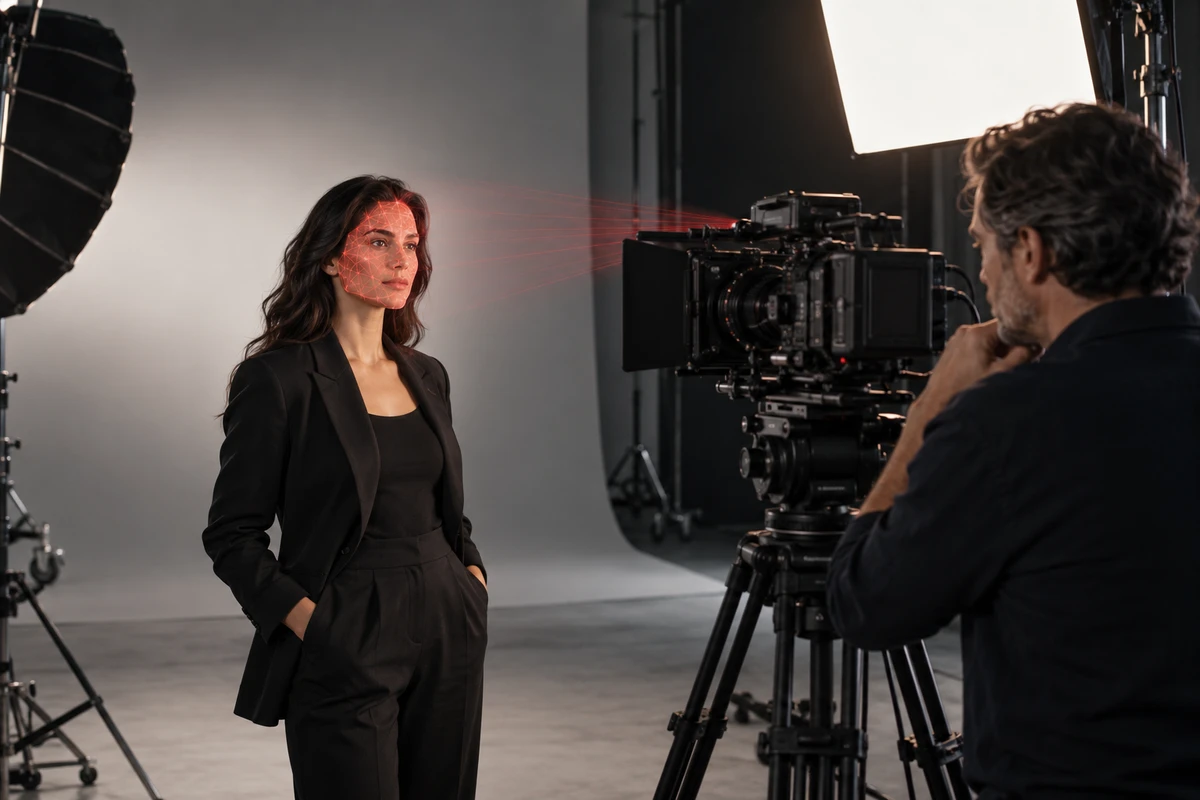
YouTube currently describes Likeness Detection as experimental and unavailable in some countries. Eligible creators verify their identity with a government-issued ID and a brief face video. The system scans newly uploaded videos for the faces of enrolled creators. YouTube says the mechanism works similarly to Content ID, except it searches for likeness rather than copyrighted material.
The current system is primarily facial. Some participants can now record a speaking-voice sample, and YouTube says it is extending detection to audio. A match is not an automatic takedown. The enrolled person reviews the result and may use the privacy complaint or copyright process; YouTube can reject a removal request and considers parody, satire, and public-interest exceptions.
For a brand, that distinction matters. Detection does not decide who owns a right. It increases the chance that a missing or overbroad permission reaches the person, agent, or channel team able to challenge the use.
AI disclosure and talent permission answer different questions
YouTube requires disclosure when realistic content is meaningfully altered or synthetically generated—for example, when a real person appears to say something they did not say. On May 27, 2026, YouTube also announced more prominent labels and internal signals that can automatically label significant photorealistic AI use in some cases. Its help guidance notes that a label by itself does not reduce monetization or distribution eligibility.
Disclosure answers how a video was made. Permission answers whether a brand may use this person in that way. A production should therefore pass three independent gates:
- Source gate: Who owns the footage, photographs, recordings, music, and model inputs?
- Identity gate: Which face, voice, body performance, or personal trait is licensed for which use?
- Disclosure gate: Has each destination version been labeled according to the platform and market?
One gate cannot repair another. A signed release does not remove a realistic-AI disclosure duty, and an AI label does not create consent. The same separation belongs beside a brand’s broader AI transparency delivery pack.
The ONCE Three-Proof and One-Matrix system
ONCE recommends making identity rights part of the production deliverable. The three proofs are source provenance, identity permission, and per-version disclosure. The matrix converts vague “worldwide commercial use” language into cells that production and media teams can actually verify.
Ten fields that belong in the matrix
- Person or rights holder;
- Identity mode: face, voice, body performance, or another recognizable trait;
- Permitted transformation: retouching, lip sync, voice clone, or full synthesis;
- Approved statements, actions, and product claims;
- Product category and competitive exclusivity;
- Organic, paid, commerce-page, retail-screen, or other media use;
- Platforms, territories, and languages;
- Start date and expiry;
- Derivative edits, model training, and sublicensing rights;
- Withdrawal, takedown, asset deletion, and dispute response.
An approved English master does not automatically clear a Spanish voice version. An organic creator post does not automatically clear paid amplification. Permission to digitally de-age a performer does not automatically include voice cloning. When a language, platform, person, or paid-media use is added, the team checks that exact matrix cell before production proceeds.
Four asset types require four procurement responses
Conventional live-action footage
The absence of generative AI does not eliminate copyright or likeness rights. Confirm term, territory, media, product category, and derivative edits. An AI label may be irrelevant, but the release is not.
A filmed performer with AI lip sync or dubbing
The agreement should state whether mouth movement, vocal character, and meaning may change, which languages are permitted, and who approves final lines. If the finished ad looks as though the performer personally made a new product claim, tie approval to that exact version.
A cloned third-party voice or generated third-party face
This is the worst place to rely on a generic commercial-use clause. Preserve the source of training or reference assets, the approving party, final script, and withdrawal path. YouTube’s altered-content examples also distinguish cloning one’s own voice from cloning someone else’s; the latter requires disclosure.
A wholly fictional AI character
A fictional character may not require a real person’s release, but the brand still needs model and asset rights, a similarity check, and realistic-AI disclosure where applicable. “Nobody was filmed” is not a complete clearance test.
Rewrite the purchase order around approved versions
First, stop buying an undefined package such as “one AI spokesperson plus 20 videos.” Buy approved identity cells multiplied by approved destination versions. Second, require the source index, identity matrix, and disclosure log with the masters—not just MP4 files. Third, use a two-person release check: production confirms that the edit matches the matrix; channel operations confirms disclosure and media scope.
Build the dispute path before launch. YouTube notes that the experimental system can miss synthetic content and may surface ordinary footage. A detected match does not guarantee removal, while a missed match does not validate the permission. Brand safety should depend on a record that can answer who approved what, which version went live, and who must respond.
A practical release rule
An AI talent video enters the publishing queue only when all five conditions are true: every source has provenance; the person, identity mode, and use are approved in the matrix; the final behavior and claims stay within that approval; platform disclosure is complete; and a withdrawal owner is named. If any cell says “pending,” the version remains with production instead of moving to media.
This system is not paperwork for its own sake. It tells a brand which versions can be bought, promoted, and localized. As face and voice detection become part of platform operations, talent permission must become a versioned production asset rather than a one-time signature.
Sources and limits
Key sources are YouTube Help’s Likeness detection on YouTube, Disclosing use of altered or synthetic content, and Protecting your identity; plus YouTube’s March 10, 2026 announcement on the expansion to civic leaders and journalists and its May 27, 2026 update on AI labels and detection signals. These sources establish what YouTube has launched or announced, not that every platform or jurisdiction uses the same rules. The Three-Proof and One-Matrix system is ONCE’s production and procurement framework, not legal advice.