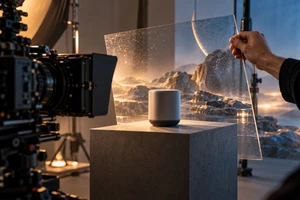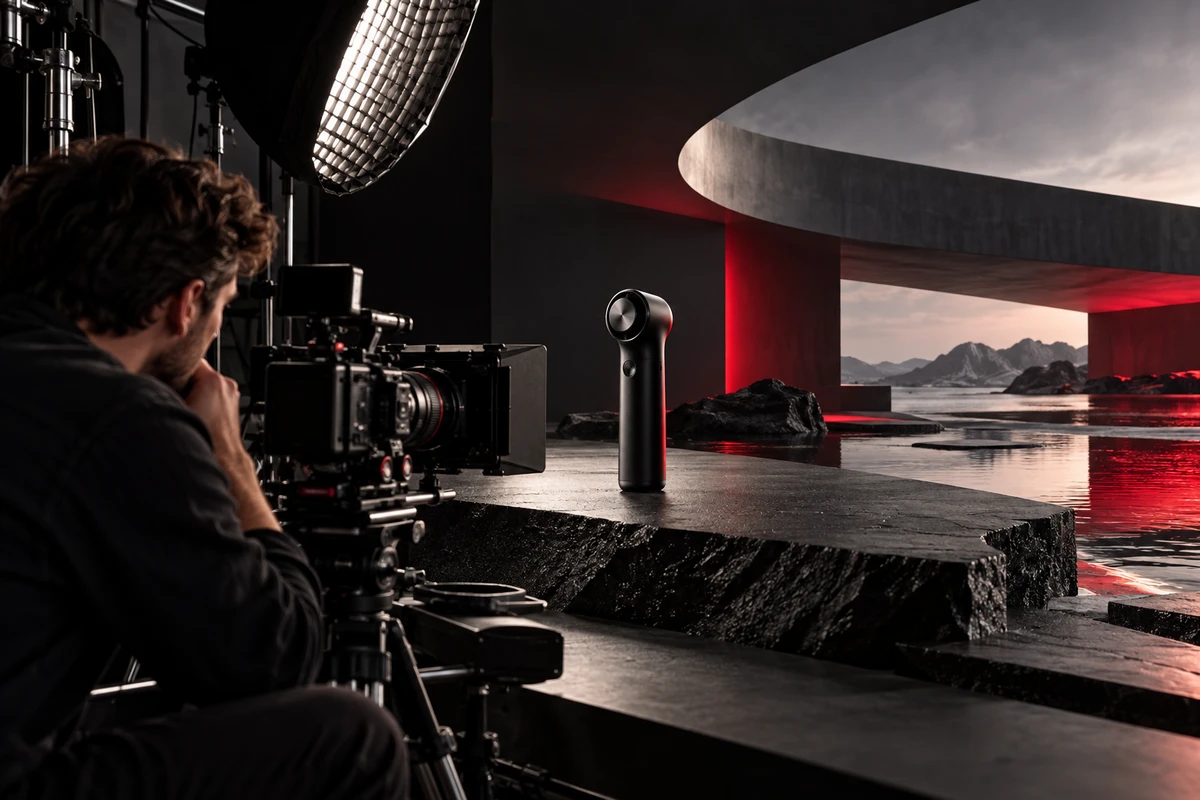
In a product launch film, the product, tabletop and hands may be photographed for real while the city beyond the window, lighting changes and several transitions are generated. On paper, that sounds like a simple live-action and AI hybrid. In production, the questions become more exacting: a generated pass changes the product reflection, button positions drift between shots, and the English version needs a new setting but no one can identify which layer in the approved master still contains the original photography.
A hybrid AI video workflow should not divide the budget by asking what percentage is live action and what percentage is AI. It should first lock a real master that generation is not allowed to rewrite. Generative work can then extend environments, rhythm and versions around that master. Every approval should leave behind an asset the project can return to, not merely another MP4 whose history is harder to explain.
Identify the shots that carry product truth
Not every realistic shot has to be filmed, and not every background is a good candidate for generation. Start procurement with three questions.
First, what happens if the image is wrong? If an incorrect button count, port position, material reflection, package label, operating sequence or result could change a buying decision, the shot should begin with an approved sample, real operation or verified 3D asset.
Second, how often will this element change? Markets, weather, atmosphere, distant architecture and visual metaphors that do not prove a product claim may need several fast variations. They are better candidates for generation than for rebuilding a physical set for every direction.
Third, can the project roll back after a mistake? If a generated pass has already overwritten product edges, hand occlusion or real shadows, a later factual error may force a complete rebuild. If the live-action subject, matte, clean plate and generated environment remain separate, the error can stay local.
These questions are more useful than asking whether AI can make a shot. High-consequence elements stay with verified assets. High-variation, low-truth-risk elements can enter generation. When both are high, the shot needs live action, verified 3D, compositing and generation to work together rather than relying on a single prompt.
The real master is a reusable negative, not the final film
The real master should let every later team confirm three things: what the product actually looks like, how the action actually occurs, and how light and scale should continue across the sequence.
Depending on scope, capture more than the takes intended for the hero edit: standard product angles, critical details, real operation, material and colour references, clean plates, tracking references, and a viable matte or separation plan. Not every job needs a full visual-effects archive, but the quote should state which plates become reusable client assets, which files remain production intermediates, and which require additional preparation.
This is different from AI previsualisation. Previs tests direction before a shoot. The real master protects product facts when formal generation begins. A practical lock test is simple: can the brand review only these captured assets and independently approve product appearance, core operation and the elements that must not change? If not, every new generated version will cost more to inspect.
Use one generated test shot to expose the hard failure
Do not begin by generating an entire film across a dozen settings. Start with one representative test shot containing the project's hardest combination: a real product edge, hand occlusion, camera movement, reflective material and an environmental change. The test answers whether the available inputs can maintain product identity, whether the compositing method is viable, and whether generation contaminates the real subject.
After approval, lock a shot recipe: the exact live-action plate, the regions that may be generated, the details that must remain unchanged, movement and lighting references, and the rejection conditions. The project may later change city, season, language or aspect ratio, but it should not redraw approved product facts each time.
A failed test does not mean abandoning generative production. Narrow the generated region, return hand interaction to live action, assign a controlled product turn to verified 3D, and reserve AI for distant environments, atmosphere, transitions or clearly stylised passages. A useful hybrid workflow makes failure happen early in one test shot rather than late across the whole film.
Review the composite for factual drift, not only realism
The first composite review often asks whether the shot looks natural. The brand also needs a separate product-fact pass. Check silhouette, openings, text, colour, material, operating order, contact between people and the product, and whether the image implies an unapproved capability or use environment.
Classify feedback by layer. Style notes stay in the generated layer. Product-fact errors return to the real master or compositing node. A new market, performer, action or use case is a scope change, not simply one more version. This tells both brand and production company whether a request consumes generation attempts, finishing time or a return shoot.
Provenance should not wait until delivery. The C2PA Content Credentials explainer describes a way to record origin, modifications and AI use in a cryptographically bound structure. It also states an important limit: provenance does not judge whether content is true, lawful or good. The project still needs its own shot list, input records, approvals and release decisions.
Put four kinds of responsibility in the contract
Input responsibility: who supplies the approved sample, product photography, 3D model, talent and voice permissions, fonts, music and generation references? Reference material also needs a confirmed right to be used in commercial generation.
Revision responsibility: which changes are included style adjustments, which are corrections to product facts, and which introduce a new shot, market or version? If generation deviates from the approved shot recipe, who restores it? If the brand changes the product or claim after lock, how is the new work scoped?
Delivery responsibility: beyond the finished films, will the project deliver the real master plates, clean plates, mattes, approved stills, generated-shot list, version relationships and necessary provenance records? Do not assume that project files include every intermediate asset or that one finished export can be expanded cheaply forever.
Publication responsibility: who rechecks disclosure, regional requirements and platform settings at upload? As checked on October 1, 2026, TikTok Ads Manager provides an AI-generated content disclaimer workflow for qualifying ads; YouTube requires disclosure for realistic AI-generated or meaningfully altered content; and Meta applies AI information labels to significant use of its generative ad tools and may use industry signals for third-party AI content. Interfaces, regions and rules can change. The contract should name the person who rechecks them before release instead of promising permanent label treatment or guaranteed approval.
A complete delivery lets the project return one station
A rollback-ready production has at least three stations: the real master, an approved generation recipe, and a release master that has passed product-fact review. If one market version fails, the team should be able to identify its live-action source, generation pass, composite and approval rather than reverse-engineering a final export.
This method fits projects where a real product, human performance or brand fact remains central while environments, visual imagination and delivery versions need to expand. It can be simplified for deliberately stylised animation. It may need to wait if the product itself is not final. Digital likenesses, medical outcomes, financial claims and high-risk markets require additional rights and compliance review.
Hybrid production is not valuable because it minimises live action. It is valuable when the most expensive truth is captured once and the expression around it can change safely. If you are planning a launch or brand film, prepare the final product references, three shots that must remain real, the market versions you want to extend, and the intended platforms, then contact ONCE through the English site for a hybrid production route assessment.
This article reflects official material checked on October 1, 2026 and is not legal advice.